
What is the Ria Formosa?
The Ria Formosa is a lagoon system and Nature Park that stretches over around 60 km of coast on the Algarve Sotavento, covering 18,400 hectares between Ancão (municipality of Loulé) and Manta Rota (Vila Real de Santo António). It was classified as a nature reserve in 1978 and raised to a Nature Park in 1987, to protect its lagoon system, flora and fauna. It is one of the richest ecosystems in Portugal.
Beyond its Nature Park status, the Ria is a Ramsar Site (wetland of international importance), a Special Protection Area for birds and a Site of Community Importance — one of the most protected territories in the country.
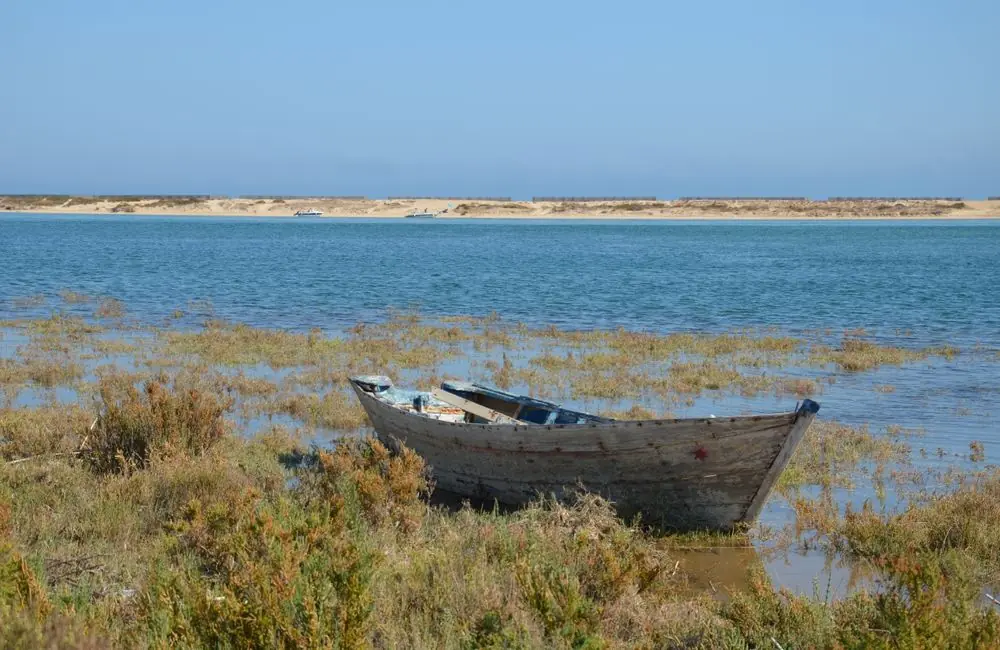
The barrier islands of the Ria Formosa
The Ria is separated from the open sea by a cordon of 5 barrier islands and 2 peninsulas, with wide-sand beaches and a calm sea:
| Island / Peninsula | Municipality | Note |
|---|---|---|
| Ancão Peninsula | Loulé | Next to Quinta do Lago |
| Ilha da Barreta (Deserta) | Faro | The southernmost point of mainland Portugal |
| Ilha da Culatra | Faro/Olhão | Fishing community, lighthouse |
| Ilha da Armona | Olhão | Long sandy beaches |
| Ilha de Tavira | Tavira | Kilometres of preserved sand |
| Ilha de Cabanas | Tavira | Quick access by boat |
| Cacela Peninsula | V. R. Sto. António | Cacela Velha, shellfish |
The Ilha de Tavira is one of the most sought-after, with preserved sand and warm water.
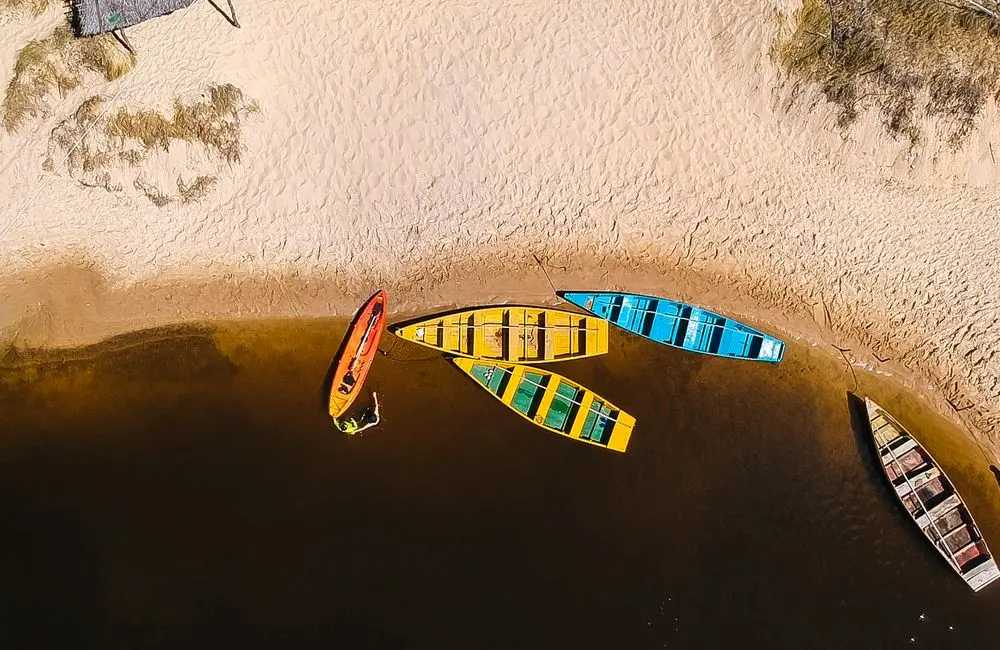
Wildlife, flora and nature
The Ria Formosa is a bird sanctuary: the flamingo, the red-crested pochard, the heron and the emblematic purple swamphen, the park’s symbol. Its waters shelter one of the largest seahorse populations in the world. The salt marshes and sandbanks produce oysters and clams of recognised quality. It is a prime destination for birdwatching, especially in autumn and winter.
How to visit the Ria Formosa
The best way to discover the Ria is by boat, on trips departing from Faro, Olhão or Tavira. There are birdwatching circuits, island visits and shellfish tastings. The kayak lets you explore the channels at the rhythm of the tide. Olhão and Tavira are the best gateways.
Cacela Velha, food and when to visit
At the eastern tip of the Ria, Cacela Velha is one of the prettiest villages in the Algarve: whitewashed houses above the lagoon, with a golden-sand beach reachable on foot at low tide or by boat. The Ria is also a byword for food: the oysters and clams raised on its banks are renowned, and Olhão and Fuzeta have some of the best fish markets in the region. The best time to visit is spring and early autumn, when the weather is mild and the birdwatching is at its peak — though summer offers the warmest sea for bathing off the islands.
Where to stay near the Ria Formosa
To be close to the Ria, stay in Tavira (the most charming), Olhão (the most authentic) or Faro. These are destinations with a warm sea, wide sands and excellent food. See the accommodation in the Algarve Sotavento, with direct booking on Homing.
Sources and references
- ICNF — Ria Formosa Nature Park — https://www.icnf.pt/conservacao/rnapareasprotegidas/parquesnaturais/pnriaformosa
- natural.pt — Ria Formosa Nature Park — https://natural.pt/protected-areas/parque-natural-ria-formosa
- Wikipedia — Ria Formosa — https://en.wikipedia.org/wiki/Ria_Formosa
Original editorial article by Maré Algarve, based on official sources (ICNF, ABAAE/Blue Flag, public climate data) and on our experience of holiday rentals in the Algarve. Prices and availability vary — always check each property's page.