
Most people reach the Algarve through Faro Airport (FAO), which serves the whole region and sits just a few kilometres from the centre of Faro, 26 km from Albufeira and around 63 km from Lagos. From there, a hire car is the most flexible way to cover a coast stretching more than 150 km between Sagres and Vila Real de Santo António, though train and bus link the main towns too.
This guide brings together the real distances and times between towns, the costs to factor in and how to choose where to stay depending on the transport you'll use.
How do you get to the Algarve?
You reach the Algarve mainly by plane, through Faro Airport, and secondly by car or train from Lisbon. Faro Airport receives direct flights from dozens of European cities all year round and is, in practice, the starting point of almost every holiday in the region. It sits right beside the city of Faro, just 3 km from the centre, which makes the move from the plane to the road quick.
Those coming from Lisbon can take the A2 motorway and then the A22, a journey of around 2h30 to the centre of the Algarve, or the Alfa Pendular/Intercidades train to Faro or Tunes, with a connection to the regional Algarve line. There are also Rede Expressos express coaches serving the main towns from Lisbon and Porto.
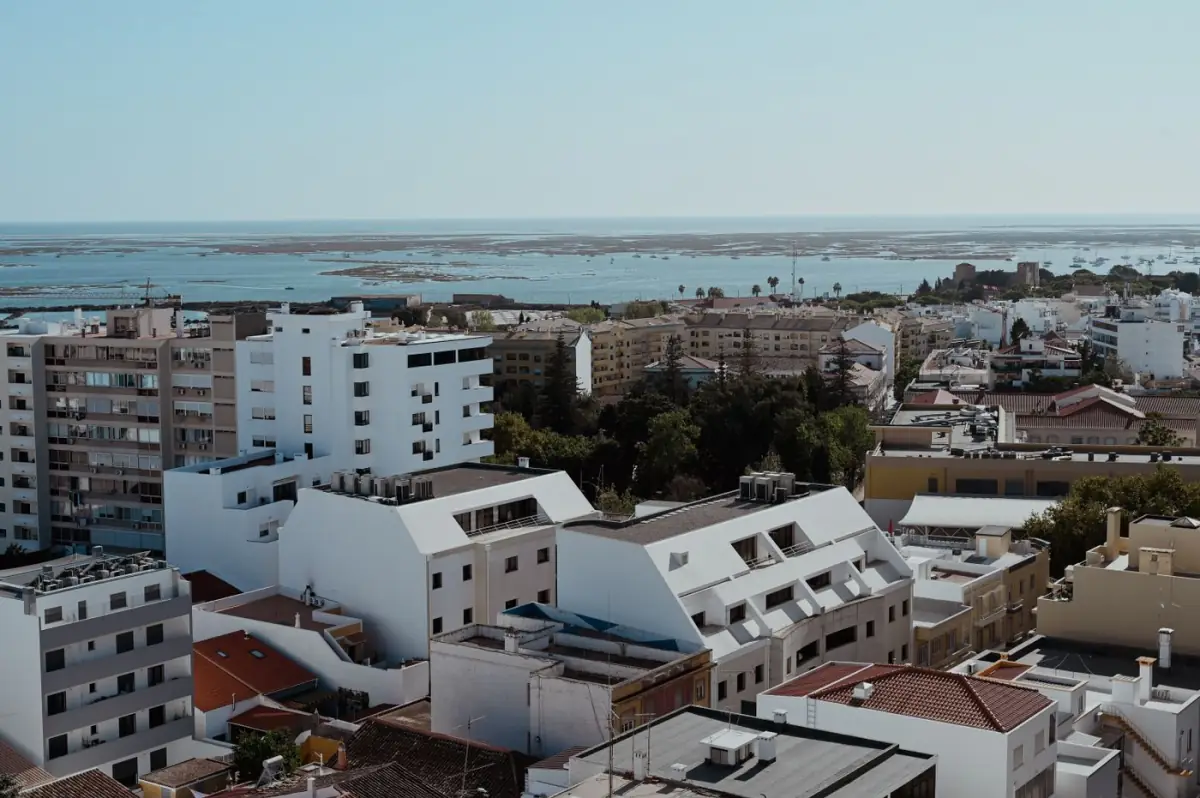
The practical difference between the three options is what you do next: by plane or train, you'll need a hire car or public transport to get around; arriving in your own car from Lisbon, you've already sorted the mobility. To plan the rest of the stay, it's worth cross-referencing this guide with the 7-day Algarve itinerary, which suggests bases and routes.
Faro Airport: access and transfers
Faro Airport has four main ways to take you to your home: hire car, taxi/private transfer, bus and train (from Faro station, in the city). The choice depends on the destination and how many people are travelling — for a family with luggage, the car or transfer rarely loses out to the bus.
Distances from the airport to the main towns
The distances below come from the Algarve map itself and help you gauge how long it takes between landing and check-in. The centre of the region (Albufeira, Vilamoura, Quarteira) is 20–30 minutes away; the Barlavento (Lagos, Sagres) and the Sotavento further east demand more road.
| Town | Distance | Approximate time by car |
|---|---|---|
| Faro (centre) | 3 km | ~10 min |
| Almancil | 10 km | ~12 min |
| Olhão | 11 km | ~15 min |
| Quarteira | 13 km | ~18 min |
| Vilamoura | 15 km | ~20 min |
| Albufeira | 26 km | ~25 min |
| Tavira | 31 km | ~30 min |
| Carvoeiro | 44 km | ~40 min |
| Monte Gordo | 49 km | ~45 min |
| Portimão / Praia da Rocha | 52 km | ~45 min |
| Vila Real de Santo António | 53 km | ~50 min |
| Lagos | 63 km | ~55 min |
| Sagres | 87 km | ~1h15 |
For those staying in Faro city or the nearest towns, such as Olhão and Almancil, a taxi or private transfer sorts out the arrival without high costs. For the Barlavento, though, with Lagos almost an hour away, the hire car almost always pays off, especially if you plan to explore the coast.
Hiring a car in the Algarve: is it worth it?
Yes, in most cases it's worth hiring a car in the Algarve, because the region stretches over more than 150 km of coast and the prettiest beaches are scattered and poorly served by public transport. With a car, in a single day you can go from Praia da Marinha to Benagil and still have dinner in Carvoeiro; without a car, that's practically impossible.
When the car really pays off
A car pays off if you want to see several towns, if you're travelling with children and luggage, if the home is outside the centre or if you plan to visit wild beaches and the Costa Vicentina, where the bus barely reaches. The most hidden beaches in the Algarve are only accessible by car, many along dirt tracks.
Tolls, fuel and parking
There are three costs to factor in beyond the daily rental price. The A22 (Via do Infante), which crosses the Algarve, has electronic-only tolls — ask for the Via Verde device or the rental company's toll system so you don't risk fines. Fuel is around national levels and parking is free in many areas, but paid and hard to find in the centres of Albufeira, Lagos and Tavira during the summer.
- Daily rental price: far more expensive in July and August; book ahead to catch good prices.
- A22 tolls: electronic, with no booths; sort the device out at the rental desk.
- Summer parking: hard in the historic centres and near the famous beaches by late morning.
- Insurance: check the excess and whether it covers tyre and glass damage, common on the narrow inland roads.
On the other hand, if you're going to stay a fixed week in a town with the beach on the doorstep and good restaurants within walking distance, you can do without the car and save on the rental, the tolls and the headache of parking. It all depends on the kind of holiday you're after, a subject we explore in the weekend itinerary and the car itinerary from Sagres to VRSA.
Train and bus around the Algarve
The CP Algarve line links Lagos, in the Barlavento, to Vila Real de Santo António, in the Sotavento, with stops in Portimão, Silves, Tunes, Albufeira (Ferreiras station), Loulé, Faro, Olhão, Fuseta and Tavira. It's a cheap, scenic regional train, ideal for getting between towns without driving, but beware: many stations are well away from the town's tourist centre.
The train: cheap, but with stations far from the beach
Albufeira station, for example, sits in Ferreiras, several kilometres from the marina and the beaches, requiring a bus or taxi for the last stretch. Faro and Tavira are happy exceptions, with a station a short walk from the historic centre. For those travelling light and in no hurry, the train is a genuine, inexpensive way to discover the Sotavento.
The Vamus buses and the express coaches
The Vamus Algarve network runs the region's urban and intercity buses, linking towns, beaches and the airport. In summer there are seasonal routes to the beaches and dedicated lines from Faro Airport to Albufeira and other towns. Outside the high season, frequency drops considerably and on Sundays many connections are rare, so it's best to check timetables before relying on the bus for an appointment.
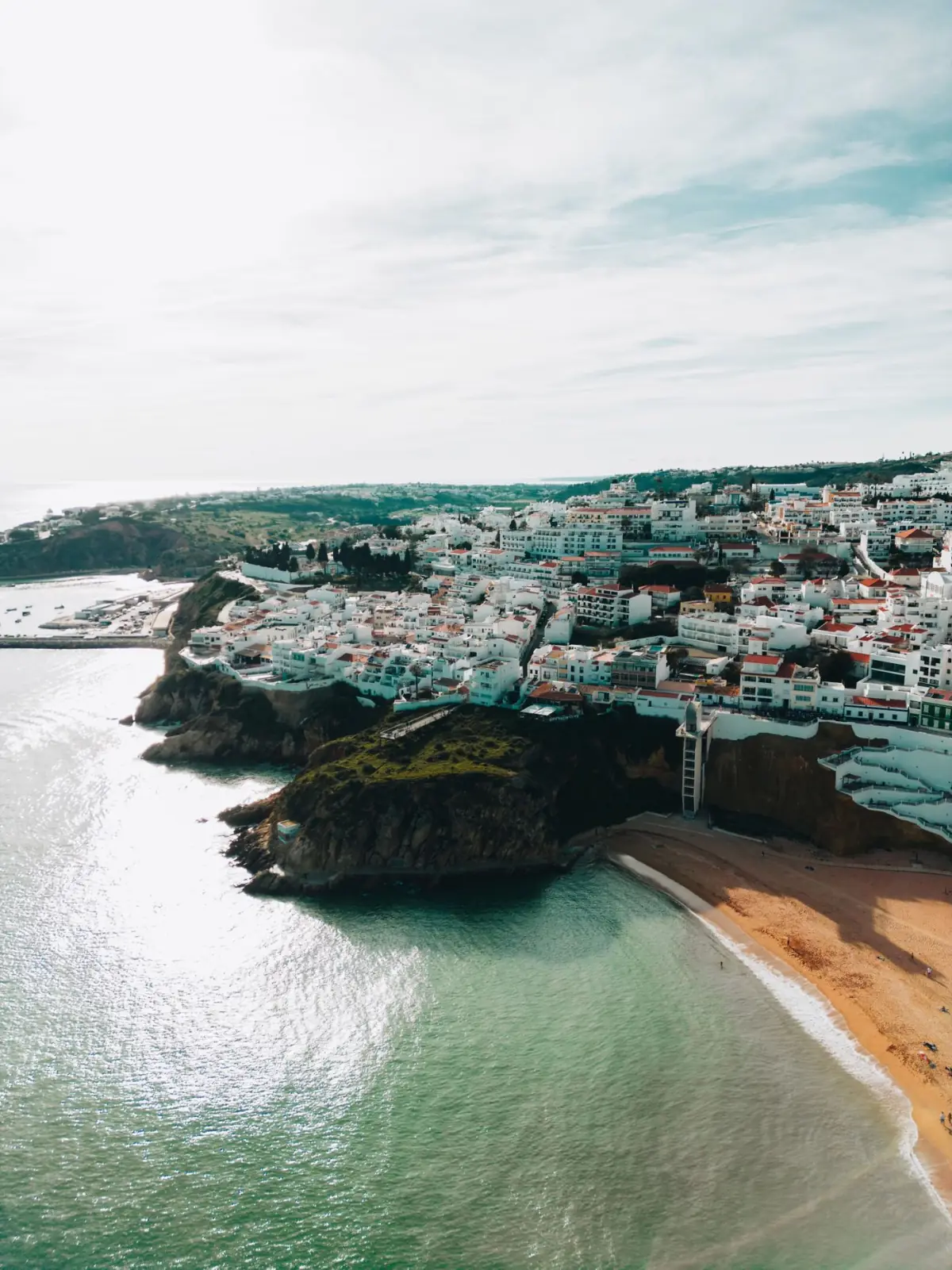
Train and bus combine well for a tight-budget trip or one without a driving licence, especially on the Faro–Olhão–Tavira axis. For longer distances or remote beaches, they still lose out to the car, but they handle the day-to-day for those who choose a good urban base.
Distances and times between the main towns
The Algarve can be crossed in around 1h30 by car between Sagres, in the west, and Vila Real de Santo António, in the east, via the A22. Knowing the distances between towns helps decide how many bases to set up: staying in the middle (Albufeira, Vilamoura) cuts the journeys, while basing yourself at one end forces long trips to see the other side.
| Route | Distance | Time by car |
|---|---|---|
| Lagos → Albufeira | ~50 km | ~40 min |
| Albufeira → Faro | ~40 km | ~35 min |
| Faro → Tavira | ~35 km | ~30 min |
| Tavira → Vila Real de Santo António | ~25 km | ~25 min |
| Lagos → Sagres | ~35 km | ~35 min |
| Vilamoura → Carvoeiro | ~35 km | ~35 min |
| Sagres → Vila Real de Santo António (end to end) | ~150 km | ~1h30 |
These times refer to normal conditions. In July and August, traffic near Albufeira, Vilamoura and on the exits to the beaches can lengthen the duration considerably, especially in late morning and at the end of the day. Anyone wanting to see how to fit these distances into a full trip will find a tested plan in the 7-day itinerary, which splits the Algarve into zones.
Getting around without a car: is it possible?
Yes, it's possible to holiday in the Algarve without a car, as long as you choose the base well and adjust your expectations. A town with a beach, restaurants and a train station on the doorstep — like Tavira, Faro or Olhão — allows whole days without a steering wheel, topped up by train and bus for the odd outing.
The best bases for those who don't drive
The Sotavento is the friendliest area for those who don't drive, because Faro, Olhão and Tavira have a central station and boat connections to the barrier islands of the Ria Formosa. The Sotavento guide shows how to combine train and ferry to reach the island beaches without a car. In the Centre, Albufeira and Vilamoura offer buses to the beaches in summer and plenty to do on foot.
- Taxi and ride-hailing (Uber, Bolt) work in the larger towns and at the airport, handy for short trips or at night.
- Bicycle: the flat Sotavento (Tavira, Cabanas, the coastal ecovia cycle path) is great for pedalling between beaches.
- Boat: regular ferries link Faro, Olhão and Tavira to the islands of the Ria Formosa.
- Private transfers: worth it for groups that only need the airport–home journey.
What you lose without a car are the wild beaches, the Costa Vicentina and the freedom to change plans at the last minute. If your aim is to rest in a town and walk to the beach, doing without the car is not only possible but cheaper and more relaxing.
Where to stay depending on your transport
The choice between car and public transport should guide the choice of home. Those who hire a car gain the freedom to stay in a villa outside the centre or by a quieter beach; those who don't drive should prioritise towns with a train station and everything on foot. Faro is, in this respect, the most practical base for those arriving by plane who want to stay without a car: it's 3 km from the airport, has a central station and a direct link to the Ria Formosa.
In our inventory, there are practical apartments in Faro, such as a 2-bedroom apartment of 100 m² and a 2-bedroom apartment of 106 m², both a few minutes from the airport and the centre — ideal for those who land and want to start the holiday without depending on the car. For those who prefer the comfort of their own kitchen near transport, these homes sort out the logistics of arrival.
Real-time availability and prices on Homing — book direct, cheaper than Booking, Airbnb and Hotels.com. Click «See dates and price».
Booking these homes is done direct on Homing, our official partner, without the platform commission that Booking, Airbnb and Hotels.com add to the price, and with support in Portuguese, English, French and Spanish. To decide between types and areas, also compare holiday home or hotel and see how much it costs to rent a home in the Algarve.
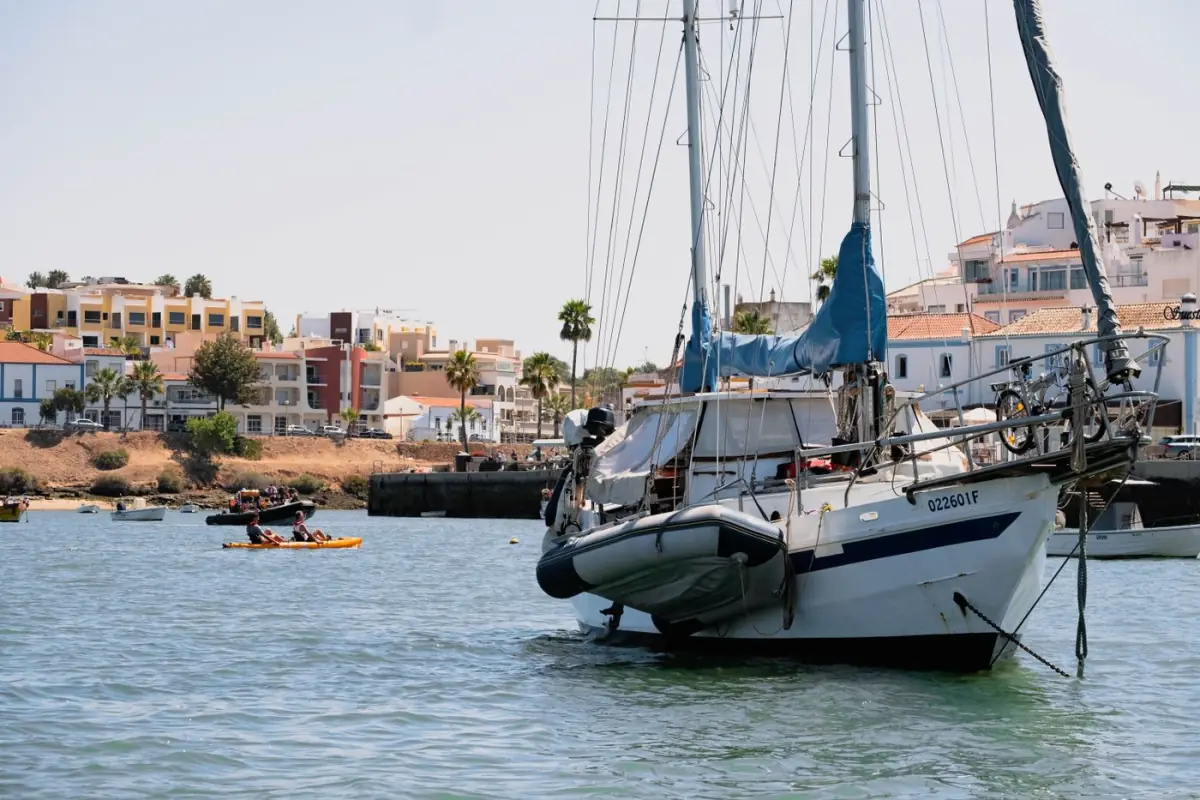
Whatever transport you choose, aligning the base with how you'll get around avoids the frustration of hours lost on the road or waiting for a bus. Decide first how you'll move and only then settle on the home — it's the order that saves time and money.
Practical tips for getting around the Algarve
Three decisions solve most mobility problems in the Algarve: sort out the tolls with the rental, book the car early in the high season and choose the base according to the transport. Those who anticipate these points arrive in the region with the logistics ready and devote their time to the beaches and the towns.
- Sort out the electronic toll at the rental desk — the A22 has no booths and the fine for not paying is avoidable.
- Book the car ahead for June to September, when prices soar and the fleet runs out.
- Check train and bus timetables before relying on them, especially outside the high season and on Sundays.
- Avoid driving at summer peak hours near the beaches and the exits to Albufeira and Vilamoura.
- Use the EN125 and local roads for scenery; the A22 to save time between the ends.
With these basics sorted, getting around the Algarve becomes simple and the region opens up in full, from Sagres to the border with Spain. The next step is to choose the right home for your way of travelling — and, as we've seen, staying near Faro is the safest bet for those arriving by plane without a car.
Sources and references
- ANA Aeroportos — Faro Airport — https://www.ana.pt/pt/fao/inicio
- CP — Comboios de Portugal — https://www.cp.pt/
- Vamus Algarve — Transportes do Algarve — https://www.vamusalgarve.pt/
- Turismo do Algarve (Visit Algarve) — https://www.visitalgarve.pt/
- Wikipedia — Algarve — https://pt.wikipedia.org/wiki/Algarve
- Wikipedia — Aeroporto de Faro — https://pt.wikipedia.org/wiki/Aeroporto_de_Faro
Original editorial article by Maré Algarve, based on official sources (Turismo do Algarve, ICNF, ABAE/Blue Flag, IPMA, INE) and on our experience of holiday rentals in the Algarve. Prices and availability vary — always check each property's page.