
The Sotavento is the eastern half of the Algarve — from Faro to the Spanish border — and stands out for three things the cliff-lined Barlavento doesn't have: a warmer sea (22 to 25 °C at the height of summer), the sheltered lagoon of the Ria Formosa with its barrier islands, and a less touristy pace of life, anchored in towns like Tavira and Olhão. There are no golden cliffs plunging into the sea here; there are wide, flat sands, marshes full of birds, fishing boats and oysters that came out of the lagoon that very morning.
What is the Sotavento of the Algarve and why is it different?
The Sotavento is the eastern sub-region of the Algarve, stretching from Faro to Vila Real de Santo António, on the border with Spain. It differs from the Barlavento — the western half of jagged cliffs — through an entirely different geography: here the coast is low, sandy and protected by a string of barrier islands, rather than limestone cliffs battered by the Atlantic. It's the side of the Algarve where the sea warms most, the beaches widen and tourism eases off.
The great difference is called the Ria Formosa. This coastal lagoon filters the ocean swell and creates calmer, warmer waters than the Barlavento's: at the height of summer, the Sotavento sea runs around 22 to 25 °C, against the typically cooler values to the west, where the Atlantic current hits full on. That's why those fleeing icy water and seeking long, peaceful swims find their place here. It's also why the Sotavento is so often the choice of those travelling with babies and children.
Sotavento, Centro and Barlavento: the three personalities
The Algarve splits into three sub-regions, each with its own character. The Barlavento is the one of golden cliffs, caves and the Costa Vicentina; the Centro — the so-called Golden Triangle — concentrates the liveliest tourism and the golf; the Sotavento is the one of warm sea, islands and riverside life. To see which fits your holiday, it's worth reading our guide Barlavento vs Sotavento, which compares beaches, atmosphere and prices side by side.
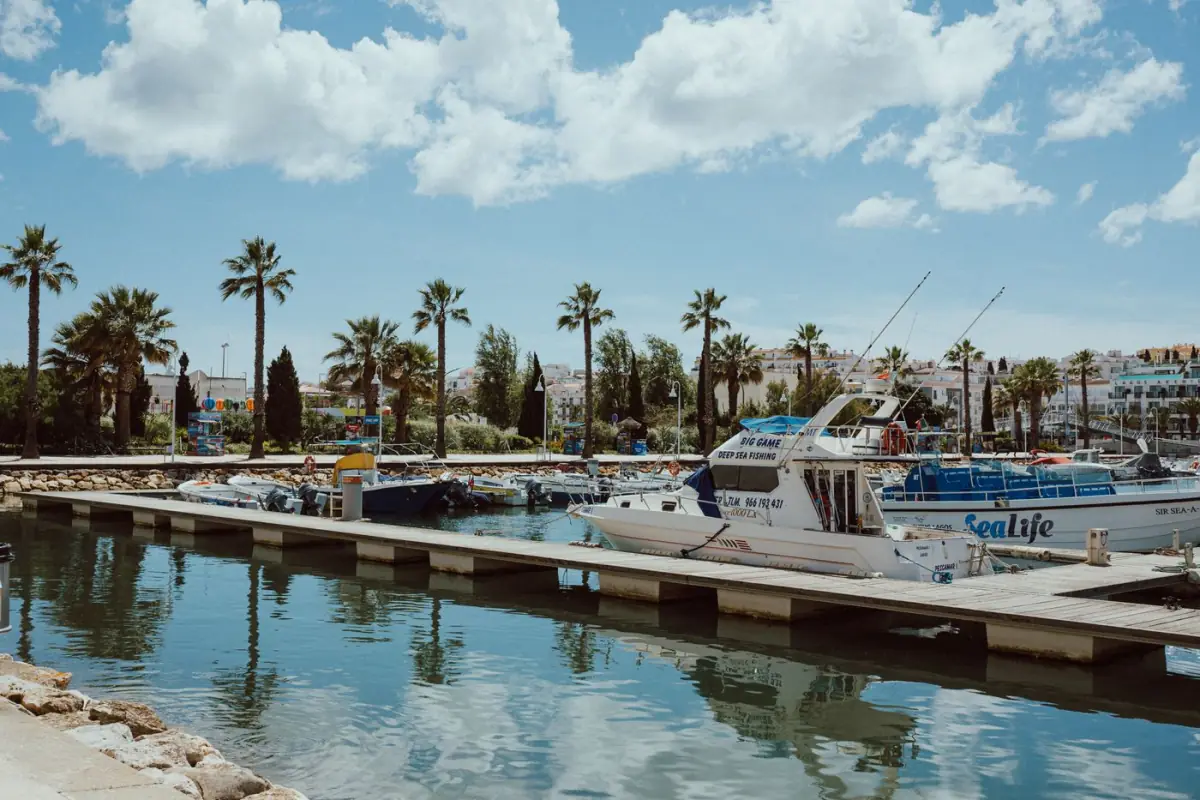
In short, choosing the Sotavento means opting for authenticity over spectacle. You won't find the postcard of the Lagos cliffs here, but you will find an Algarve closer to what it was before the tourism boom: fish markets working early in the morning, salt pans glinting in the sun, islands you reach by boat and a table laden with fresh seafood. It's the Algarve of those who come back.
Tavira: the riverside jewel of the Sotavento
Tavira is the prettiest and most complete town in the Sotavento, with around 26,000 inhabitants and just 31 km from Faro Airport. Crossed by the river Gilão and marked by a bridge of Roman origin, it joins a historic centre of churches, cobbled streets and pyramid-tiled roofs to a riverside front of terraces. It's the perfect base for those wanting island beach and town charm in the same day.
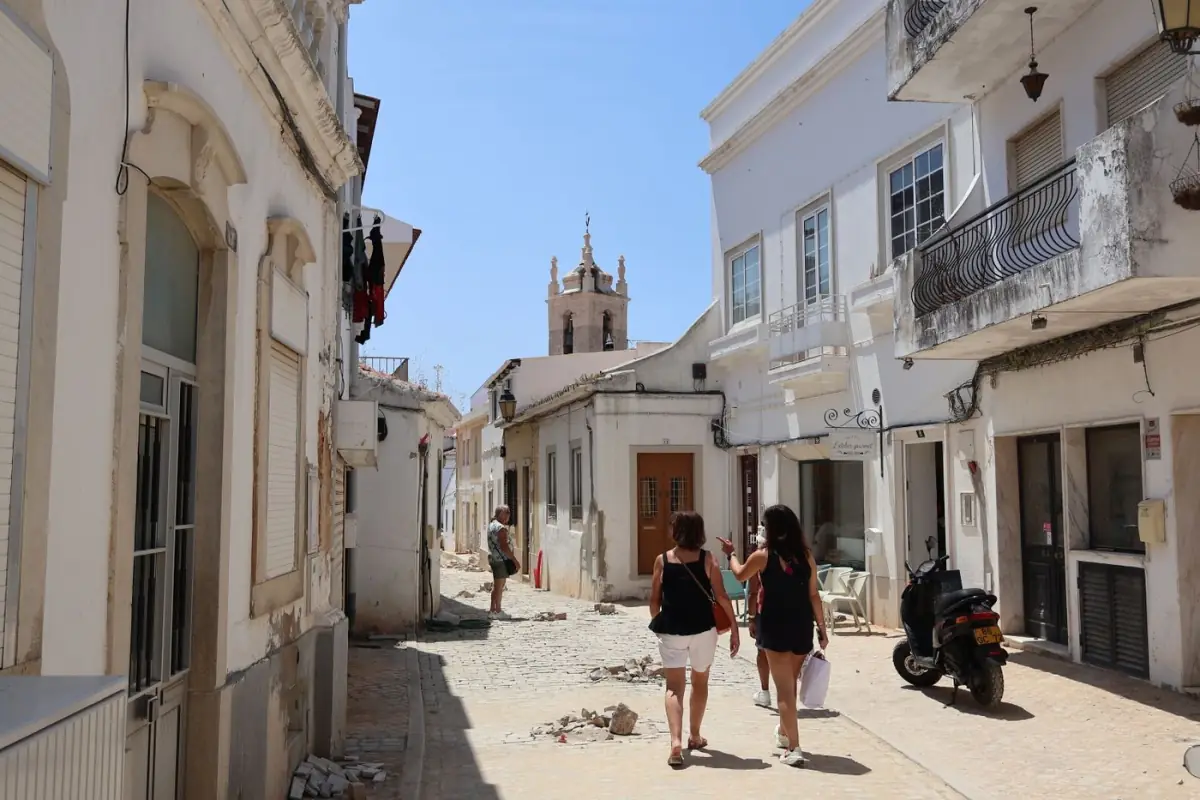
What to see in Tavira's historic centre
Start at the bridge over the Gilão, climb up to Tavira Castle for the view over the rooftops and the Ria Formosa, and visit the Church of Santa Maria do Castelo. The centre is compact and walkable in a couple of hours, with essential stops at the terraces of Praça da República and the old Mercado da Ribeira, now a gallery of shops and restaurants. In the late afternoon, the soft light over the white houses explains why so many travellers choose Tavira to return to.
The Ilha de Tavira, the beach you reach by boat
Tavira's beach isn't in the town: it's the Praia da Ilha de Tavira, a barrier island of very wide sand a few minutes by boat from Quatro Águas or Santa Luzia. The ferry runs more frequently in summer and the crossing is part of the experience. Those who prefer to arrive on foot can use neighbouring Cabanas de Tavira, linked to its island by a walkway over the lagoon.
To settle in with this programme to hand, Tavira and its surroundings offer everything from apartments in the centre to homes near the lagoon. The inventory grows in the neighbouring parishes, such as Santa Luzia and Cabanas, where proximity to the islands is even greater. Further on we point out the specific homes we recommend for this area.
Olhão, the markets and the islands
Olhão is the fishing capital of the Sotavento and has the best fish and seafood markets in the Algarve. With around 45,000 inhabitants and just 11 km from Faro Airport, it's a working town, of cubic North African-inspired architecture, facing the Ria Formosa. It doesn't live off urban-beach tourism — it lives off the sea — and so it offers a rawer, more genuine experience than the resorts of the Centro.
The two markets by the lagoon
The two red-brick pavilions on Olhão's riverside front, from the early 20th century, are the heart of the city: one given over to fish and seafood, the other to fruit, vegetables and regional produce. Early in the morning, you see the catch arriving — sea bass, gilthead bream, tuna, octopus, clams and the famous oyster from the lagoon. On Saturdays, the market spills onto the street and gains producers' stalls. It's the best lesson in Algarve gastronomy you can have, and it's free.
Culatra and Armona: the islands from Olhão
From Olhão, regular boats leave for two barrier islands of the Ria Formosa: Armona, closer and with a holiday village, and Culatra, where a permanent fishing community still lives and no cars circulate. Both have beaches of wide sand and a calm sea on the lagoon side and gentle swell on the ocean side. They're full-day destinations: take water, a hat and lunch booked at one of the island's fish restaurants, because the return runs to the rhythm of the ferry.
Olhão is also the cheapest base for transfers for those arriving by plane, given the short distance to the airport. For those who favour contact with the Ria Formosa and the food over the beach on the doorstep, it's a smart choice — and increasingly sought after by those wanting the Algarve off the beaten track.
The Ria Formosa and the barrier islands: what makes the Sotavento unique
The Ria Formosa is a coastal lagoon around 60 km long, classified as a Nature Park and managed by the ICNF, stretching from Faro to Cacela Velha. It's a system of marshes, channels, salt pans and five barrier islands that separate the lagoon from the ocean: Barreta (or Deserta), Culatra, Armona, Tavira and Cabanas. It's these islands that, by filtering the swell, create the calm, warm waters that define the Sotavento.
More than a landscape, the Ria Formosa is one of the most important bird sanctuaries in Portugal. In the marsh and the salt pans you can spot flamingos, spoonbills, herons and the rare swamphen (the purple gallinule), the park's symbol. The traditional salt pans still produce salt and fleur de sel, and the lagoon's beds sustain much of the clams and oysters eaten in the country. To go deeper, read our dedicated guide to the Ria Formosa.
How to visit the Ria Formosa without harming the park
The best way to get to know the lagoon is on a boat trip from Faro, Olhão or Tavira, or by kayak through the channels — options that respect the park's balance. There are footpaths and cycle paths beside the salt pans and the Marim environmental education centre, in Olhão. As it's a protected area, there are rules: don't stray off the paths, don't gather bivalves without a licence and respect the birds' nesting zones at the start of summer.
Understanding the Ria Formosa is understanding the whole Sotavento: from it comes the warm sea, in it lie the island beaches, from it comes the seafood on the table. Those who plan the trip around the lagoon — and not just the beach — take home the most authentic Algarve there is.
Wide sands and warm sea: the best beaches of the Sotavento
The beaches of the Sotavento are, for the most part, barrier islands of very wide, flat, white sand, with a calm, warm sea — the opposite of the narrow coves between cliffs of the Barlavento. They're ideal for families with small children, for long walks along the shore and for those wanting space, even in August. Most fly the Bandeira Azul, awarded by ABAE for the quality of the water and the services.
| Beach | Town / access | Profile |
|---|---|---|
| Praia da Ilha de Tavira | Boat from Tavira or Santa Luzia | Immense sand, calm sea, ideal for families |
| Praia de Cabanas | Walkway/boat from Cabanas de Tavira | Barrier island, easy access on foot |
| Praia de Monte Gordo | On foot in Monte Gordo town | Wide urban sand, one of the warmest seas |
| Ilha da Culatra/Armona | Ferry from Olhão | Full day, fishing atmosphere |
| Praia da Barreta (Deserta) | Boat from Faro | Wild, no buildings |
Of them all, the Praia de Monte Gordo is the one that combines the warmest sea with the easiest access: it sits right at the edge of the town, with no boat needed, and the sand is so extensive that it absorbs the summer demand without feeling crowded. For a selection of the most spectacular beaches in the whole Algarve, see also our guide to the best beaches and the article on the most beautiful beaches.
It's worth remembering a difference in logistics against the Barlavento: here many beaches are reached only by boat, with ferry timetables and tides to reckon with. That keeps the crowds away and rewards those who plan, but it requires arriving early and confirming the last crossing back. It's a small price to pay for sands that look deserted even at the peak of summer.
The food of the Sotavento: oysters, tuna and octopus
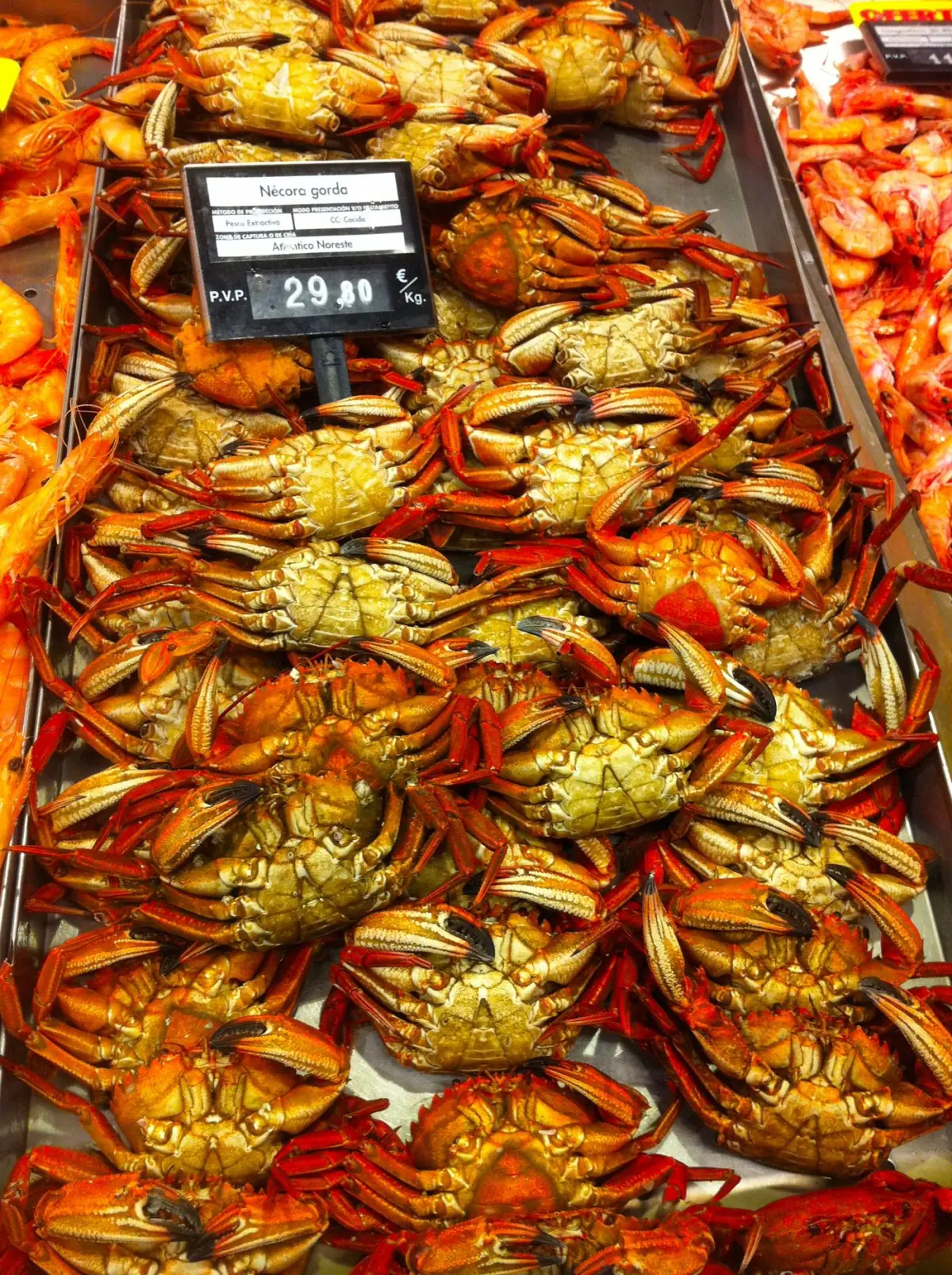
The cooking of the Sotavento revolves around what the Ria Formosa and the sea give every day: oysters, clams, tuna, octopus, cuttlefish and fish grilled over charcoal. It's a simple, honest cuisine, without elaborate sauces — freshness is the star. Eating in the Sotavento is, in good part, the very reason to visit it, and it's rarely expensive away from the more touristy terraces.
The oysters of the Ria Formosa
The Ria Formosa is today the main oyster nursery in Portugal, with much of the production going on to export. You can try them freshly shucked in various restaurants in Olhão, Fuzeta and Tavira, often with a view over the beds they came from. They're one of the best examples of "sea to table" the country has, and a reason to travel in themselves for those who love seafood.
Santa Luzia, the octopus capital
A few kilometres from Tavira, Santa Luzia is known as the "octopus capital": fishing with alcatruzes (clay pots) is a local tradition and the riverside restaurants serve octopus every which way — à lagareiro, grilled, in rice or in salads. It's a fishing village of barely more than 1,500 inhabitants, perfect for a leisurely lunch facing the lagoon and the boats.
Add to all this the tuna of Vila Real de Santo António and the sweets of Arab origin — Dom Rodrigo, almond and fig morgados — and you see that in the Sotavento you eat as well as anywhere in the Algarve. To go deeper into dishes and where to try them, read our guide on what to eat in the Algarve.
Where to stay in the Sotavento of the Algarve?
To stay close to the islands and the warm sea, the best bases in the Sotavento are Santa Luzia, Cabanas de Tavira and Monte Gordo — all a short distance from the island beaches and Faro Airport. Tavira is the choice for those wanting a town with charm; Olhão, for those favouring markets and lagoon; Monte Gordo, for those wanting the beach on the doorstep and the warmest sea on the coast.
The apartment is the most common and economical type of accommodation in the Sotavento, ideal for couples and families who value being a few steps from the beach and the lagoon. Those after more space also find villas and townhouses in the parishes of Tavira. In any case, renting a home with a kitchen gives the freedom to cook the seafood from the market — a real advantage over the hotel.
Real homes we recommend in the Sotavento
In our inventory, we highlight homes in Santa Luzia, Cabanas and Monte Gordo, beside the best island beaches. The 2-bedroom apartment with private pool in Santa Luzia, at 60 m², sits a step from the boarding point for the Ilha de Tavira and the best octopus seafood restaurants. In Cabanas, the 2-bedroom apartment at 102 m² offers generous space a few minutes from the walkway to the island. And for those bringing a larger group, the 3-bedroom apartment in Monte Gordo puts you facing the widest sand and the warmest sea in the Algarve.
Real-time availability and prices on Homing — book direct, cheaper than Booking, Airbnb and Hotels.com. Click «See dates and price».
All these homes are booked direct on Homing, our official partner, with no platform commission and no hidden fees — which usually comes out cheaper than booking through Booking, Airbnb or Hotels.com, with support in Portuguese, English, French and Spanish. Before confirming dates, check the prices and availability on each home's page, and also see our general guide on where to stay in the Algarve.
Sotavento or Barlavento: which to choose for your holiday?
Choose the Sotavento if you're after a warm sea, wide-sand beaches, seafood gastronomy and a calm, authentic atmosphere; choose the Barlavento if you want the golden cliffs, the caves of Benagil and a more spectacular setting for photographs. There's no universal answer — it depends on what makes a holiday yours. The good news is that the Algarve is narrow, and even from one end to the other it's about a two-hour drive.
| Criterion | Sotavento (east) | Barlavento (west) |
|---|---|---|
| Sea | Warmer (22–25 °C), calm | Cooler, with swell |
| Coast | Wide sands, barrier islands | Cliffs and coves |
| Atmosphere | Calm, authentic | Lively, touristy |
| Highlight | Ria Formosa, Tavira, Olhão | Benagil, Lagos, Sagres |
| Ideal for | Families, seafood, quiet | Adventure, scenery, nightlife |
For those with a week, the best strategy may even be not to choose: split the holiday into two bases, one to the west and one to the east, as we propose in the 7-day itinerary. That way you get to know the cliffs and the islands on the same trip. But if your holiday is shorter, or if you're travelling with small children, the Sotavento and its warm sea are almost always the safer bet.
There are also those who make the Sotavento their base and use the car for the odd getaway to the Barlavento and the hills. As the Algarve beyond the beach is rich too — salt pans, castles, vineyards and the Monchique hills — it's worth setting aside a day to leave the sand, as we suggest in the article on what to do in the Algarve beyond the beach.
How to get to and around the Sotavento of the Algarve?
The Sotavento is the part of the Algarve closest to Faro Airport, which makes arrival quick and cheap: Olhão is 11 km off, Tavira 31 km and Monte Gordo about 49 km. By plane, you land in Faro and continue by rental car, bus or train. The Algarve railway line, linking Lagos to Vila Real de Santo António, crosses the whole Sotavento with stops in Faro, Olhão, Fuzeta, Tavira and Monte Gordo.
For those staying in a town and wanting to catch boats to the islands, a car isn't strictly compulsory — the train links the main places and the ferries do the rest. Even so, a rental car gives the flexibility to visit Cacela Velha, the salt pans of Castro Marim or the hills. Park it and get around on foot or by bicycle within the towns, which are compact and flat, unlike the slopes of the Barlavento.
- Land in Faro and pick up the rental car or continue by train to your town.
- Settle in at Santa Luzia, Cabanas, Tavira, Olhão or Monte Gordo, according to your profile.
- Catch the boat to the island first thing in the morning, confirming the time of the last return.
- Set aside time for markets, oysters and a stroll along the Ria Formosa in the late afternoon.
With these steps, you organise a whole week in the Sotavento with no stress and no long journeys. The proximity to the airport and the compactness of the towns make this the easiest sub-region to visit in the Algarve — and one of the most rewarding for those seeking the genuine side of the Portuguese south coast.
Sources and references
- Turismo do Algarve (Visit Algarve) — https://www.visitalgarve.pt/
- ICNF — Parque Natural da Ria Formosa — https://www.icnf.pt/
- Wikipedia — Ria Formosa — https://pt.wikipedia.org/wiki/Ria_Formosa
- Wikipedia — Algarve — https://pt.wikipedia.org/wiki/Algarve
- Wikipedia — Tavira — https://pt.wikipedia.org/wiki/Tavira
- Wikipedia — Olhão — https://pt.wikipedia.org/wiki/Olh%C3%A3o
- ABAE — Bandeira Azul — https://bandeiraazul.abae.pt/
Original editorial article by Maré Algarve, based on official sources (Turismo do Algarve, ICNF, ABAE/Blue Flag, IPMA, INE) and on our experience of holiday rentals in the Algarve. Prices and availability vary — always check each property's page.