
Tavira is the most charming town in the Sotavento Algarve: it sits about 31 km from Faro Airport, has 26,000 inhabitants and keeps a historic centre of churches, tiles and a Roman bridge over the Gilão river. A few minutes away, Tavira Island offers kilometres of sand inside the Ria Formosa Natural Park, and Santa Luzia serves the region's finest octopus.
This guide explains what makes Tavira different from the rest of the Algarve, how to reach the island beaches, where to taste the local food and which areas are worth renting a home in, whether for couples or families.
Why is Tavira the most charming town in the Sotavento?
Tavira is the most charming town in the Sotavento because it escaped the over-building that marked much of the central Algarve. With around 26,167 inhabitants, it's a real city, lived in all year round, where the historic centre runs on churches, scissor-truss roofs, riverside gardens and the famous bridge over the Gilão river. It's roughly 31 km from Faro Airport, close enough to be practical and far enough to keep its own rhythm.
What sets Tavira apart from Albufeira or Praia da Rocha is its relationship with water. Here there are no postcard cliffs or beaches glued to the road: there's a lagoon, a maze of channels and salt marshes, and a sand island rising between the mainland and the open sea. You reach the beach by boat, and that changes everything — it separates those after the Algarve's bustle from those after something else.
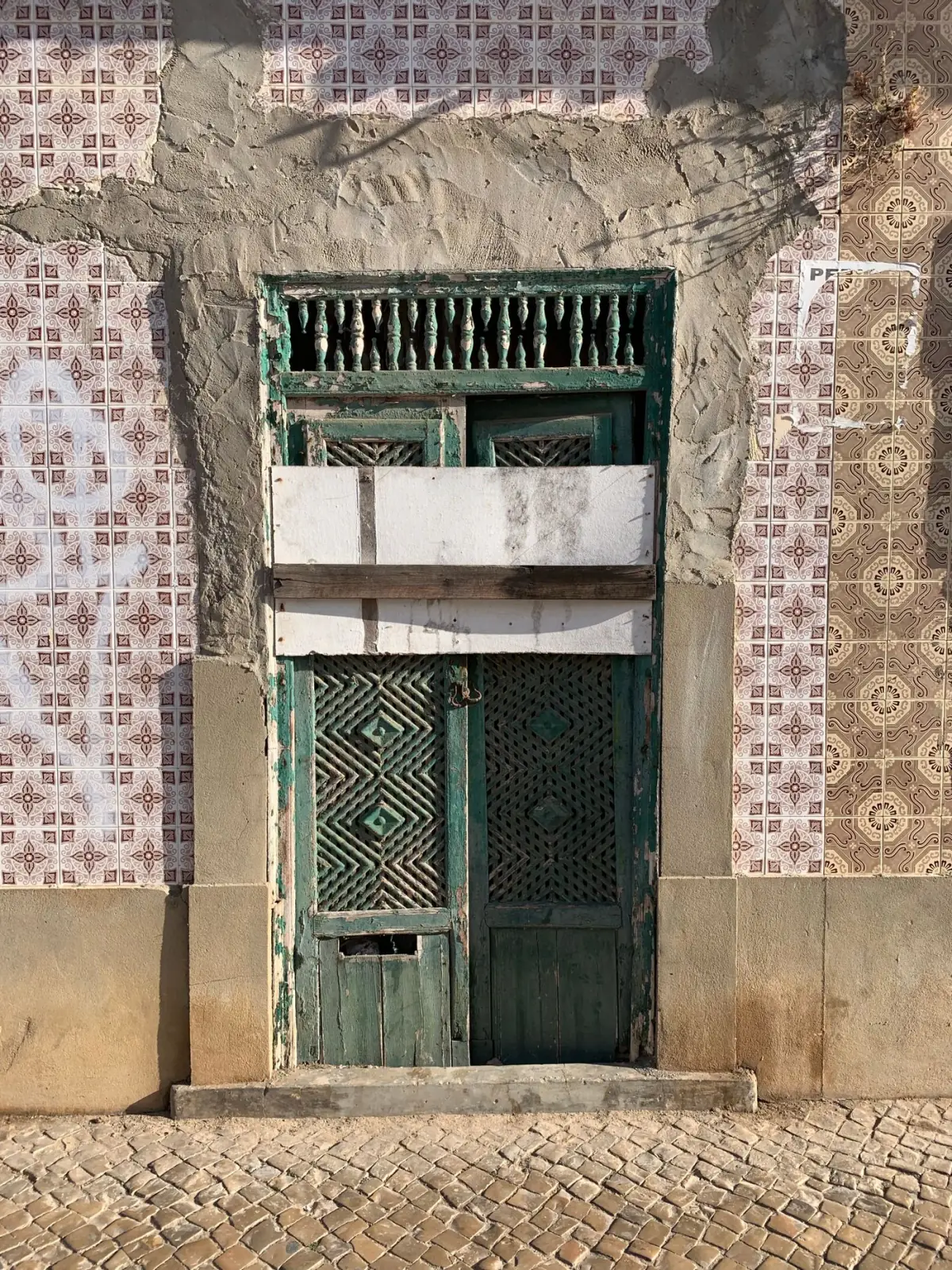
Tavira is part of the Sotavento Algarve, the strip east of Faro where the sea is warmer and calmer than in the Barlavento. It's a destination for those who want the beach without giving up a town with life, a market, terraces and history. To understand this difference between the region's two halves better, our guide to the authentic side of the Sotavento is worth a read.
What to see in the historic centre and on the Roman bridge?
The heart of Tavira is the Praça da República and the bridge over the Gilão river, known as the Roman bridge even though the current structure is medieval, set on ancient foundations. From here you climb through the narrow lanes to the castle and the area of churches — Tavira is nicknamed the city of churches for the number of temples packed into a compact centre, easy to cover on foot in a morning.
What not to miss on foot
- The bridge over the Gilão and the Praça da República, with terraces facing the river
- The castle of Tavira and the viewpoint, overlooking the rooftops and the lagoon
- The Church of Santa Maria do Castelo and the Church of the Misericórdia, in the historic core
- The Ribeira Market, by the river, for fish and local produce
- The four-pitch scissor-truss roofs, a unique architectural hallmark of the city
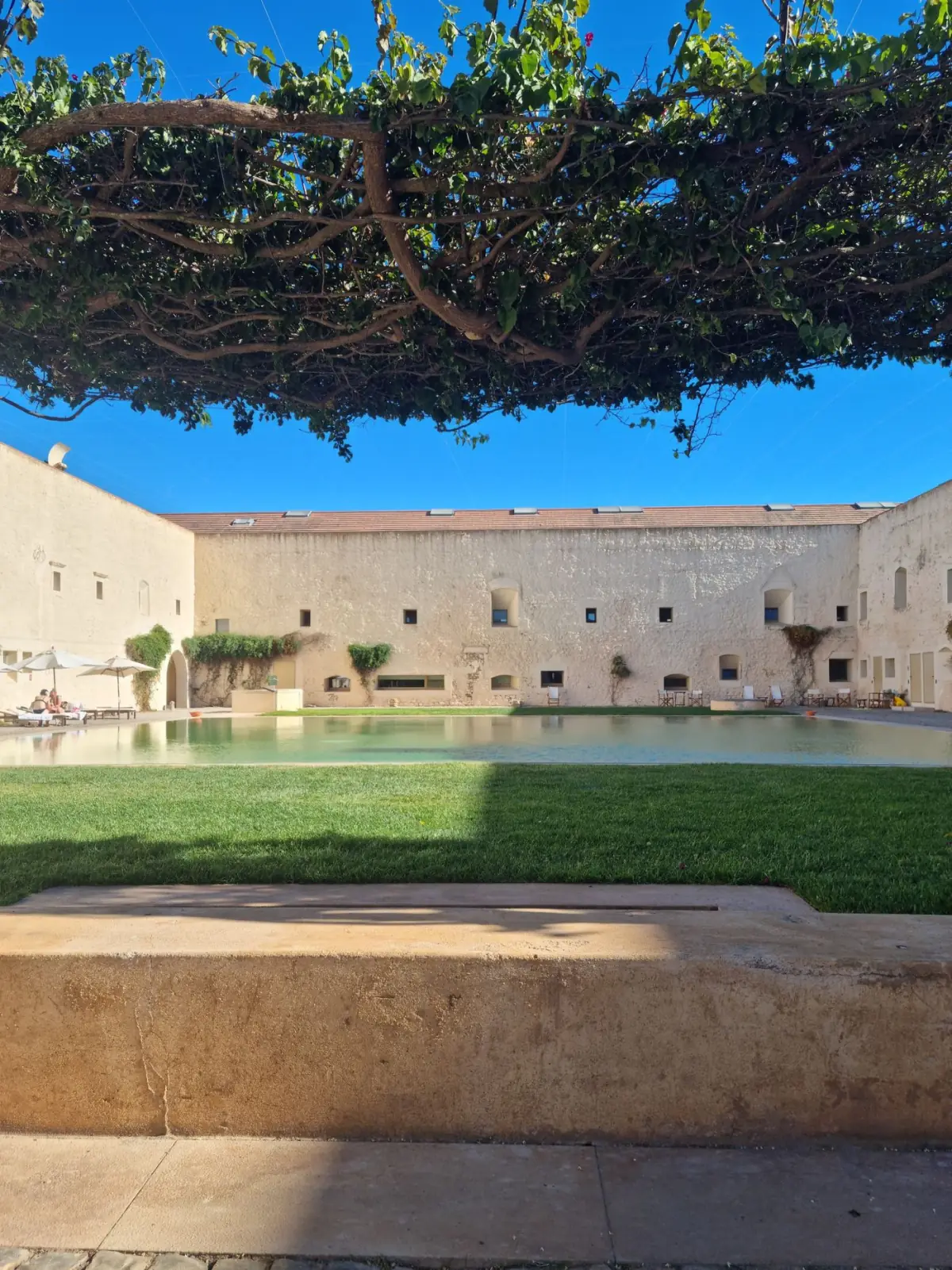
Walking the centre on foot is the best way to feel the scale of the city: everything is a few minutes away, and in late afternoon the light over the Gilão justifies an unhurried terrace. Those who rent a home in the centre have this scene at their door — an advantage that shows above all out of high season, when the town breathes at its own pace.
How do you reach Tavira Island and its beaches?
Tavira Island is a barrier island inside the Ria Formosa Natural Park and is reached only by boat. There are regular summer connections from the Quatro Águas quay (east of the centre) and from Santa Luzia, with short crossings of a few minutes. On the seaward side, the island has fine white sand, dunes and a calm, warm sea — one of the longest and quietest beaches in the Algarve.
The beach on Tavira Island is often named as one of the most beautiful in the region, and it earns its place in our selection of the most beautiful beaches in the Algarve. Being an island, it stays wild: there is beach support in the main area near the quay, but a few minutes' walk is enough to find an almost empty shore even in August.
| Departure point | How you reach the sand | Profile |
|---|---|---|
| Quatro Águas (Tavira) | Boat to Tavira Island — short crossing | Wide beach, support in the quay area |
| Santa Luzia | Beach train or boat to Praia do Barril | Long sands, anchors of the old fishing camp |
| Cabanas de Tavira | Boat to the Cabanas island | Sheltered lagoon beach, ideal for families |
It pays to plan the crossing with the tide and the boat times in mind, especially outside the peak of summer, when the frequency of connections drops. To fit Tavira into a longer coast-to-coast route, our driving itinerary from Sagres to VRSA shows how to slot the island and the lagoon into a multi-day trip.
Why is Santa Luzia the octopus capital?
Santa Luzia is known as Portugal's octopus capital because much of the traditional catch using alcatruzes — the clay pots where the octopus shelters — has always come out of this port. The village sits about 29 km from Faro Airport, has close to 1,589 inhabitants and lives off the lagoon: the riverside front lines up restaurants where octopus is the star as rice, à lagareiro, grilled or in cold salads.

Eating in Santa Luzia is an outing in itself: you sit by the lagoon, pick the octopus and follow the comings and goings of the fishing boats. It's also here that you catch the beach train or the boat to Praia do Barril, where the old fishermen's camp gave way to the famous anchor cemetery. For those who want to explore the Algarve table in depth, our guide to where to eat fresh seafood in the Algarve offers leads across the whole region.
Santa Luzia is a discreet and authentic base for those who put food and quiet first. It has less nightlife than Tavira, but it makes up for it with closeness to the lagoon and rental homes with a pool a few steps from the freshest octopus on the coast.
How do you explore the Ria Formosa from Tavira?
The Ria Formosa dominates the entire Tavira waterfront: it's a lagoon system of salt marshes, barrier islands, salt pans and channels stretching along the Sotavento and is a classified Natural Park, managed by the ICNF. From Tavira you explore it in several ways — boat trips through the channels, walking and cycling routes across the marshes, birdwatching and visits to the traditional salt pans where fleur de sel is still produced.
Ways to experience the lagoon
- Boat trip through the channels between the mainland and the barrier islands
- On foot or by bike along the trails beside the marshes and salt pans
- Birdwatching — flamingos, herons and waders use the lagoon as a wintering and passage area
- Visit to the salt pans and a tasting of locally produced fleur de sel
The lagoon is a living, protected ecosystem, so it's worth respecting the access points and the signs, above all in the dunes and nesting areas. To grasp the web of islands and channels linking Tavira to Olhão and Faro, our guide to the Ria Formosa maps the main departure points and what to see at each one.
This closeness to the lagoon is what sets a holiday in Tavira apart from an ordinary beach holiday: the warm, calm sea is only half the story — the other half is this maze of water that opens up right at the edge of town.
Is Tavira better for couples or for families?
Tavira works well for both, but for different reasons. For couples, it offers a historic centre for calm dinners, riverside terraces, an island beach without the crowds and the slow pace missing in the central Algarve — it's a place to rest, not to party. For families, the great advantage lies in the sheltered lagoon: Cabanas de Tavira has a beach of shallow sand and calm water, ideal for children, and the boat crossing is an adventure in itself.
| Criterion | Couples | Families |
|---|---|---|
| Suggested base | Centre of Tavira or Santa Luzia | Cabanas de Tavira |
| Beach | Tavira Island (wilder) | Cabanas / sheltered lagoon |
| Atmosphere | Calm dinners, slow pace | Shallow shore, safety in the water |
| Not to miss | Octopus in Santa Luzia, sunset on the Gilão | Boat to the island, lagoon without waves |
Those travelling with children will find more ideas in our Algarve with children guide, while couples after quiet getaways can take inspiration from the Algarve for couples guide. In both cases, Tavira delivers a more serene version of the Algarve, far from the intensity of the Golden Triangle.
Where to stay in Tavira and its surroundings?
The three most practical bases are the centre of Tavira (town, history and terraces at the door), Santa Luzia (food, lagoon and quiet, 29 km from the airport) and Cabanas de Tavira (sheltered lagoon beach, ideal for families, 35 km from the airport). The choice depends on what you're after: town life, a riverside table or a safe beach for the little ones.
Real homes in Santa Luzia and Cabanas
In our inventory, Santa Luzia has practical options such as the 1-bedroom apartment with pool in Santa Luzia and the 1-bedroom studio with pool, both compact and a few steps from the lagoon front — perfect for couples who want the octopus at their door. In Cabanas de Tavira, the 1-bedroom apartment in Cabanas de Tavira puts the sheltered lagoon beach within a short crossing's reach, a good base for families.
Real-time availability and prices on Homing — book direct, cheaper than Booking, Airbnb and Hotels.com. Click «See dates and price».
All these homes are available with booking direct on Homing, our official partner — with no platform commission and cheaper than Booking, Airbnb or Hotels.com, with support in Portuguese, English, French and Spanish. Prices vary with the dates, so confirm the rates and availability on each home's page. Those who want to see more options can browse the apartments in Santa Luzia, the options in Cabanas de Tavira or the general rental hub for Tavira.
Whatever the base, booking early pays off: the Sotavento has fewer beds than the central coast and the best homes with a pool sell out first for July and August. To understand how prices move over the year, see our calendar of when to book your Algarve holiday.
When to go to Tavira and how long to stay?
The best time for Tavira runs from May to October, when the Sotavento sea is warmer and the boat crossings to the island run frequently. July and August are the peak months — packed beach in the quay area and prices at their highest — while May, June and September offer the best balance of climate, calm and cost. Off-season, the town stays alive because it's a real city, even if the boat connections grow scarce.
For a balanced stay, three to four nights are enough for the essentials: historic centre, Tavira Island, octopus in Santa Luzia and a trip on the lagoon. Those using Tavira as a base to explore the Sotavento — Olhão, Cacela Velha, Vila Real de Santo António — should count on five to seven nights. If the dates fall in summer and there are still doubts about climate and crowds, the Algarve off-season guide helps you decide.
Tavira rewards those who stay and slow down. It's not a town of intense programmes: it's a place to alternate island beach, octopus dinners and lagoon afternoons, and so it wins when you give it time rather than treating it as a quick stop on a route.
Sources and references
- Turismo do Algarve (Visit Algarve) — https://www.visitalgarve.pt/
- ICNF — Parque Natural da Ria Formosa — https://www.icnf.pt/
- Wikipedia — Tavira — https://pt.wikipedia.org/wiki/Tavira
- Wikipedia — Ria Formosa — https://pt.wikipedia.org/wiki/Ria_Formosa
- Câmara Municipal de Tavira — https://www.cm-tavira.pt/
Original editorial article by Maré Algarve, based on official sources (Turismo do Algarve, ICNF, ABAE/Blue Flag, IPMA, INE) and on our experience of holiday rentals in the Algarve. Prices and availability vary — always check each property's page.