
The best surf beaches in the Algarve are nearly all on the west coast, the Costa Vicentina, between Sagres and Odeceixe. Praia da Arrifana, in Aljezur, and Praia do Amado, in Carrapateira, are the two essential names: they have consistent waves, surf schools open all year and seabeds for every level. The south coast, more sheltered, only works in specific south-westerly swell conditions, as happens at Zavial and Praia da Luz.
This guide sorts the beaches by level — beginner, intermediate and advanced — and by time of year, so you can pick the right spot without wasting a day of your trip hunting for waves.
Where do you surf in the Algarve?
Surfing in the Algarve happens above all on the west coast, along the Costa Vicentina, in the municipality of Vila do Bispo and of Aljezur. Here the coast faces west and takes the North Atlantic swells head-on, which guarantees waves for practically the whole year. The south coast — from Lagos to Vila Real de Santo António — is more sheltered and protected, so it only sees surf on days of strong south-westerly swell.
This difference between the two coasts explains nearly everything. Those after waves every day head west; those wanting calm sea for the family stay in the south. The Sotavento, by the border with Spain, has almost no surf — the beaches of the Ria Formosa and Monte Gordo have a gentle sea, ideal for bathing, not for catching waves.
West coast versus south coast: what's the difference for surfing?
The west coast has more frequent and stronger waves because it's exposed to the open sea; the water is colder and the north wind (the nortada) picks up hard on summer afternoons. The south coast has warmer, calmer water, with small, occasional waves. For a first contact with surfing in sheltered sea, Praia da Luz, near Lagos, works well on days of south-westerly swell.
In practice, most surfers base themselves between Sagres and Aljezur and, depending on the wind and tide of the day, pick the right beach in the morning. That flexibility is what makes the region so sought after by schools and by those travelling just to surf.
Is the Costa Vicentina really the surf mecca?
Yes. The Costa Vicentina is the most consistent surf destination on mainland Portugal south of Peniche, and the Algarve stretch — between Cape St Vincent and Odeceixe — holds the best peaks. This whole strip lies within the Southwest Alentejo and Costa Vicentina Natural Park, managed by the ICNF, which has kept the coast wild, with high cliffs, wide beaches and almost no building by the shore.
Being a protected area has practical consequences for those who surf. Access is limited, parking is on packed earth and there are trails to respect along the cliffs. Sagres and the Costa Vicentina is the natural base for this area, with more accommodation, schools and restaurants on offer than the inland villages of Aljezur.
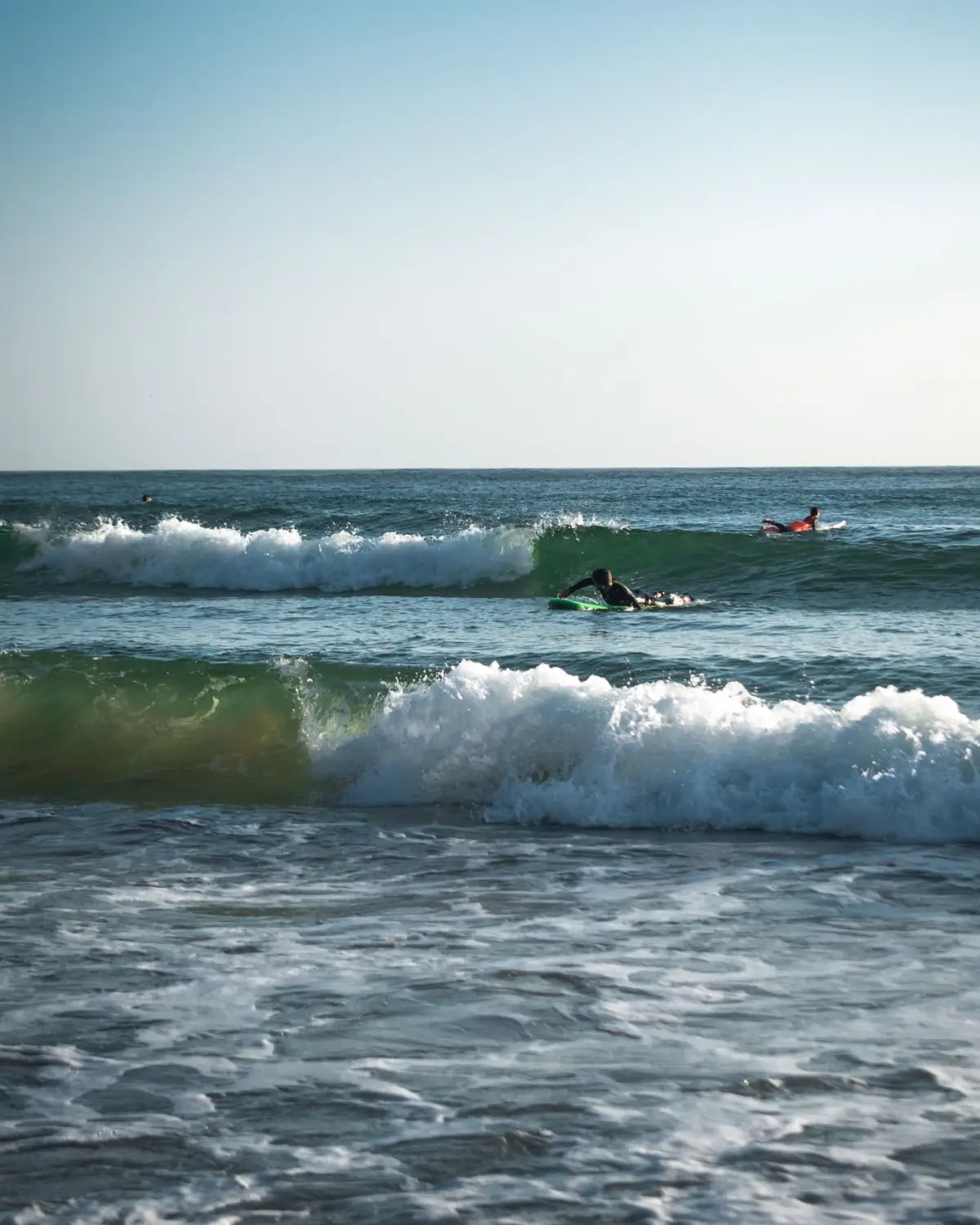
Distances: how far are the surf beaches?
The surf beaches lie at the far west of the Algarve, a long way from the airport. Reckon on around an hour to an hour and twenty by car from Faro. Aljezur is about 81 km from Faro Airport and Sagres 87 km; Odeceixe, at the northern edge, is 85 km. Lagos, halfway, is just 63 km and makes a more comfortable base for those who want to mix surf with city life.
| Base | Municipality | Distance to Faro | Profile |
|---|---|---|---|
| Lagos | Lagos | 63 km | City, lots on offer, surf 20–40 min |
| Monchique | Monchique | 65 km | Mountains, quiet alternative base |
| Aljezur | Aljezur | 81 km | Village, next to Arrifana and Bordeira |
| Odeceixe | Aljezur | 85 km | North of the Costa Vicentina, river and sea beach |
| Sagres | Vila do Bispo | 87 km | South-western tip, several peaks nearby |
These distances show why so many surfers choose Lagos as a base: it's half an hour from the Sagres peaks and a little more from Arrifana, yet it offers supermarkets, restaurants and homes with a pool that the coastal villages don't have. See the options for rentals in Lagos before deciding on a location.
Which are the best beaches for those just starting out?
For beginners, the best beaches are Praia da Arrifana and Praia do Amado, both with surf schools, a sandy bottom and waves that break predictably. They are wide beaches, with bays that shelter part of the swell, which creates safe whitewater zones for first lessons. Praia do Beliche, near Sagres, also works well for beginners on smaller days.
Praia da Arrifana (Aljezur)
Arrifana is the best-known surf beach in Aljezur. It sits in a bay sheltered by a high cliff, which cuts the wind and creates a sand-bottom wave ideal for learning. It has several surf schools, board and wetsuit hire, and a small cluster of restaurants atop the cliff. On big days, the north end (the right by the cliff) gains waves for more advanced surfers, so the beach serves almost every level on the same day.
Praia do Amado (Carrapateira)
Amado, in Carrapateira, is the Costa Vicentina's surf-school beach par excellence. It's wide, open and has several peaks spread along the sands, which lets beginners and intermediates surf without getting in each other's way. This is where many schools take their groups, because the wave is forgiving and there's room for everyone. The car park is on packed earth and fills up early in summer.
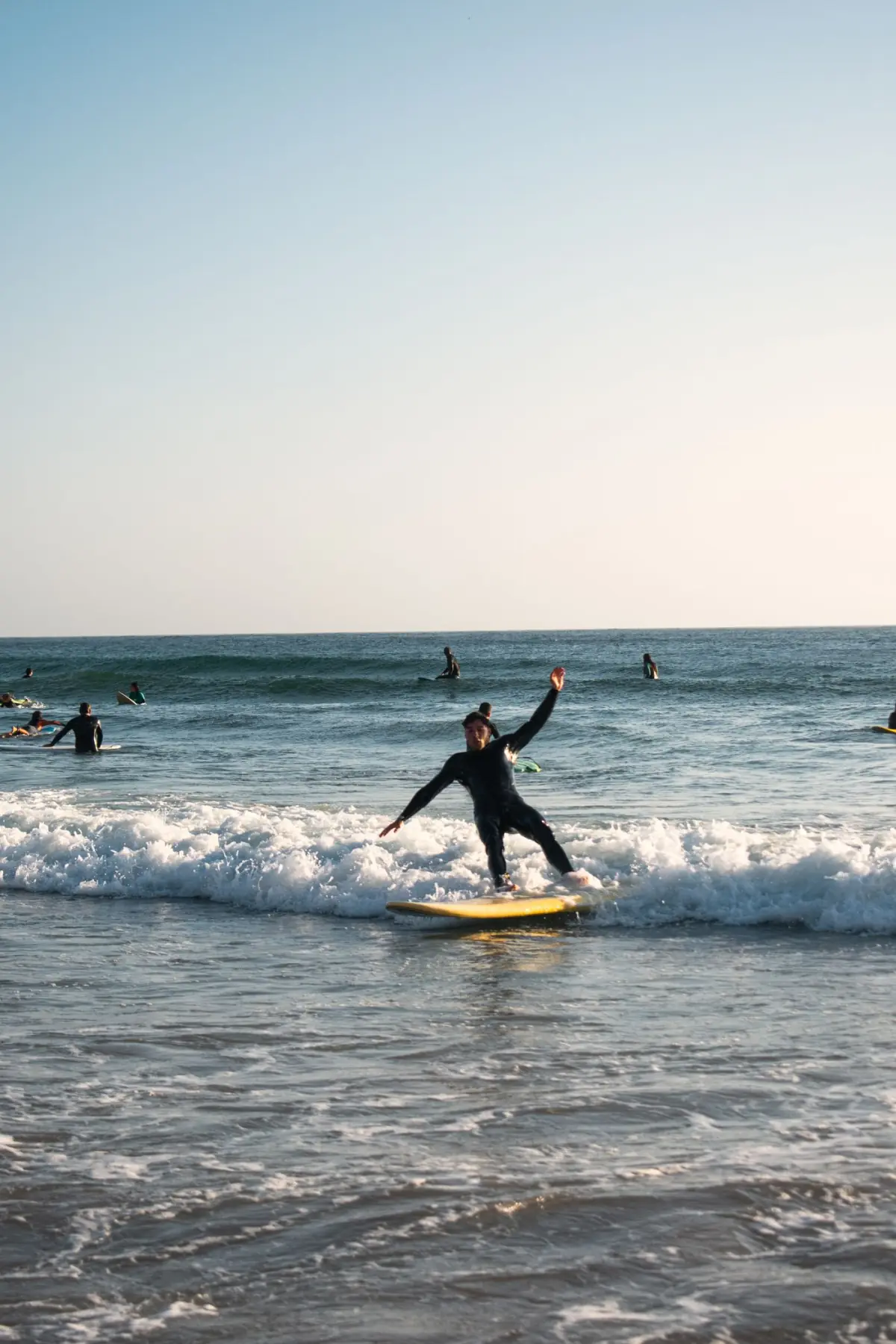
If you're travelling with children or have never picked up a board, start at one of these two beaches with a lesson booked. The combination of an instructor, a sandy bottom and a sheltered bay makes all the difference to how safely and quickly you learn. For days without waves, there are always alternatives in what to do in the Algarve beyond the beach.
And for experienced surfers, where are the best waves?
Experienced surfers find the best waves at the more exposed peaks of Sagres and the west coast: Beliche, Tonel, Castelejo and Cordoama. These are beaches that take the swell full-on, with stronger sets, currents and seabeds that demand reading the sea. On big days, the right at Arrifana and the Bordeira peaks also deliver quality waves for those who already have the take-off mastered.
Tonel and Beliche (Sagres)
Tonel sits on the west side of Sagres and is one of the strongest waves in the area, working best on a falling tide. Beliche, facing north-west in a cove tucked between cliffs, catches swells that other beaches don't get and so rescues many small days on the rest of the coast. Both call for experience: getting in and out of the water, above all at Beliche, is done by trails and steps down the cliff.
Castelejo and Cordoama (Vila do Bispo)
Castelejo and Cordoama, north of Sagres, are wide, powerful beaches, with fast waves and sands that shift a great deal with the tides. They're spots for surfers confident in size. They have little infrastructure — a restaurant at Castelejo and not much else — which reinforces the wild side of the Costa Vicentina and keeps the crowd lower than at Arrifana.
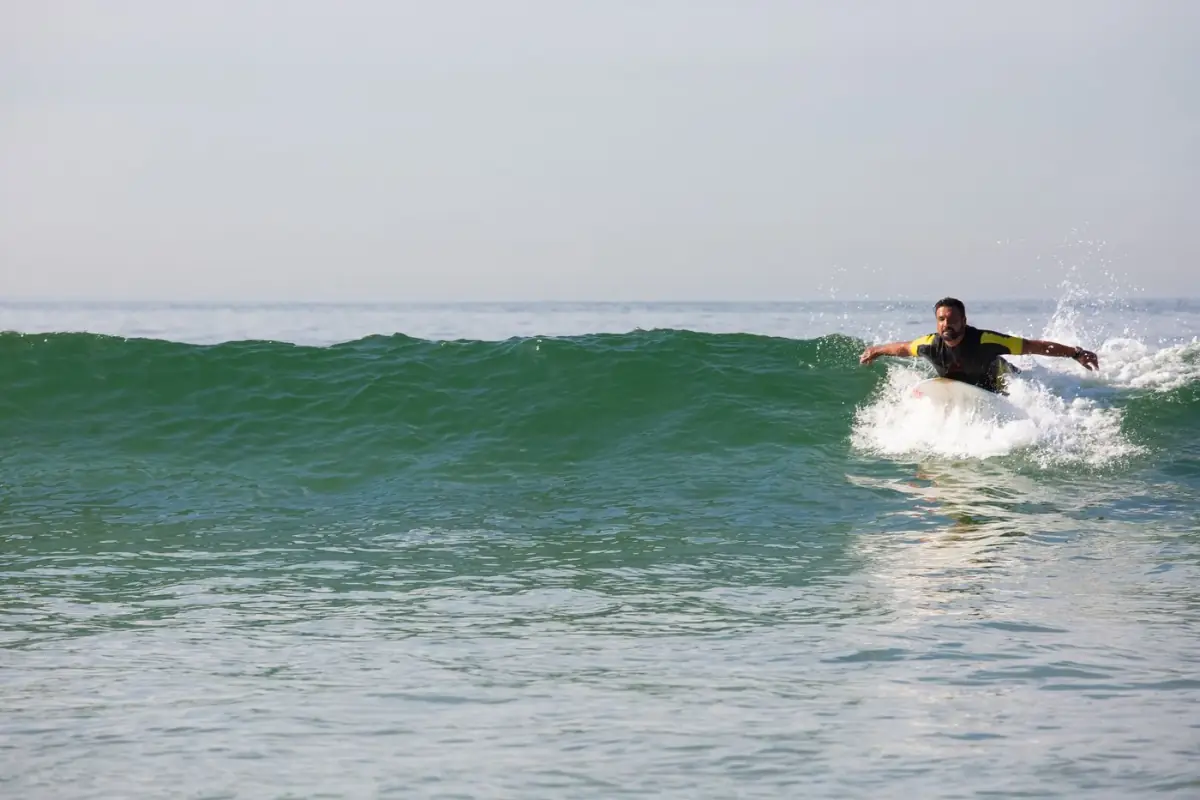
Before going into one of these beaches, check the swell and tide forecast and talk to the school or the local surf shop. The west coast currents are real and change fast, and there are days when the size doesn't match the level of someone still learning. When the sea is too big to surf, it's worth swapping the board for the trails and walks of the Rota Vicentina along the cliffs.
What's the best time of year to catch waves?
The best time depends on the level. For beginners, summer (June to September) is ideal: the sea is smaller, the water warmer and the schools are in full swing. For experienced surfers, autumn and winter (October to March) bring the bigger, cleaner Atlantic swells, with the bonus of near-empty beaches outside high season.
Summer: small sea, ideal for learning
In summer, the Costa Vicentina gets gentler swells and the sea warms up enough for long lessons. The season's great enemy is the nortada, the north wind that rises mid-morning and spoils conditions in the afternoon. So in summer you surf early: the best lessons and sessions are at daybreak, before the wind comes in. It's also the busiest time, with schools packed in July and August.
Autumn and winter: the best waves, fewer people
From October to March, the Atlantic sends the most consistent swells and the nortada calms, giving long days of clean waves. The water cools and a 4/3 mm wetsuit is a must (and boots in deep winter), but the reward is an almost deserted coast. It's the favourite season for those who take surf seriously and want to make the most of the Algarve off-season, with cheaper homes and empty beaches.
Whatever the month, the rule is the same: check the forecast the day before, pick the beach according to the wind and have a plan B. The flexibility to switch beaches through the day is what sets a good surf trip apart from a frustrating one. To weave surf into the rest of the trip, the month-by-month calendar helps you gauge climate and crowds.
Where to find surf schools and gear hire?
The surf schools cluster in Sagres, Aljezur (next to Arrifana) and Carrapateira (Amado), the three bases that serve the best beaches. Most offer packages including a board, wetsuit, transport to the day's beach and insurance, and run all year, though with reduced hours in winter. Many surf camps combine accommodation and lessons in the same booking.
What to expect from a lesson
A beginner lesson lasts around two hours, with theory on land, exercises on the sand and practice in the whitewater, the school always choosing the beach to suit the day's conditions. The gear is included and the groups are small. For children, confirm the minimum age with the school; most take them from 6 or 7 years old, with adapted lessons.
Board hire for those who already surf
Those who already surf can hire a board and wetsuit by the hour, the day or the week at the surf shops in Sagres and Aljezur, without a lesson. It's the most flexible and cheapest option for a long stay, and it saves the hassle of flying with a board. The shops also give up-to-date information on which beach is working best, which is worth gold on a first day in the area.
Book the first lesson well ahead in July and August, when the schools sell out. Outside that season, there's almost always a place from one day to the next. Pairing the school with the right home — near the beaches and with space to dry wetsuits and stow boards — is the next step, and that's where the choice of base comes in.
Where to stay for a surf trip to the Algarve?
For a surf trip, the two best bases are Lagos and Sagres/Aljezur. Lagos (63 km from Faro) offers more homes, restaurants and nightlife, with the Sagres waves 30–40 minutes away by car. Sagres and Aljezur sit right by the beaches, but have less accommodation on offer and everything closes earlier. The choice comes down to whether you want to live the surf from morning to night or add city life and comfort to it.
Those travelling in a group of friends or as a family gain by renting a home with a pool, a garage to stow the gear and a kitchen to prepare meals between sessions. In Lagos, the 5-bedroom villa in Lagos · 492 m² gives plenty of room for a large group, while the 3-bedroom apartment with pool in Lagos · 121 m² suits families or two couples wanting to stay near the marina and the city beaches well. For those who prefer more space, there's also a 3-bedroom apartment with pool in Lagos · 150 m².
Real-time availability and prices on Homing — book direct, cheaper than Booking, Airbnb and Hotels.com. Click «See dates and price».
These homes are booked directly on Homing, our official partner, which usually comes out cheaper than Booking, Airbnb or Hotels.com by charging no platform commission or hidden fees, with support in Portuguese, English, French and Spanish. Prices vary with the dates — always confirm on each home's page. If you're still torn between channels, see the comparison between booking direct and Booking/Airbnb.
Lagos, Sagres or Aljezur: which is the right base?
Choose Lagos if you want to combine surf with restaurants, a market and city beaches like Meia Praia and Praia da Luz. Choose Sagres or Aljezur if the aim is to surf every day and wake up by the waves, accepting less comfort in exchange for closeness. For large groups moving between several beaches, Lagos is usually the best compromise for the number of villas and apartments available.
Whatever the base, look for a home with outdoor space — a terrace or garden — to dry wetsuits and lay boards out in the sun, and with a parking spot, because without a car the surf beaches are tricky to reach. To fine-tune the location, the where to stay in Lagos guide and the where to stay in the Algarve one help seal the decision.
Surfing in the Algarve with family or as a group: how to organise it?
A surf trip with family or as a group is built around a good base and booked lessons. The practical rule is to rent a home with a pool and outdoor space in a central village, book the lessons for the first days and leave the rest of the week free to catch waves wherever conditions are best. The west coast surf beaches are all less than an hour from one another.
For groups, the secret is flexibility: some surf in the morning, others visit wild, hidden beaches or Sagres, and in the afternoon everyone gathers round the pool. With family and children, a group lesson at Arrifana or Amado keeps the youngest entertained while the adults surf alongside, and the Algarve with children guide gathers the most practical areas for this.
| Beach | Area | Level | Best season |
|---|---|---|---|
| Arrifana | Aljezur | Beginner to advanced | All year |
| Amado | Carrapateira | Beginner to intermediate | All year |
| Beliche | Sagres | Beginner to advanced | Autumn/winter |
| Tonel | Sagres | Intermediate to advanced | Autumn/winter |
| Castelejo | Vila do Bispo | Advanced | Autumn/winter |
| Zavial | Vila do Bispo | Intermediate | South-westerly swell |
This combination of beaches lets you put together a whole week without repeating a spot, adjusting to the wind and the size of the day. The key is not to fix everything from the outset: book the home and the first lessons, and let the sea decide the rest. That margin is what makes a surf trip to the Algarve go well from start to finish.
Sources and references
- Turismo do Algarve (Visit Algarve) — https://www.visitalgarve.pt/
- ICNF — Parque Natural do Sudoeste Alentejano e Costa Vicentina — https://www.icnf.pt/
- Rota Vicentina — https://rotavicentina.com/
- IPMA — Instituto Português do Mar e da Atmosfera — https://www.ipma.pt/
- Wikipédia — Costa Vicentina — https://pt.wikipedia.org/wiki/Costa_Vicentina
- Wikipédia — Algarve — https://pt.wikipedia.org/wiki/Algarve
Original editorial article by Maré Algarve, based on official sources (Turismo do Algarve, ICNF, ABAE/Blue Flag, IPMA, INE) and on our experience of holiday rentals in the Algarve. Prices and availability vary — always check each property's page.