
The Algarve beyond the beach fits into six fronts: nature (Ria Formosa, Costa Vicentina, the Monchique mountains), water adventure (the Benagil cave by kayak, dolphins, surf), culture (the castles of Silves and Tavira, old Faro, the Estói palace), golf in the Golden Triangle, markets, wines and spas, and a plan B for rainy days too. All within a territory of just over 150 km of coast, with Faro Airport almost halfway along.
This guide brings together 30 real experiences by sub-region, with the distances that matter and one golden rule: the Benagil cave can only be visited by water. By the end, it's clear where to set up base to explore without spending the day behind the wheel.
What is there to do in the Algarve beyond the beach?
Beyond the beach, the Algarve offers six broad types of experience: exploring protected nature (the Ria Formosa, the Costa Vicentina and the Monchique mountains), water adventure (the Benagil cave by kayak, dolphin-watching trips and surf), visiting historic heritage (Silves, Tavira, Faro and Estói), playing golf in the Golden Triangle, discovering markets, wines and spas, and having a plan for rainy days. It's a small region, dense with things to see, which lets you combine beach in the morning and culture or mountains in the afternoon.
The geography helps. The Algarve stretches just over 150 km, from the rugged Barlavento in the west, through the Centre of caves and marinas, to the Sotavento of islands and warm waters. Faro Airport sits almost halfway — 3 km from the city, 15 km from Vilamoura and 31 km from Tavira — so any of these experiences is, at most, an hour's drive from most bases.
The logic of this guide is simple: to run through the experiences by sub-region, so you can group them geographically and not bounce from one side to the other. Let's start with nature, where the Algarve surprises anyone expecting only sand and sun.
Nature and landscape: Ria Formosa, Costa Vicentina and Monchique
Algarve nature splits into three very different scenes: the Ria Formosa lagoon in the Sotavento, the wild cliffs of the Costa Vicentina in the west, and the Monchique mountains inland. All three are protected areas and give the Algarve a rare variety — salt marshes, fierce ocean and green mountain less than two hours apart.
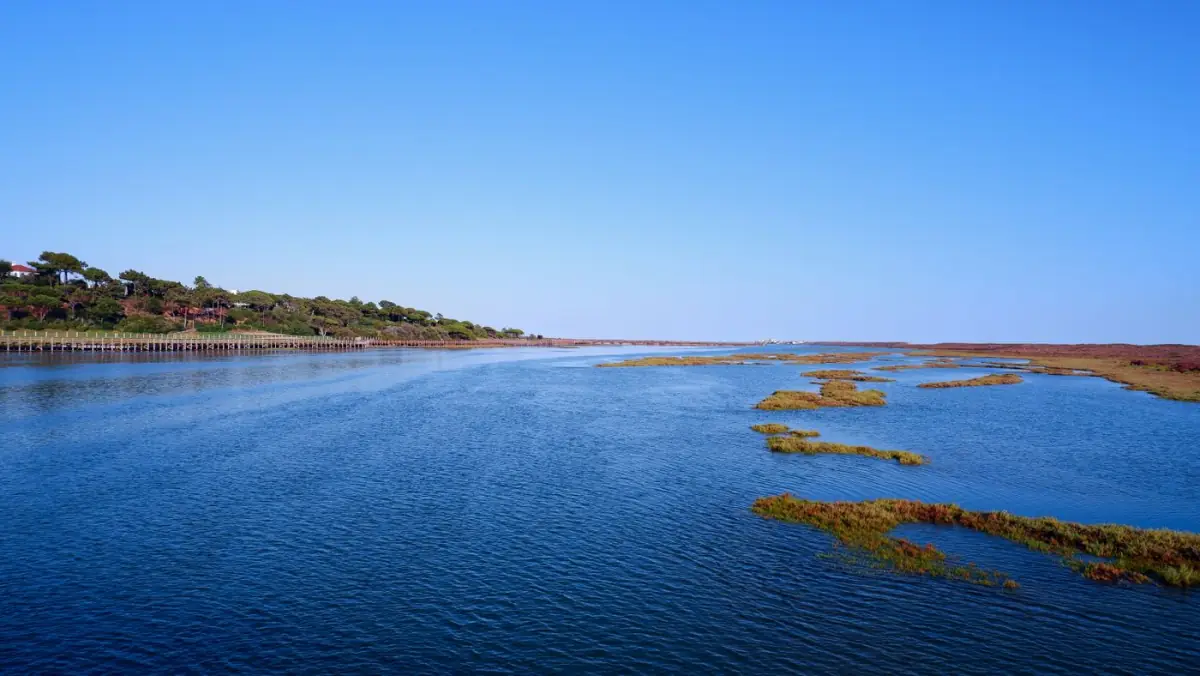
Ria Formosa: the lagoon and the barrier islands
The Ria Formosa is a nature park of about 18,000 hectares that stretches along 60 km of coast, between Vila Real de Santo António and Quinta do Lago. It's a lagoon of salt marshes, channels and barrier islands protected by the ICNF, home to flamingos, the rare seahorse and one of the largest communities of water birds in Portugal. From Olhão or Tavira, you can catch boats to the Ilha de Tavira, Armona or Culatra, where the sea is warmer and the beaches almost deserted outside August. A trip by solar boat or kayak through the channels is the best way to see the lagoon from within.
Costa Vicentina: the wild Algarve in the west
In the far west, the Southwest Alentejo and Costa Vicentina Natural Park protects dozens of kilometres of cliffs battered by the Atlantic, between Sagres and Odeceixe. Here the sea is colder and wilder, ideal for surf and for walks along the Rota Vicentina, with the Praia da Arrifana and the Praia do Amado as reference points. Cape St Vincent, the most south-westerly point of mainland Europe, offers one of the most dramatic sunsets in the country.
Monchique and Fóia, the roof of the Algarve
24 km from the coast, the Monchique mountains rise to Fóia, at 902 metres of altitude — the highest point in the Algarve. On clear days, from the viewpoint you can see the ocean on one side and the Alentejo plain on the other. The mountains are covered with eucalyptus, chestnut trees and thermal springs, and the neighbouring village of Caldas de Monchique is known for its water and for medronho, the local spirit. It's the green, cool counterpoint to the heat of the beach.
This trio — lagoon, wild ocean and mountain — shows that the Algarve is much more than a stretch of sand. But there's another front that combines nature and adrenaline: adventure on the water.
Water adventure: Benagil, dolphins and surf
The most sought-after water experience in the Algarve is the Benagil cave, which can only be visited by sea — by boat, kayak or stand-up paddle. Add to it the dolphin-watching trips in the Atlantic and the surf on the Costa Vicentina and the western beaches. All require leaving the sand and heading out to sea, and so reward those who book early and pick the right hour.
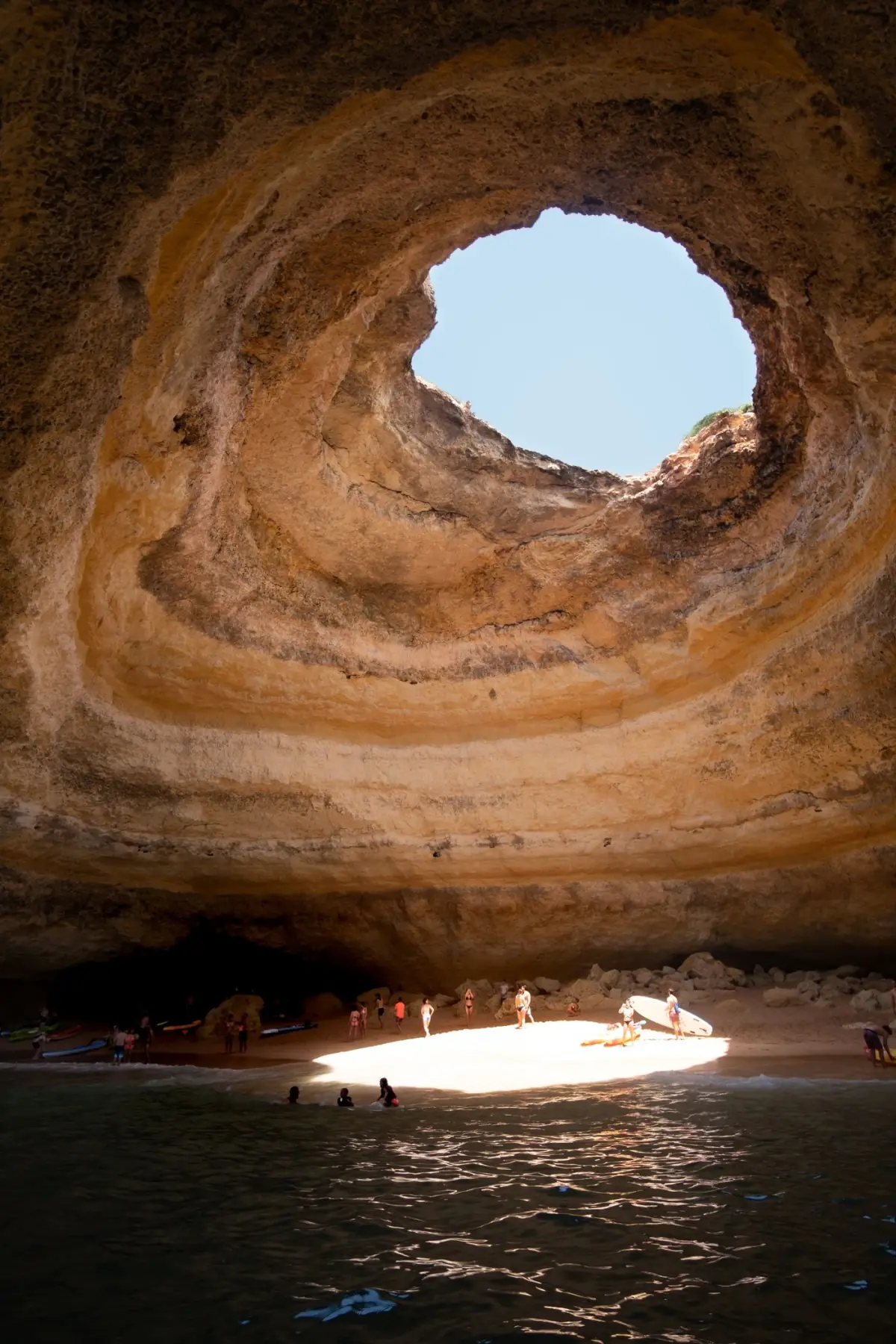
How to visit the Benagil cave
The Benagil cave sits on the coast of Lagoa, between Carvoeiro and the Praia da Marinha, and is famous for the circular opening in its ceiling, the so-called "eye". Access is exclusively by water: water taxis and organised trips leave from Benagil beach, and there are kayaks and SUPs to rent both in Benagil and in Carvoeiro. Swimming to the cave is dangerous and not advised, especially with swell. For practical details, see our dedicated guide to Benagil and the caves.
Dolphin-watching and boat trips
All along the coast, from Lagos to Portimão, there are dolphin-watching trips in the Atlantic, many with biologists on board and a guarantee of a new trip if there are no sightings. The months from May to September are the most favourable. They pair well with a trip to the caves of Ponta da Piedade, in Lagos, or the formations of the Albufeira coast, linking adventure and landscape in the same morning.
Where to surf in the Algarve
For surf, the reference is the Costa Vicentina, in the west, where the Arrifana and the Amado get consistent Atlantic waves and several schools for beginners. The south coast, more sheltered, is better for getting started and for children. Sagres is the headquarters of Algarve surf, with board rental, lessons and an active community all year round.
From the water we move to dry land and to time itself: the Algarve holds centuries of history in towns that many visitors pass through without stopping.
Culture and history: Silves, Tavira, Faro and Estói
The historic Algarve concentrates in four essential stops: Silves, the former Moorish capital with the region's largest castle; Tavira, the town of churches and the Roman bridge; Faro, the capital with its walled old town; and Estói, with its rococo palace and the Roman ruins of Milreu. These are four layers of history — Roman, Moorish, Christian and baroque — a few kilometres apart.
Silves: the Moorish castle and the cathedral
Silves, inland in the municipality of the same name, was the capital of the Moorish Algarve (Xelb) and still dominates the landscape with its red sandstone castle, the best preserved in the region. Beside it stands the Gothic cathedral, and the town descends in narrow lanes to the river Arade, navigable from Portimão. It's a journey into the Islamic past of the Algarve, away from the bustle of the coast.
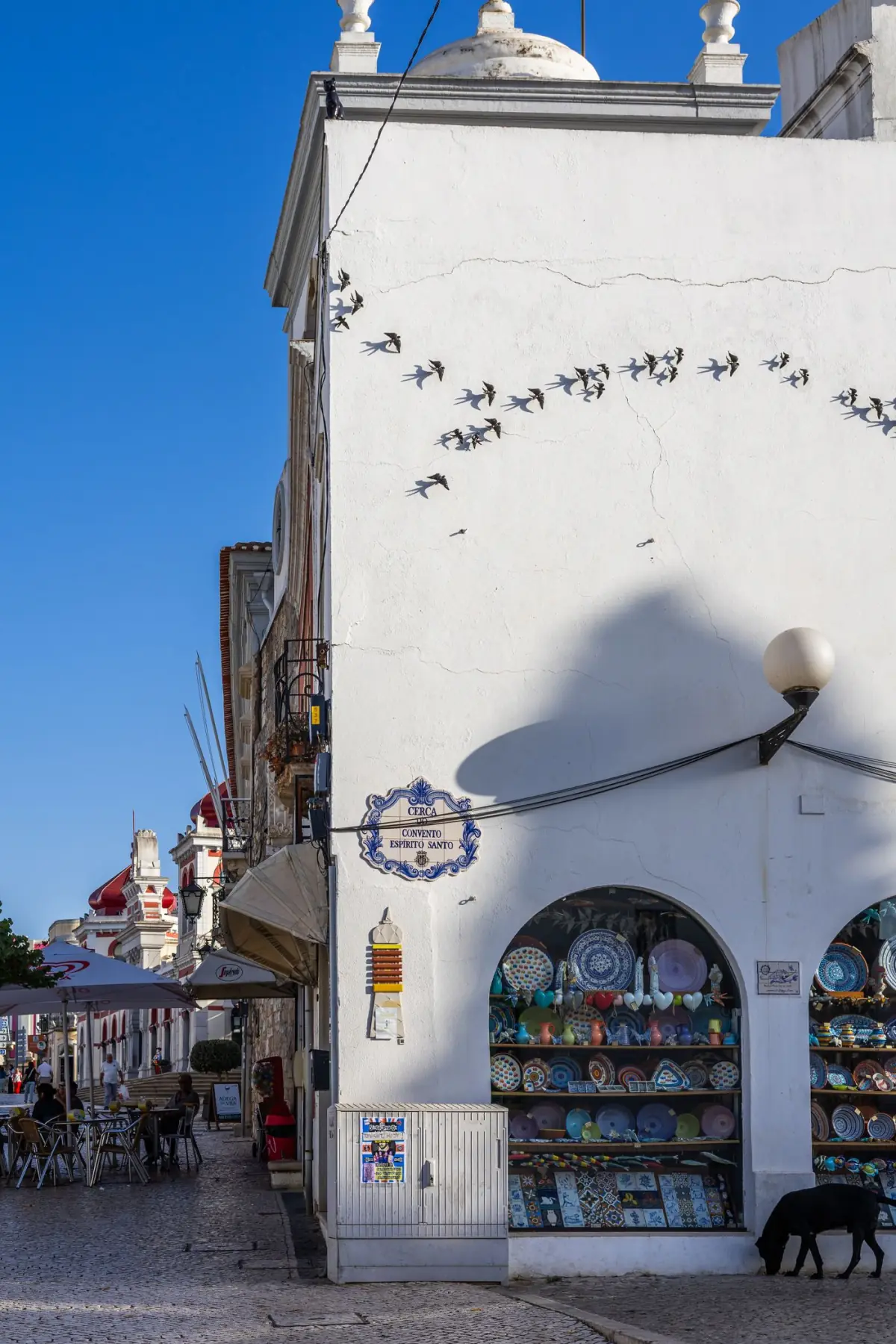
Tavira: churches, Roman bridge and salt
Tavira, with about 26,000 inhabitants 31 km from the airport, is perhaps the prettiest town in the Sotavento. It's said to have 37 churches, a bridge of Roman origin crosses it over the river Gilão, and around it stretch the salt pans that produce the famous fleur de sel. It's the ideal base to combine culture, the Ria Formosa and the Ilha de Tavira, as we detail in the guide to the Sotavento.
Faro and Estói: the capital and the palace
Faro, capital of the Algarve with about 64,000 inhabitants, keeps the Old Town within its walls, with the cathedral, the Arco da Vila and the Chapel of Bones. Boats to the Ria Formosa leave from here. A few kilometres away, in Estói, awaits one of the lesser-known treasures of the region: the Estói Palace, rococo-inspired, and the Roman ruins of Milreu, with mosaics and a third-century temple. This pair sums up well the cultured Algarve that few tourists discover.
| Town | Era / style | Not to miss | Distance from Faro |
|---|---|---|---|
| Silves | Moorish / Gothic | Sandstone castle and cathedral | about 60 km |
| Tavira | Roman to baroque | Roman bridge, churches and salt pans | 31 km |
| Faro | Roman to Renaissance | Old Town, cathedral and Chapel of Bones | 3 km |
| Estói | Roman / rococo | Estói Palace and Milreu ruins | about 12 km |
These towns show that the Algarve has soul beyond the beach season. And if you're after open-air sport and immaculate fairways, there's an experience that defines the Centre of the region: golf.
Golf in the Golden Triangle
The best golf in the Algarve concentrates in the Golden Triangle — Vilamoura, Quinta do Lago and Vale do Lobo — in the municipality of Loulé, 10–15 km from Faro Airport. It's one of the golf capitals of Europe, with courses designed by renowned architects, green fairways all year round and a mild climate that lets you play even in winter, when much of Europe is frozen.
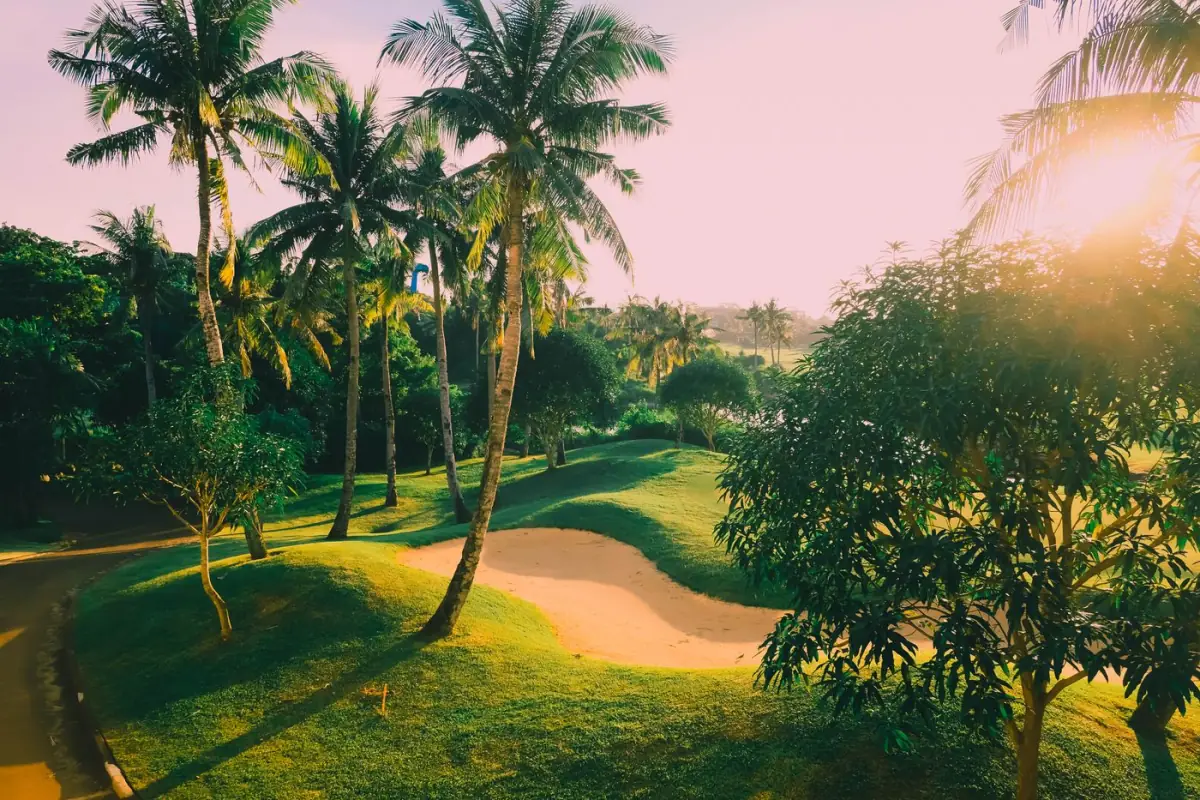
Why the Algarve is a golf destination
Vilamoura alone brings together several 18-hole courses around its marina, and neighbouring Quinta do Lago, within the Ria Formosa, adds top golf to an exclusive setting. The climate is the trump card: with mild winters and more than 300 days of sun a year in the region, you can play golf from October to May without the heat of the summer peak. It's also why many international visitors choose the Algarve outside high season.
Where to stay to play golf
For a golf-centred trip, the obvious base is the Vilamoura–Almancil–Quarteira axis, in Loulé, a few minutes from the courses and the airport. Almancil, 10 km from Faro, is the support point for the Quinta do Lago and Vale do Lobo developments and concentrates restaurants and services. Renting a villa or villa (moradia) with a pool in this area lets you rest between rounds and host the group of friends in comfort.
Golf is the Algarve's international calling card, but the soul of the region also lies in its everyday traditions — the markets, the wines and the thermal waters.
Markets, wines and spas: the Algarve of traditions
To feel the authentic Algarve, visit a municipal market in the morning, taste the wines and the medronho of the mountains, and book an afternoon at the Caldas de Monchique spa. These are three experiences with local roots, away from the tourist terraces, that show how people live and eat in the region all year round.
Markets and local gastronomy
The Municipal Market of Loulé, in a neo-Arab building, and the seafood market of Olhão, beside the lagoon, are among the liveliest in the Algarve — fish fresh off the boat, dried fruit, almond and fig sweets, honey and cheeses. It's also the best introduction to the Algarve table, which we explored in depth in the guide on what to eat in the Algarve. Buying at the market and cooking in the rented home is, in fact, one of the advantages of having your own kitchen.
Wines, medronho and wineries
The region has its own denomination of origin, with wineries scattered across the interior of Lagoa, Silves and Tavira that welcome visits and tastings. From the Monchique mountains comes medronho, a spirit distilled from the fruit of the strawberry tree, and rosemary honey. An afternoon of tasting at a family winery pairs well with a visit to Silves or to a country estate inland.
Caldas de Monchique spa
The thermal waters of Caldas de Monchique, known since Roman times, spring at a constant temperature and feed a thermal spa nestled in the mountains. It's the perfect refuge for a cooler day or to recover from a walk, in a setting of eucalyptus and streams at 300 metres of altitude. It combines nature, well-being and history in a single programme.
These traditions work at any time of year — and that's precious when the weather doesn't cooperate. Let's see what to do when it rains in the Algarve.
What to do in the Algarve on rainy days?
On rainy days, the Algarve swaps the beach for museums, spas, covered markets, wineries and covered water parks. Despite more than 300 days of sun a year, there's rain mainly between November and March, and it's worth having a plan B that doesn't depend on the sand — easy in a region with so much culture and so many indoor spaces.
- Visit the Faro Municipal Museum, set in a former convent, or the Portimão Museum, in a former fish-canning building.
- Spend the afternoon at the Caldas de Monchique spa, with warm waters and spa treatments sheltered from the rain.
- Explore the covered markets of Loulé and Olhão, which operate under a roof and fill with colour and aromas.
- Take a wine tasting at a winery in the interior of Lagoa or Silves, under cover and with the tasting included.
- Take the children to Zoomarine, in Guia (Albufeira), a park with an aquarium, dolphins and covered activities, or to a science centre.
With this range, a grey day stops being a problem and becomes an opportunity to discover the more intimate Algarve. And there's another practical advantage: having a comfortable home with a living room and kitchen turns a rainy afternoon into a pleasant moment rather than a setback.
Where to stay to explore the Algarve beyond the beach
To explore the Algarve beyond the beach, the best base is central — between Lagos, Albufeira and Faro — to reach the mountains, the Ria Formosa and the caves by car in under an hour. Renting a home with a kitchen and, ideally, a pool gives you total freedom: leave early for the boat trip, come back to cook the fish from the market and end the day without hotel timetables. For groups and families, it's almost always more economical than several hotel rooms.
Lagos and Faro: two gateways
Lagos, to the west, is the perfect base for Ponta da Piedade, Sagres, the Costa Vicentina and the Atlantic dolphins. It has a vibrant historic centre and easy access to the urban beaches. Faro, to the east and 3 km from the airport, opens the door to the Ria Formosa, Tavira, Olhão and the Estói palace. Between the two lies the whole range of experiences in this guide.
In our inventory, there are real homes ideal for this logic. In Lagos, the 2-bedroom apartment with pool · 124 m² gives comfort to a couple or a small family minutes from the beaches and the centre; those travelling lighter will find the practical 2-bedroom apartment · 60 m². In Faro, the 4-bedroom apartment · 116 m² accommodates a group or an extended family with a perfect base for the Ria Formosa and the historic Sotavento.
Real-time availability and prices on Homing — book direct, cheaper than Booking, Airbnb and Hotels.com. Click «See dates and price».
All these homes are booked direct on Homing, our official partner, with no platform commission and usually cheaper than Booking, Airbnb or Hotels.com, with support in Portuguese, English, French and Spanish. To compare areas and profiles, see the guide to where to stay in the Algarve and, if you travel as a family, the best areas for families.
With the base set, it's easy to fit two or three experiences a day without stress. And to round off the planning, we've gathered the most common questions from those looking to go beyond the beach.
Sources and references
- Turismo do Algarve (Visit Algarve) — https://www.visitalgarve.pt/
- ICNF — Protected Areas and Ria Formosa Nature Park — https://www.icnf.pt/
- Wikipedia — Algarve — https://pt.wikipedia.org/wiki/Algarve
- Wikipedia — Ria Formosa — https://pt.wikipedia.org/wiki/Ria_Formosa
- Wikipedia — Fóia (Monchique mountains) — https://pt.wikipedia.org/wiki/F%C3%B3ia
- Wikipedia — Silves Castle — https://pt.wikipedia.org/wiki/Castelo_de_Silves
- IPMA — Portuguese Institute for Sea and Atmosphere — https://www.ipma.pt/
Original editorial article by Maré Algarve, based on official sources (Turismo do Algarve, ICNF, ABAE/Blue Flag, IPMA, INE) and on our experience of holiday rentals in the Algarve. Prices and availability vary — always check each property's page.