
In the Algarve you mostly eat fish and seafood from the sea, cooked with simplicity: sardines grilled over coals, cataplana of monkfish and clams, oysters farmed in the Ria Formosa and percebes (goose barnacles) gathered on the cliffs of the Costa Vicentina. To this you add a convent tradition of sweets made with almond, fig and eggs — the dom rodrigo and the morgado — and the medronho distilled in the Monchique hills. It's a cuisine of fresh produce, of the market and the tavern, where the best dish often costs less than you'd imagine.
This guide shows you what to try, where to try it and how to cook at home with the fish you buy in the morning at the fish auction.
What do people really eat in the Algarve?
In the Algarve you eat the sea: fresh fish and seafood are the base of almost everything. The region has two seas at the table — the open Atlantic of the Barlavento, with cold waters and strong swell, and the warmer, sheltered waters of the Sotavento, beside the Ria Formosa. From this geography comes a rare larder: sardines, tuna, horse mackerel and sea bream from the open sea; oysters, clams, cockles and wedge clams from the lagoons; and percebes clinging to the cliffs of the Costa Vicentina.
Algarve cooking is, at heart, a cuisine of simplicity. The produce rules. A fat sardine needs only coarse salt and coals; a clam needs only garlic, coriander and a thread of olive oil. The most famous dishes — the cataplana, the xerém with wedge clams, the razor clam rice — exist to let the fish and seafood shine, not to hide them. It's honest food, inherited from fishermen and smallholders, still made in family taverns from Olhão to Lagos.
But there's also the hills. In Monchique and the interior of Silves come the cured ham, smoked sausage, black pork and medronho. And there's the sweet-making, of Arab and convent inspiration, made of almond, fig and carob. So when someone asks what people eat in the Algarve, the right answer is: much more than sardines — though these do, in fact, deserve the place of honour.
The cataplana and the great dishes of the sea
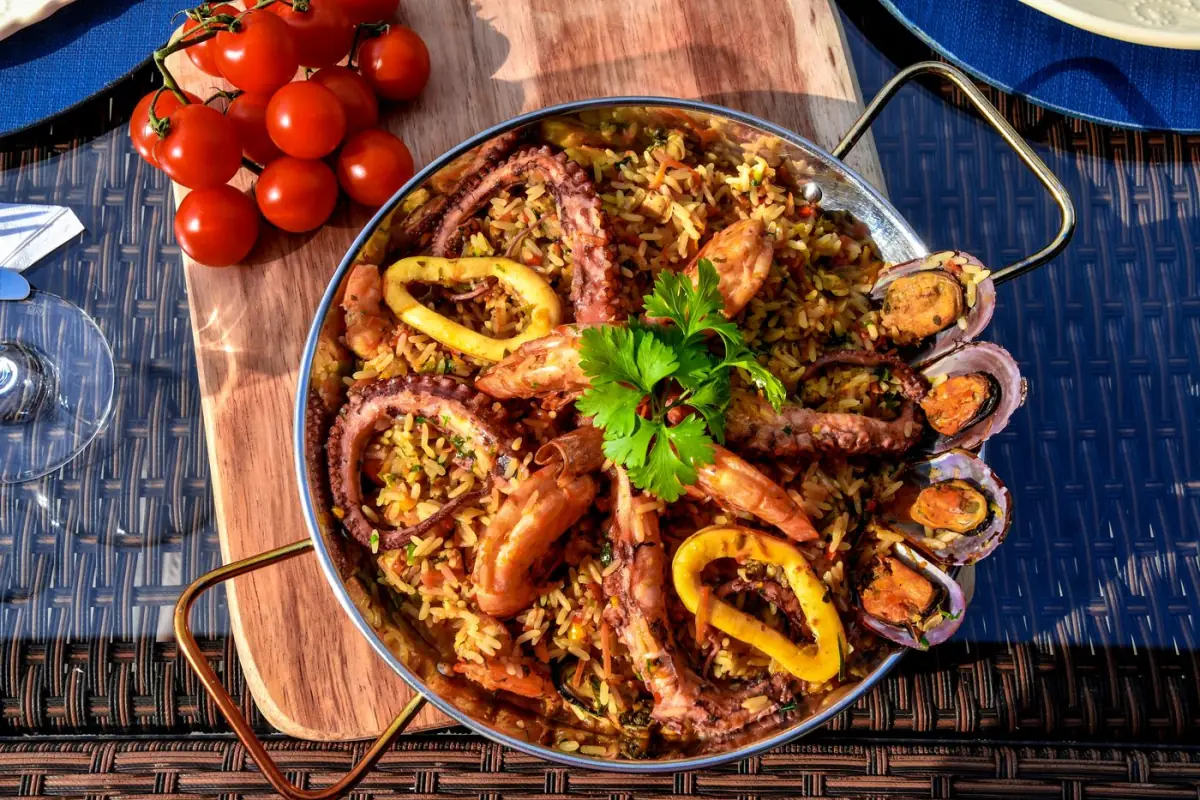
The cataplana is the Algarve's signature dish: a stew of seafood, fish or pork with clams, cooked over a gentle heat inside the hinged copper vessel that gives it its name. The lid closes over the pot like a shell and the steam that builds up concentrates all the flavours. The result is deep, perfumed with tomato, pepper, garlic, coriander and white wine. It's a dish to share, served at the table inside the copper itself, still steaming.
The most classic cataplana is the seafood one — clams, prawns, mussels and, often, monkfish. But there are variations everywhere: cataplana of fish, of pork with clams (an Algarve cousin of carne à alentejana), and even of octopus. The Confraria Gastronómica da Cataplana, linked to Turismo do Algarve, helps preserve the recipe and its regional origin.
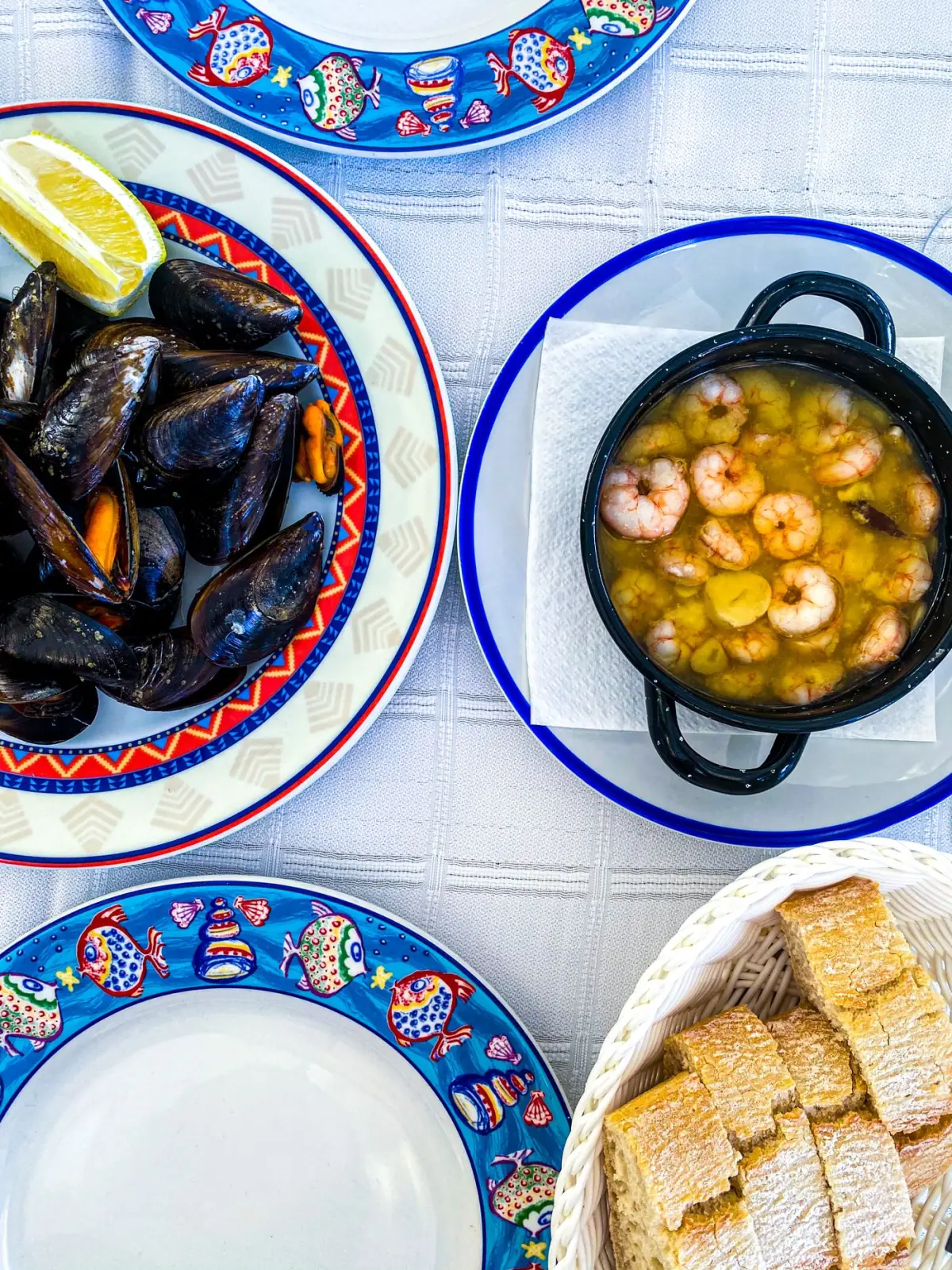
Alongside the cataplana, other great sea dishes shine. The xerém with wedge clams, a creamy corn porridge topped with small bivalves, is typical of the Sotavento. The seafood açorda, made of soaked bread, garlic and coriander, is fisherman's food turned into a delicacy. And the razor clam rice or seafood rice, soupy and generous, appears in almost every coastal tavern. Ordering one of these dishes in a simple house in Olhão or Albufeira, with the sea in view, is one of the best experiences the region offers.
Fresh fish and seafood: from sea to plate
The fish and seafood of the Algarve reach the table almost without middlemen, often on the very day of the catch. The sardine is the queen of summer: between June and September it's at its fattest and tastiest, and it's grilled over coals to be eaten with homemade bread and roasted pepper. The tuna, historically tied to the tuna traps of Vila Real de Santo António, appears grilled in steaks or in the traditional estopeta. And the horse mackerel, the sea bass and the sea bream appear grilled, simply dressed with olive oil and lemon.
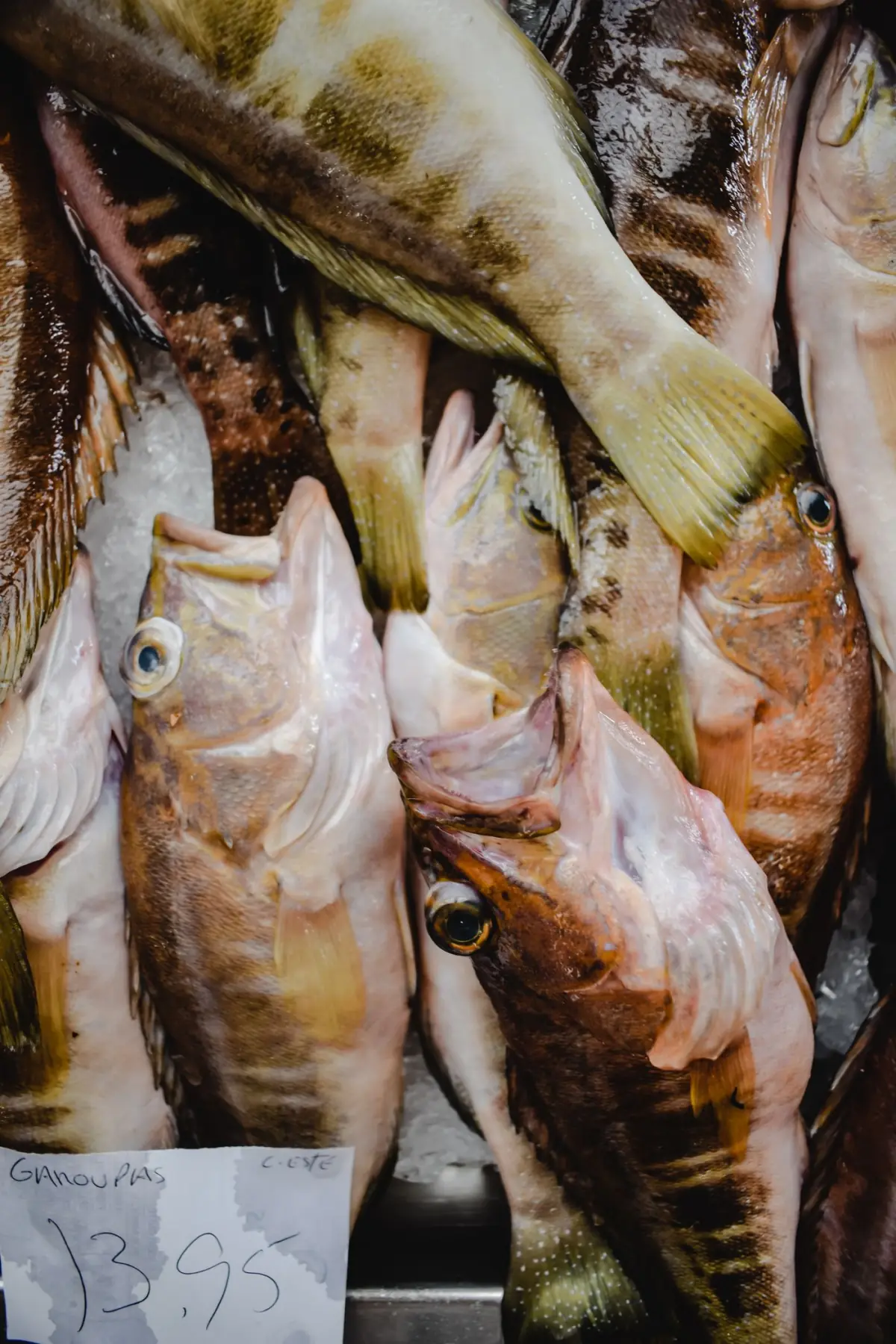
In the seafood chapter, the Sotavento is blessed. The oysters of the Ria Formosa are farmed in natural beds between Olhão, Tavira and Faro, in a protected lagoon system managed by the ICNF — seafood of recognised export quality, eaten fresh right beside where it's harvested. The clams, the cockles and the wedge clams come from the same lagoons. In Santa Luzia, the octopus capital, you try octopus à lagareiro and octopus salads hard to match.
And there are the percebes, the wildest seafood of all. Gathered by hand on the wave-battered rocks of the Costa Vicentina, near Sagres, they are a seasonal rarity with an intense taste of sea spray. They cost dearly and earn it. Anyone wanting to try mixed seafood will find generous platters — prawns, mussels, whelks and clams — in the seafood houses of Portimão and Quarteira, where the smell of the sea comes right in through the door.
The secret, across the whole Algarve, is to follow the seasonality. Fish and seafood taste better in their season, and the locals know it. Asking the waiter "what's fresh today?" is worth more than any laminated menu. Almost always, the answer leads to the dish of the day — and to the best meal of the trip.
Algarve sweets: almond, fig and eggs
Algarve sweet-making is born of three ingredients of the land — almond, fig and carob — combined with the abundance of eggs from the convent tradition. It's an Arab and monastic heritage that has survived intact. The most famous sweet is the dom rodrigo, made of egg threads and almond, wrapped in twisted silver paper like a boiled sweet. Beside it stand the morgado, a dense almond paste topped with egg sweet, and the doces finos of marzipan moulded into fruit and animal shapes, hand-painted.
The fig is another pillar. Sun-dried, filled with almond and moulded into a fig cheese, it perfectly accompanies a glass of medronho or port. There's also the carob tart, the almond cake and the popular folhados found in any pastry shop from Loulé to Tavira. These sweets keep well and make perfect souvenirs to take home.
Tasting the sweets of the Algarve is also to understand the region's history. Each sweet tells of the passage of the Moors, of the orchards of almond in February blossom and of the convents where nuns turned egg yolks into eternal desserts. A simple stop at a neighbourhood pastry shop, with a dom rodrigo and a coffee, is enough to feel that thread of centuries still running at the table.
Where to eat in the Algarve: markets, taverns and restaurants
The best place to eat in the Algarve is often not a restaurant — it's a market. The Olhão Market, housed in two brick pavilions by the lagoon, is the greatest temple of fish and seafood in the Sotavento: oysters, clams, sardines and tuna at source prices, plus fruit, sausages and sweets from the hills. The Loulé Market, in a century-old neo-Moorish building, offers the same spirit in the Centre, with the advantage of being a few minutes from Almancil and the Golden Triangle.
To sit and eat, the golden rule is to seek out the tavern. The places full of locals, with simple tables and the catch of the day chalked on a board, almost always serve better (and cheaper) than the touristy terraces facing the beach. Olhão, Faro and Alvor hold some of the best. For a special occasion, the Almancil–Vilamoura axis concentrates fine-dining restaurants, including Michelin-starred houses.
Before ordering, it's worth knowing the ritual of the couvert: the bread, olives, sardine butter or cheese that arrive at the table are not free and are charged separately. You can refuse what you don't want without any problem. This is one of the etiquette rules that separates the informed visitor from the tourist caught by surprise on the bill.
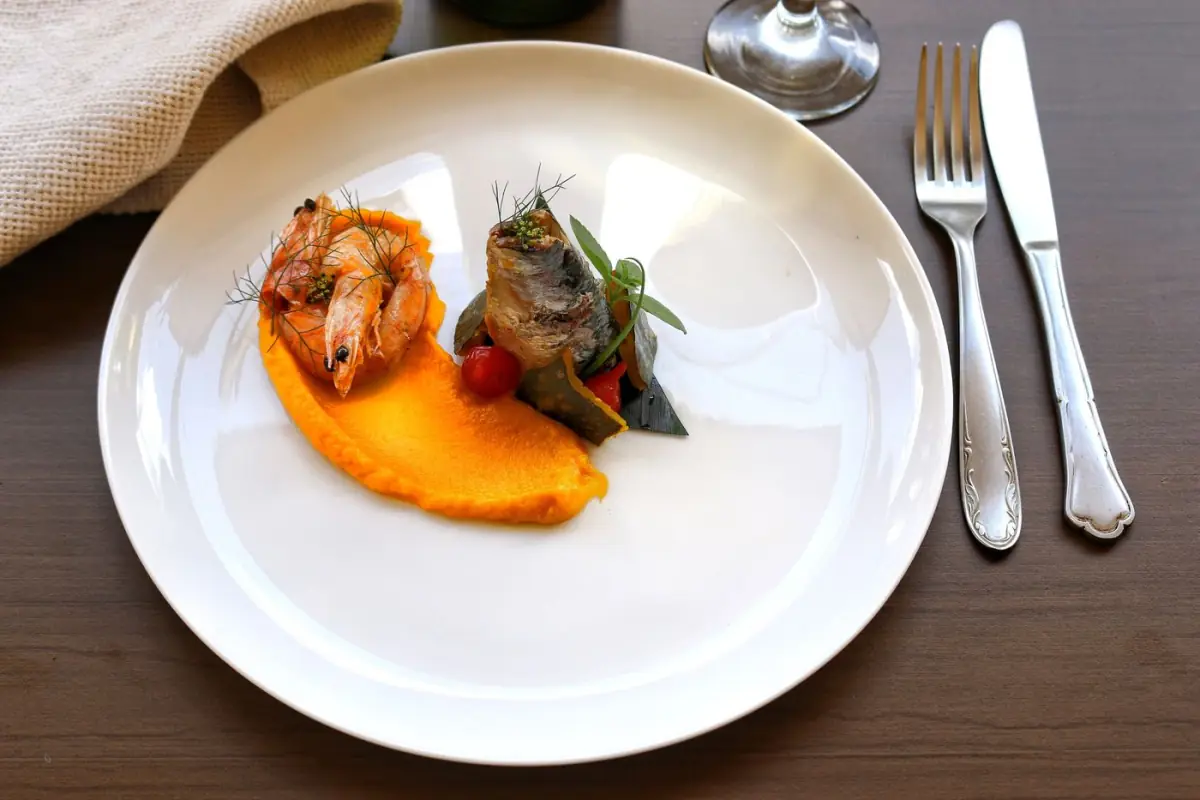
Whether at a market, a neighbourhood tavern or a restaurant overlooking Praia da Rocha, the common denominator is freshness. Eating well in the Algarve is, above all, eating close to the source — and almost always at a price that pleasantly surprises.
Wines and medronho: what to drink in the Algarve
The Algarve produces its own DOC wines, above all full-bodied reds and fresh whites, with grape varieties adapted to the heat and sandy soil of the region. The sub-regions of Lagos, Portimão, Lagoa and Tavira have recognised denomination of origin, and in recent decades estates have emerged that have raised the quality considerably. A nicely chilled Algarve white accompanies seafood perfectly.
But the most distinctive drink is the medronho — an aguardente distilled from the fruit of the strawberry tree, a shrub that grows wild in the Monchique hills and the Algarve interior. The best medronho is artisanal, distilled in small quantities by hill producers, and has a high alcohol content. It's drunk at the end of the meal, as a digestif, sometimes with honey or in smoother aged versions.
Alongside the medronho there's the carob liqueur, sweet and velvety, and the amarguinha, a bitter-almond liqueur that tastes of the old Algarve. Trying one of these drinks in a Monchique tavern, after a hill lunch of cured ham and sausage, is to close the region's gastronomic circle — from sea to mountain, in a single day.
Different flavours: what changes between Barlavento and Sotavento?
Algarve cuisine changes character as you travel from west to east. In the Barlavento, with its wilder, colder sea, the open-sea fish, the percebes of the Costa Vicentina and the seafood houses of Portimão and Lagos dominate. It's the coast of golden cliffs, of hidden coves and of tuna with history in Alvor. The Sotavento, meanwhile, bathed by the warm, calm waters of the Ria Formosa, is the kingdom of the bivalve: oysters, clams, wedge clams and the octopus of Santa Luzia.
| Zone | Standout flavours | Where to try |
|---|---|---|
| Barlavento | Percebes, tuna, open-sea fish, seafood houses | Sagres, Portimão, Lagos, Alvor |
| Centre / Golden Triangle | Cataplana, fine dining, grilled seafood | Almancil, Vilamoura, Albufeira |
| Sotavento | Ria Formosa oysters and clams, octopus, xerém | Olhão, Tavira, Santa Luzia, Faro |
| Hills (Monchique / interior) | Cured ham, sausage, medronho, black pork | Monchique, Silves, Loulé interior |
In the Centre, around the Golden Triangle, you'll find everything from traditional taverns to some of the best restaurants in the country. And in the hills of Monchique and the interior, the cooking changes completely: in come the black pork, the cured ham, the smoked sausage and the medronho. This diversity in a small territory is, perhaps, the Algarve's greatest gastronomic asset — in half an hour by car you go from a raw oyster to a plate of wild boar.
Cooking at home: the taste of the market in your kitchen
The cheapest — and most authentic — way to eat in the Algarve is to cook what you buy at the market. Renting a holiday home with an equipped kitchen transforms the morning: you go to the Olhão or Loulé market, choose the fattest sardine or a kilo of just-caught clams, and by lunch it's all on the terrace grill. The fish comes at source price and the meal costs a fraction of what you'd pay at a restaurant.
For this experience, it's worth choosing a home near a good market or the fish auction. In Olhão, the fish capital of the Sotavento, the 2-bedroom apartment in Olhão puts you a stone's throw from the most famous market in the region. In Portimão, a riverside town with a strong seafood tradition, the 4-bedroom apartment in Portimão offers space for families who cook together. And in Lagos, the 2-bedroom apartment with pool in Lagos pairs the convenience of the kitchen with the pleasure of a swim after lunch.
Real-time availability and prices on Homing — book direct, cheaper than Booking, Airbnb and Hotels.com. Click «See dates and price».
Booking these homes direct on Homing, our official partner, comes out cheaper than Booking, Airbnb or Hotels.com — with no platform commissions or hidden fees, and support in Portuguese, English, French and Spanish. You can compare availability and equipped kitchens in our home search or explore the apartments across the region.
Cooking at home doesn't replace the taverns — it complements them. A lunch of sardines on the home terrace and a dinner of cataplana at a local seafood house give you the best of both worlds. And if you want to plan the whole trip, it's worth cross-referencing this guide with our 7-day Algarve itinerary and discovering what to do beyond the beach.
Sources and references
- Turismo do Algarve (Visit Algarve) — https://www.visitalgarve.pt/
- Wikipedia — Algarve — https://pt.wikipedia.org/wiki/Algarve
- Wikipedia — Cataplana — https://pt.wikipedia.org/wiki/Cataplana
- Wikipedia — Ria Formosa — https://pt.wikipedia.org/wiki/Ria_Formosa
- ICNF — Parque Natural da Ria Formosa — https://www.icnf.pt/
- Vinhos do Algarve — Comissão Vitivinícola do Algarve — https://www.vinhosdoalgarve.pt/
Original editorial article by Maré Algarve, based on official sources (Turismo do Algarve, ICNF, ABAE/Blue Flag, IPMA, INE) and on our experience of holiday rentals in the Algarve. Prices and availability vary — always check each property's page.