
Algarve confectionery revolves around three products of the land: the almond, the dried fig and the egg yolk. From them come the best-known convent sweets — the dom rodrigo (egg-thread and almond sweet) wrapped in silver paper, the morgado (almond cake filled with egg sweet) and figs stuffed with filling. It's a tradition with Arab roots, centuries of convent pastry-making and a production that still lives today in the pastry shops of Tavira, Faro, Loulé and Lagos.
Anyone who rents a holiday home has an advantage here that a hotel doesn't offer: with your own kitchen and a fridge to keep the sweets you bought at the market, you bring the Algarve flavour to the breakfast table every day.
What is Algarve confectionery?
Algarve confectionery is a set of traditional sweets made mainly from almond, dried fig, carob, honey and egg yolk, rooted in Arab rule and developed in the region's convents. Unlike much Portuguese pastry, which starts from flour and dough, the Algarve kind starts from dried fruit: the almond is ground into marzipan and the fig is worked into a paste. Sugar and egg yolk do the rest.
The explanation lies in the land. The Algarve has a dry, hot climate that favours the almond, fig, carob and olive trees — the four trees that for centuries sustained the agricultural interior. The legend of the almond tree in blossom, told across almost the whole region, tells of a Moorish king who ordered almond trees planted so that his Nordic princess would have a white cloak in winter. Behind the tale lies a fact: the blossoming almond trees paint the fields white in January and February, and the almond harvested in summer is the base of almost every sweet.
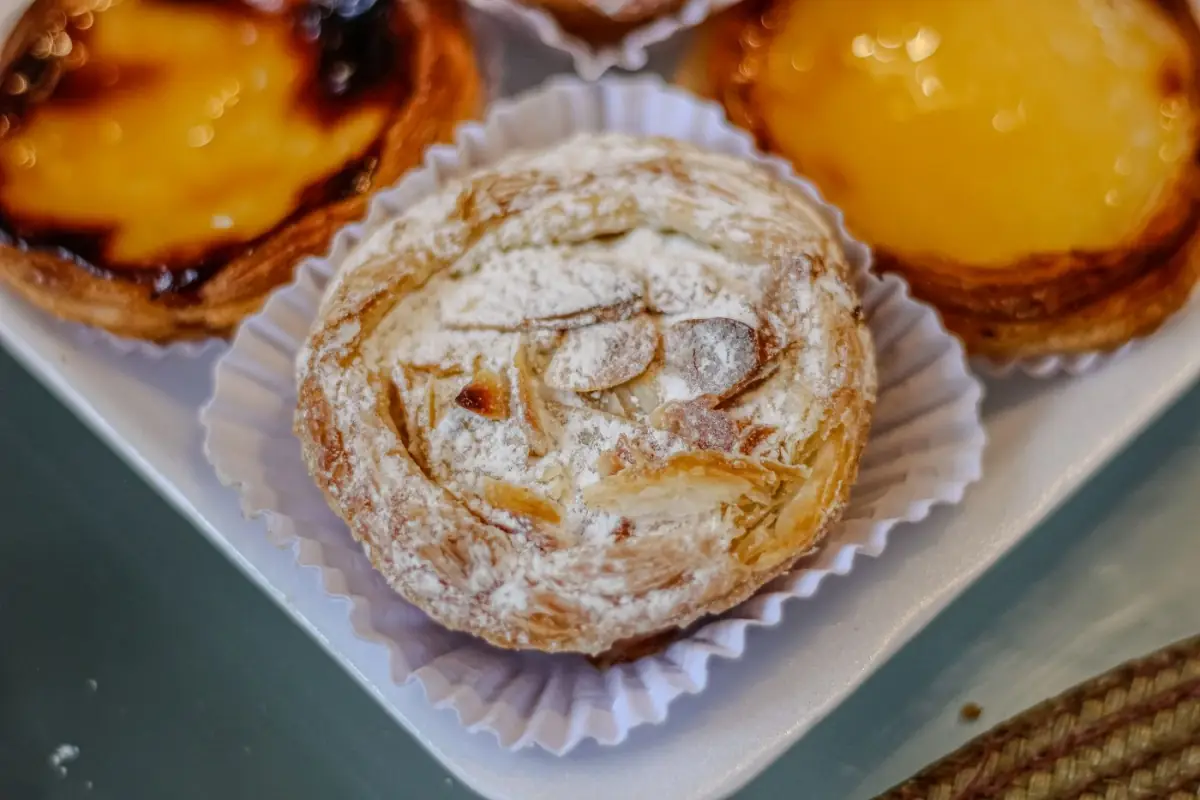
This heritage makes Algarve confectionery different from the rest of the country and an essential part of what you taste on a visit. Anyone wanting to fit the sweets into the full meal will find the overview in our guide to what to eat in the Algarve, which covers everything from cataplana (sealed copper-pan stew) to seafood before reaching dessert.
Which are the typical Algarve sweets you have to try?
The most representative sweets of the Algarve are the dom rodrigo, the morgado, the figos cheios (stuffed figs), the doce fino de amêndoa (fine almond sweet) and the maçapão (marzipan). They all share the same family of ingredients — almond, egg and sugar — but differ in shape, texture and the occasion on which they appear at the table. The table below sums up each one before we look at them in detail.
| Sweet | Main ingredients | What it's like | Where it's strongest |
|---|---|---|---|
| Dom rodrigo | Egg threads, almond, cinnamon, sugar | Wrapped in coloured silver paper, twisted at the ends | Lagos and the whole Barlavento |
| Morgado | Almond paste, egg sweet | Round cake decorated by hand, for celebrations | Loulé, Faro and Sotavento |
| Figos cheios | Dried fig, almond, chocolate or fennel | Fig opened and stuffed, flower-shaped | Interior and Sotavento |
| Doce fino | Marzipan moulded into fruit and shapes | Small coloured pieces, sold by weight | The whole region |
| Maçapão | Ground almond and sugar | Mouldable paste, the base of other sweets | The whole region |
It's worth trying them all at least once, because the difference between them lies more in the technique than in the base flavour. Anyone with a rented home with a kitchen can buy a small selection at the market and taste them over the days, without the commitment of a single tasting in a café.
What is dom rodrigo and where do you taste the best?
The dom rodrigo is the most recognisable Algarve sweet: egg threads wrapped in an almond paste with cinnamon and sugar, then bundled in coloured silver paper and twisted at both ends, like a large boiled sweet. Inside it's moist and very sweet; on the outside, the shiny paper makes it unmistakable in the window of any Barlavento pastry shop.
The origin in Lagos
The dom rodrigo is tied to Lagos, a Barlavento town that was once the Algarve's capital and a hub of Portugal's maritime expansion. The traditional recipe combines fios de ovos (egg threads cooked from yolk in syrup) — a convent confectionery technique — with the local almond. Anyone passing through Lagos to see Ponta da Piedade and Praia do Camilo will find the sweet in almost every pastry shop in the historic centre.
Today dom rodrigo is made all over the Algarve, but the tradition stays most alive in the Barlavento. For those using Lagos as a holiday base, our guide to where to stay in Lagos helps you choose the area; and the Alvor guide shows the neighbouring fishing village, equally rich in sweets and seafood.
What is the morgado and why is it the celebration sweet?
The morgado is an almond-paste cake filled and topped with egg sweet, decorated by hand with floral or geometric motifs. It's the wedding, christening and Christmas sweet par excellence in the Algarve, and its elaborate decoration — made in fine marzipan and painted — makes it look more like a piece of craftwork than a café dessert.
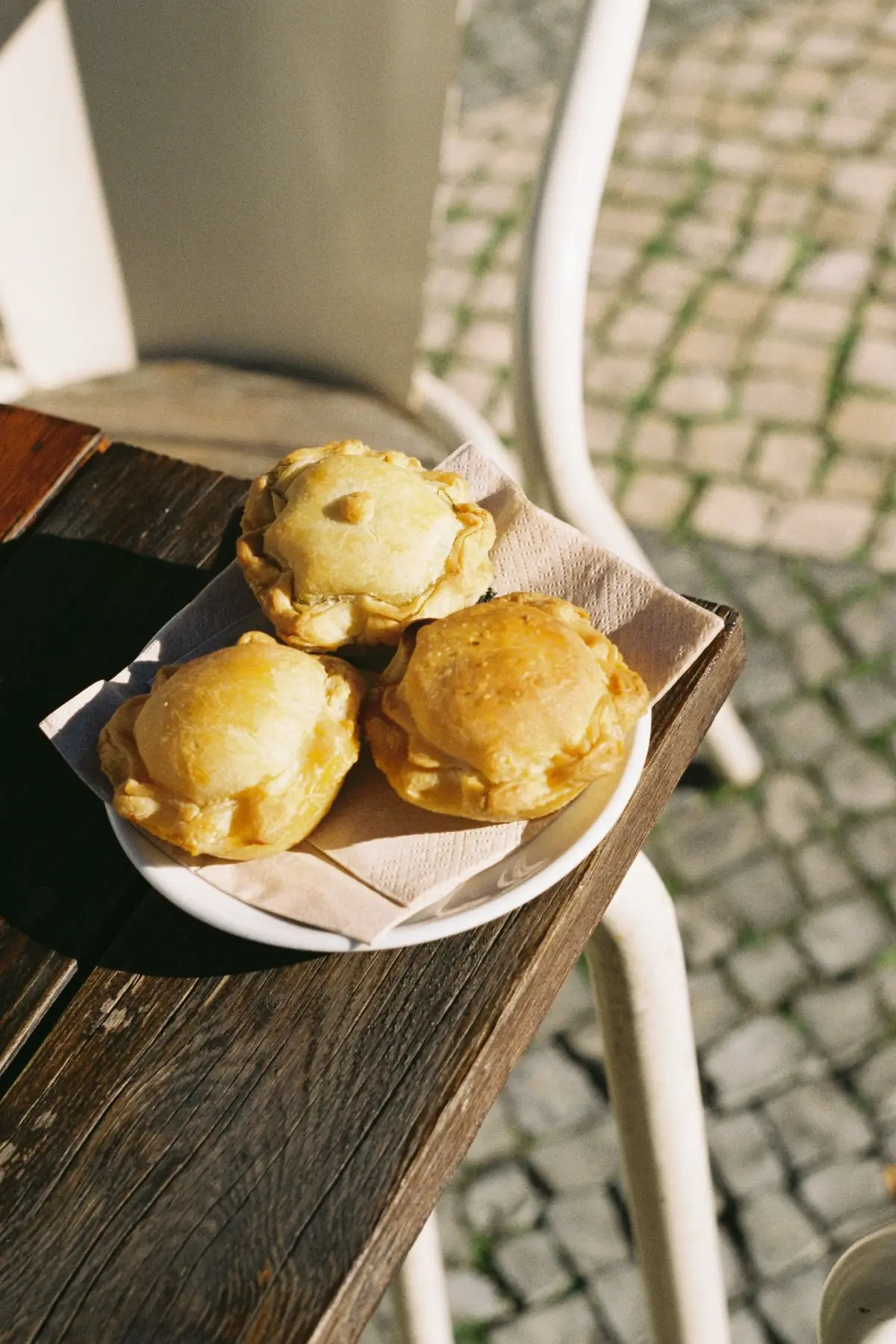
The morgado's bond with Loulé and the Sotavento is strong. Loulé is one of the towns with the deepest tradition of almond confectionery, and its municipal market — an Arab-inspired building in the centre — is one of the best places to buy sweets made by local producers. The Loulé morgado tends to be larger and more elaborate than the everyday versions.
Being a celebration sweet, the morgado isn't in every window: you look for it in the leading pastry shops and at the markets, above all in the Sotavento. Anyone exploring that half of the region will find the full context in our guide to the Sotavento, from Tavira to Olhão.
How are fig sweet and stuffed figs made?
Figos cheios (stuffed figs) are made by opening the dried fig and stuffing it with almond, chocolate, fennel or orange peel, before moulding it into a flower or star shape. Fig sweet, in turn, is a thick paste made from dried fig ground with almond and spices, sold in a mould or in small loaves, sliceable like firm marmalade. Both make use of the dried-fig harvest, plentiful in the Algarve's interior.
The dried fig as a base
The fig tree is, along with the almond and carob trees, one of the trees that define the Algarve's agricultural interior. The fig is harvested at the end of summer, dried in the sun and kept for the whole year, which makes it a pantry ingredient — always available, even out of season. That's why fig sweets are so common in the Sotavento and in the interior of Loulé and Silves, far from the coastal tourist strip.
- Figos cheios de amêndoa (figs stuffed with almond) — the most classic filling, with fennel to balance the sweetness.
- Figs with chocolate — a more modern version, popular in city pastry shops.
- Doce de figo em pão (fig sweet in a loaf) — sliceable, goes with cured cheese and wine.
- Fig with almond and cinnamon — an aromatic filling, close in profile to the dom rodrigo.
These sweets keep well at room temperature, which makes them the perfect souvenir to take home. In a holiday home they sit in the cupboard for several days without spoiling, ready to go with a mid-afternoon coffee after the beach.
What other sweet flavours mark the Algarve?
Beyond the almond, fig and egg sweets, the Algarve has other sweet flavours tied to the hills and the sea: Monchique honey, medronho (arbutus-berry spirit), alfarroba (carob) and the orange of the barrocal. These products go into liqueurs, cakes and regional sweets, and help explain why the confectionery changes character depending on the area of the region.
Honey and medronho from the hills
The Serra de Monchique, in the inland Barlavento, produces quality honey and the famous medronho — a spirit distilled from the fruit of the arbutus tree, which gives its name to liqueurs and sweets. Anyone heading up to Monchique and the Caldas for the spa can taste these products at source; our guide to Caldas de Monchique covers the hills, the spa and the mountain flavours.
Carob and orange
Carob, the pod of the carob tree, was for centuries food for animals and for people in times of scarcity; today it returns to the pastry shops in cakes and chocolates, as an alternative to chocolate. The Algarve orange, from the barrocal between the hills and the coast, scents cakes and egg sweets. Both go into the regional sweet kitchen and complete the picture of the flavours found at the region's food fairs and festivals.
These products of the hills and the barrocal give depth to Algarve confectionery and show that it doesn't end at the beach strip. It's worth heading up into the interior to understand where the ingredients that fill the coastal windows come from.
Where to buy Algarve sweets: markets, pastry shops or supermarket?
The best Algarve sweets are bought at the traditional pastry shops and the municipal markets, not in supermarket packaging. At the markets you find sweets made by local producers, often at their own stalls, with a quality and freshness that industrial production can't match. The table compares the main places to buy by area.
| Place | Area | What you'll find |
|---|---|---|
| Loulé Municipal Market | Centre | Morgado, almond sweets, honey, stuffed figs |
| Olhão Market | Sotavento | Fig and almond sweets and Ria Formosa products |
| Tavira pastry shops | Sotavento | Dom rodrigo, egg sweets, almond cheeses |
| Lagos pastry shops | Barlavento | Dom rodrigo, morgado, doce fino |
| Faro pastry shops | Sotavento | Full selection of convent confectionery |
The Olhão market, with its two waterfront pavilions, and the Loulé market are essential stops for anyone wanting to buy sweets from the people who make them. For those based in the Sotavento, it's worth combining the sweet-buying with fresh seafood — our guide to where to eat fresh seafood shows the same markets from the angle of fish and shellfish.
The rule is simple: the closer you buy to the person who makes the sweet, the better the freshness and the price. The market and the neighbourhood pastry shop always beat the supermarket packet, and it's in that direct purchase that you taste the real Algarve confectionery.
Is it worth having a home with a kitchen to enjoy the sweets?
Yes, and for a practical reason: with a holiday home and your own kitchen, the sweets stop being a one-off tasting in a café and become part of everyday life. You buy a selection at the market, keep it in the fridge and taste it at breakfast, at the after-beach snack or at the end of dinner, without the cost of a restaurant dessert per person every day.
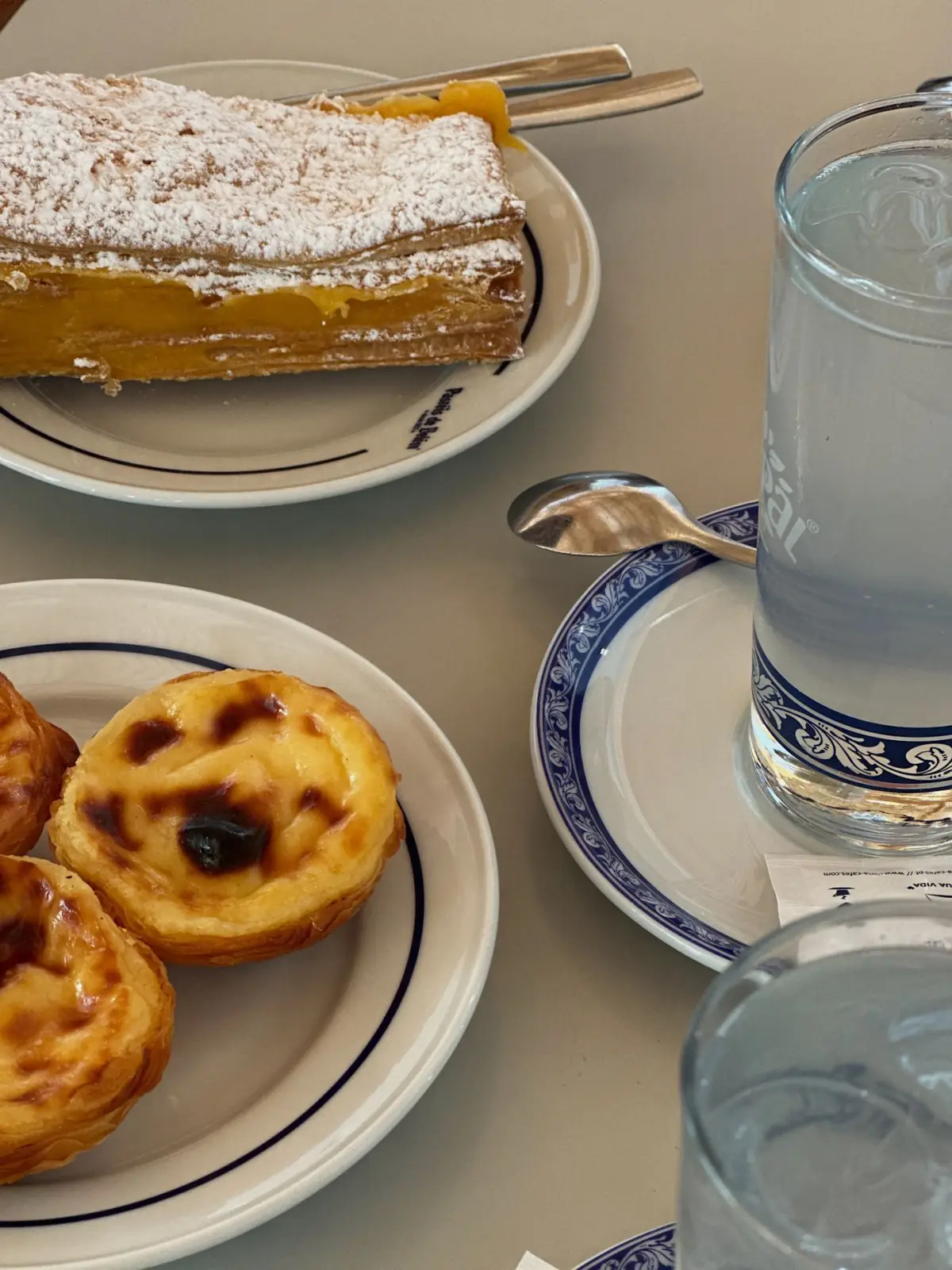
Faro is a practical base for this approach. It sits about 3 km from the airport, has its own market, is close to Olhão and Loulé and works as the gateway to the Sotavento. In our inventory, homes like the 2-bedroom apartment in Faro of 106 m² put the traveller a few minutes from the city's pastry shops and the neighbouring markets. For those who prefer the Sotavento's most charming riverside town, the 3-bedroom apartment in Tavira of 91 m² gives direct access to the local sweets and the islands of the Ria Formosa.
Real-time availability and prices on Homing — book direct, cheaper than Booking, Airbnb and Hotels.com. Click «See dates and price».
All these homes are booked directly on Homing, our official partner — with no platform commission and cheaper than Booking, Airbnb or Hotels.com, with support in Portuguese, English, French and Spanish. Before locking in your stay, it's worth reading our checklist before booking to confirm everything that matters in a home with a fitted kitchen.
How to fit the sweets into your holiday itinerary?
The sweets fit into the itinerary at the market stops and on town afternoons, between beach days. A balanced week-long itinerary crosses beach, nature and food, and the sweets appear naturally when you visit a town with a market or pause at a historic pastry shop. Our 7-day itinerary and weekend itinerary show how to spread out these stops.
- Set aside a morning for the market in your area — Loulé, Olhão or Tavira — and buy the selection of sweets there.
- Combine the purchase with fish and fruit for the home, in a single trip.
- Keep the egg sweets in the fridge and the fig ones in the cupboard.
- Taste one a day at the afternoon snack, after the beach, so as not to overdo it all at once.
- Take the stuffed figs and the fig sweet as a souvenir — they keep for weeks.
That way, the sweets become a thread running through the holiday rather than an isolated curiosity. Anyone wanting to go deeper into the food across their stay will find the complement in the guide to the best restaurants in the Algarve, where dessert rounds off meals of sea and land across the whole region.
Sources and references
- Turismo do Algarve (Visit Algarve) — https://www.visitalgarve.pt/
- Wikipedia — Algarve — https://pt.wikipedia.org/wiki/Algarve
- Wikipedia — Dom Rodrigo (sweet) — https://pt.wikipedia.org/wiki/Dom_Rodrigo
- Wikipedia — Portuguese convent confectionery — https://pt.wikipedia.org/wiki/Do%C3%A7aria_conventual
- Wikipedia — Medronho — https://pt.wikipedia.org/wiki/Aguardente_de_medronho
Original editorial article by Maré Algarve, based on official sources (Turismo do Algarve, ICNF, ABAE/Blue Flag, IPMA, INE) and on our experience of holiday rentals in the Algarve. Prices and availability vary — always check each property's page.