
Caldas de Monchique is a small thermal resort tucked into the Serra de Monchique, in the municipality of Monchique (Barlavento), about 65 km from Faro Airport. The mineral water rises naturally at close to 32 °C, in a valley of eucalyptus, chestnut trees and streams, at roughly 250 metres of altitude. It's the place where you visit the Algarve without going to the beach: springs, spa, trails and Fóia, the highest point in the region, at 902 metres.
What is Caldas de Monchique?
Caldas de Monchique is a historic thermal resort at the heart of the village of Monchique, in the Barlavento Algarve, where a spring of hot mineral water rises naturally at around 32 °C. It lies in a small wooded valley between the village of Monchique and the coast, at roughly 250 metres of altitude, ringed by eucalyptus, chestnut trees and streams. The complex brings together the thermal baths, a spa, hotels, an old square of plane trees and the Monchique water bottling plant, which distributes the spring across the whole country.
The water is the reason for everything. It rises mineralised and warm all year round, and has for centuries been linked to relief from rheumatic, muscular and respiratory complaints. Romans and, later, the Portuguese court frequented these waters; King John II is said to have come to the Caldas in 1495 in the hope of recovery. Today the register is more about well-being than cure: you come to the Caldas to slow down, for a spa circuit, to walk in the hills and to escape the heat and the crowds of the sands.
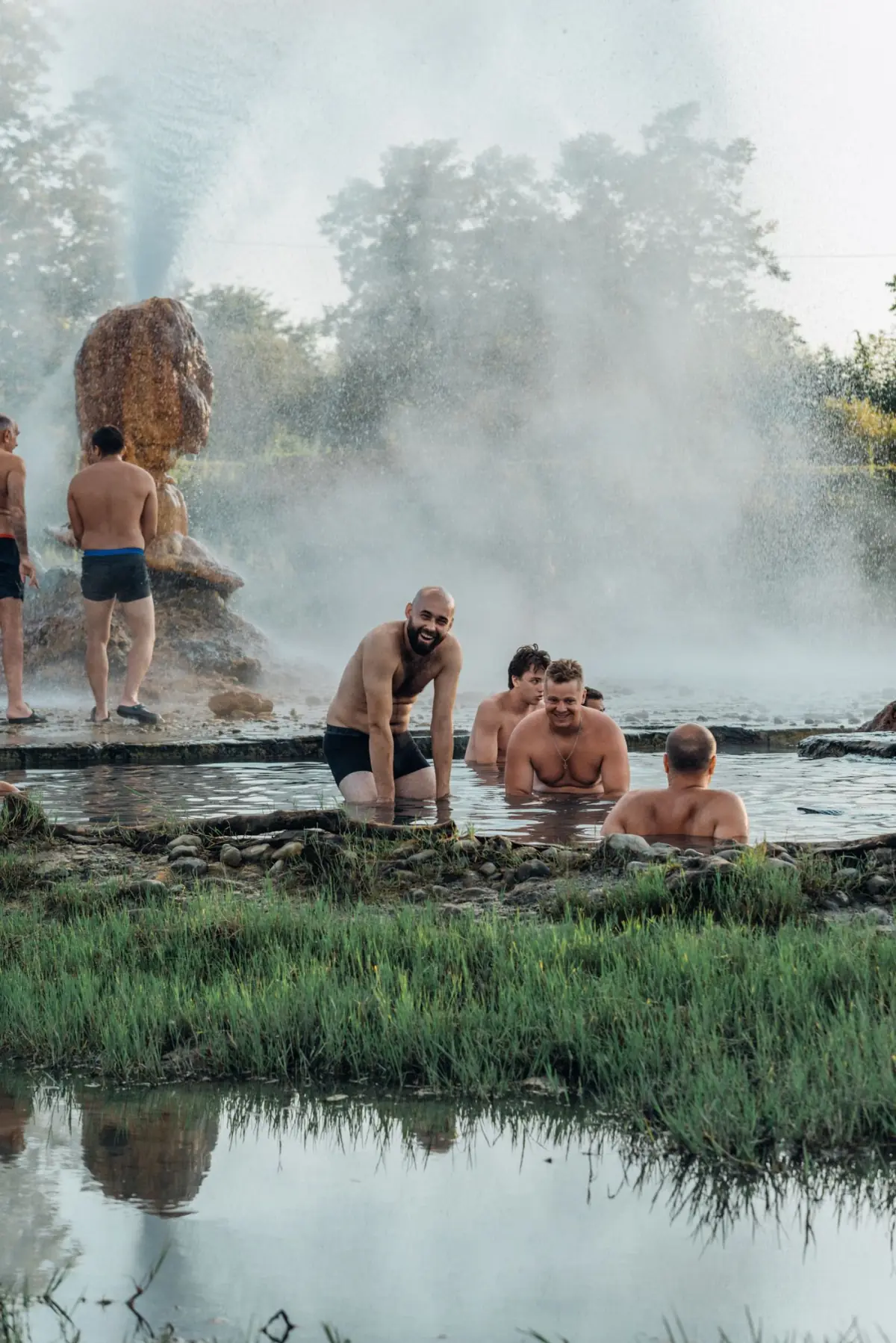
Those arriving used to the Algarve's beaches are struck by the contrast: here the sound is of running water and leaves, not waves. It's a green, cool, unhurried Algarve, which works well as a break day within a holiday beyond the beach or as an off-season weekend getaway.
Where is it and how do you reach Caldas de Monchique?
Caldas de Monchique lies about 65 km from Faro Airport, which works out at close to 1 hour by car along the A22 (Via do Infante) to Portimão and then up the hills on the N266. The village of Monchique has around 6,045 inhabitants and is the seat of the most mountainous municipality in the Algarve; the Caldas sits some 6 km below the village, already descending towards Portimão.
The sensible way to get there is by car. There is a bus between Portimão and Monchique, but with few connections a day and no flexibility to explore Fóia and the trails. If the trip to the Algarve already means moving between villages and beaches, the car pays for itself in freedom — and the climb on the N266 through the eucalyptus is, in itself, part of the outing.
| From | Approx. distance | Approx. time |
|---|---|---|
| Faro Airport | 65 km | ≈ 1 h 00 |
| Portimão | 20 km | ≈ 25 min |
| Lagoa | 30 km | ≈ 35 min |
| Alvor | 25 km | ≈ 30 min |
| Lagos | 45 km | ≈ 50 min |
| Fóia (hilltop) | 12 km from the village | ≈ 20 min |
Times vary with summer traffic and with driving in the hills, which calls for calm on the bends. For those wanting to combine hills and sea in the same route, it's worth cross-reading this guide with our guide on how to reach and get around the Algarve, which details car hire, tolls and connections.
How do the springs and the spa work?
Caldas de Monchique works on two registers: classic thermalism and the modern spa. With thermalism, you follow a programme aimed at rheumatic, muscular or respiratory complaints, usually with prior booking and, in some cases, medical referral. The spa, on the other hand, is more freely accessible: hot-water circuits, Turkish bath, sauna, showers and massages, designed to relax rather than to treat.
What to expect from a spa visit
A spa circuit at the Caldas usually combines a heated indoor pool, jacuzzi, sauna and Turkish bath, with the hills' mineral water as the lead. It's worth booking ahead in summer and at weekends, taking flip-flops and a cap if required, and allowing one to two hours for an unhurried circuit. Prices vary with the programme and the season, so always confirm directly with the thermal facility.
For thermal treatments with therapeutic aims, contact the baths before travelling: some programmes run for a minimum of several days and require an assessment. Those who simply want a day of rest stick to the spa, which is the simplest gateway to feeling the water of the hills.
Spa with the family or as a couple
The spa works well as a break for two on a romantic getaway, but it also welcomes families, with the caveat that the sauna, Turkish bath and some circuits have a minimum age and their own rules. For smaller children, the plan tends to be the heated pool and a short stroll through the gardens of the Caldas, rather than the full circuit. Confirm the conditions by age when booking, as they vary between programmes and times of year.
Fóia and the Serra de Monchique: what to see?
Fóia, at 902 metres of altitude, is the highest point in the Algarve and the region's great viewpoint. From the top, on clear days, a huge panorama opens up: to the west Cape St Vincent and the Costa Vicentina, to the south the bay of Portimão and, to the east, the plain as far as the eye can see. You drive up the Fóia road from the village of Monchique in around 20 minutes, with several viewpoints and stalls of hill produce along the way.
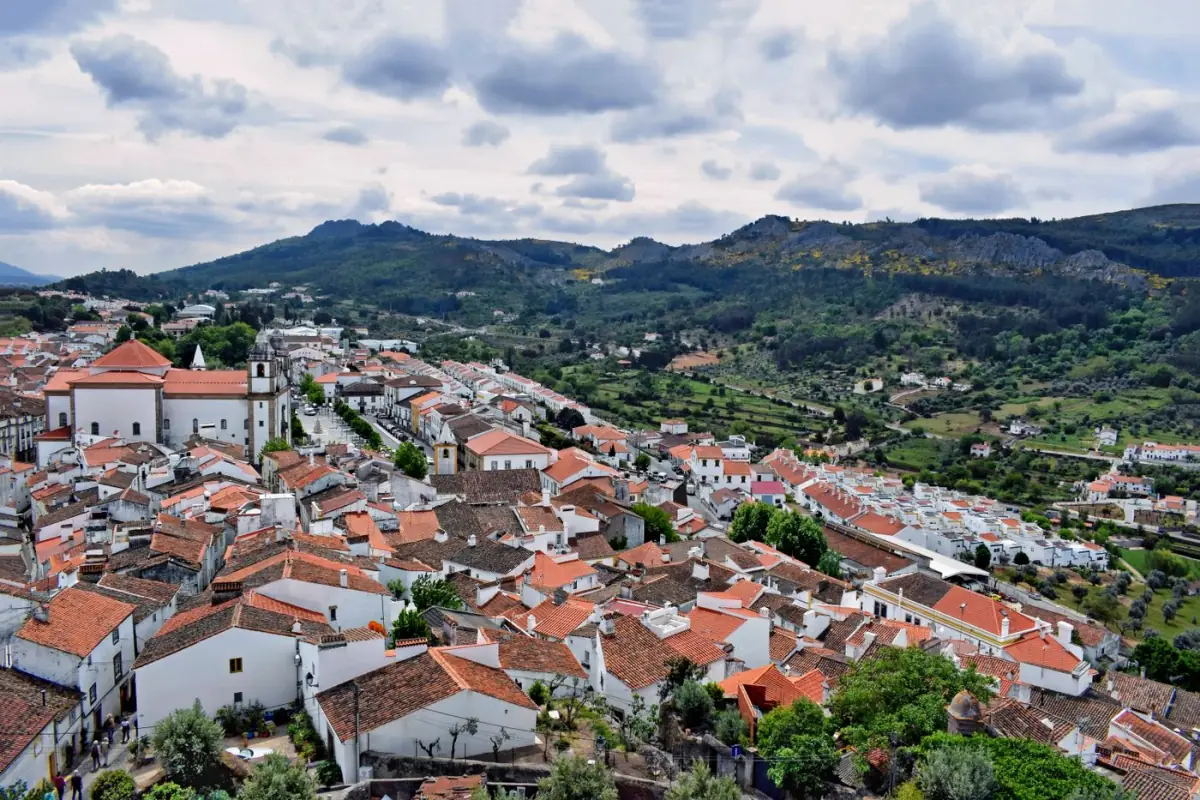
The hills are also a land of water, honey, medronho and cured meats. The Serra de Monchique holds the Algarve's finest medronho — the spirit distilled from the fruit of the strawberry tree — and a mountain cuisine that swaps fish for cured ham and stews. The village markets and taverns are the place to taste it, and the theme ties into our guide to Algarve wines and wine tourism, which travels the region's cellars and distilleries.
Cerro de São Miguel and Picota
Alongside Fóia, the hills have Picota, the second highest peak, at around 774 metres and with shadier, more wooded trails. It's less visited than Fóia and rewards those after a hike rather than a roadside viewpoint. Between the two peaks, the Serra de Monchique shows the green, damp side that the rest of the Algarve lacks.
What are the best trails from Monchique?
Monchique is one of the Algarve's best walking bases, with waymarked trails leaving the village and the Caldas through eucalyptus, streams and old terraces. The altitude and the shade make these routes comfortable even in months when the coast bakes in the heat, which makes the hills a walking destination almost all year round.
- Climb to Fóia — walking routes linking the village to the summit at 902 m, with a demanding altitude gain and broad views opening up as you climb.
- Picota trail — a more wooded, cooler circuit up to the range's second peak (≈ 774 m), with stretches of dense woodland.
- Camino de Santiago / Via Algarviana — the great route crossing the Algarve from Alcoutim to Cape St Vincent passes through Monchique and offers half-day stretches.
- Trails of the Caldas streams — short, flat walks through the thermal valley, ideal to combine with the spa visit.
Those wanting to go further will find routes through the Serra de Monchique, the Seven Hanging Valleys on the coast and the Rota Vicentina on our page of trails and walks in the Algarve. Take water and sure footwear and download the offline map: mobile coverage in the hills is patchy.
Is it worth going to Monchique off-season?
Yes, and it may be the hills' best argument. While the coast closes its terraces and empties its beaches between November and March, Monchique stays alive on its own logic: springs, walks, markets and the quiet of the forest. The hills are several degrees cooler than the coast in summer and, in winter, take on an almost autumnal character of mist, fireplaces and warming medronho.
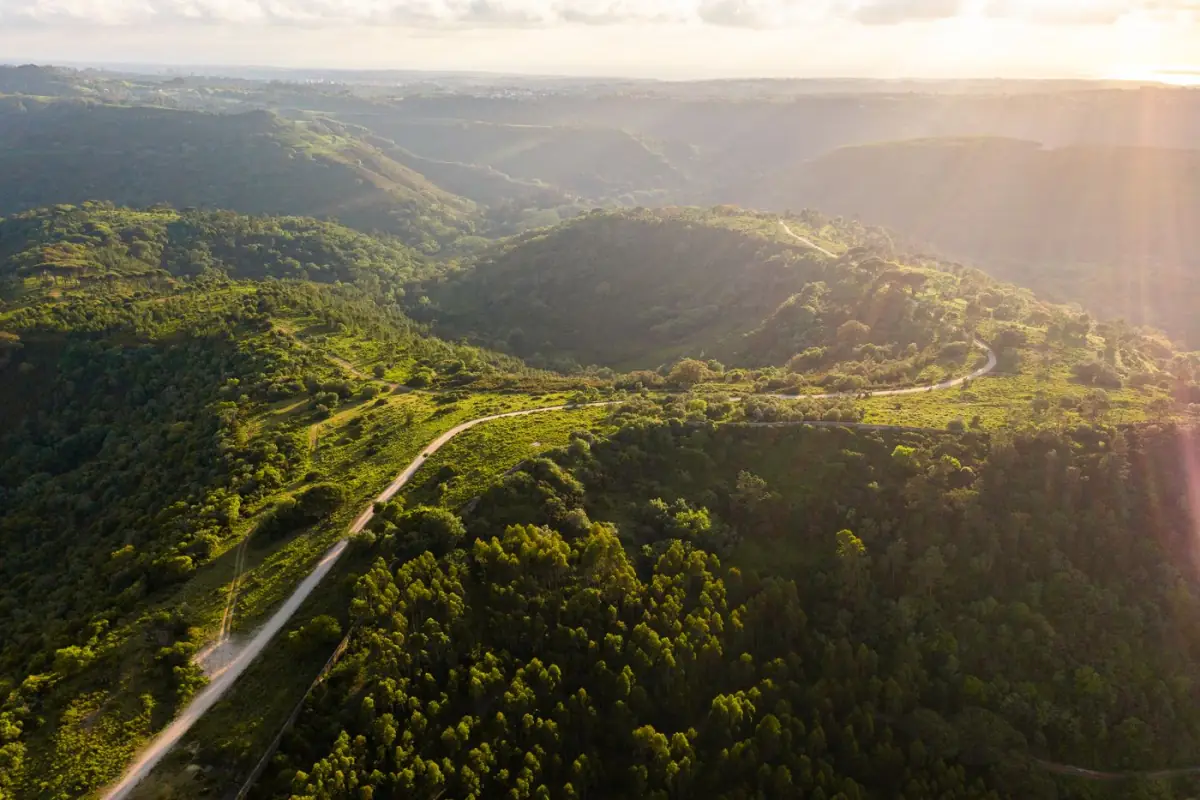
In late winter, the slopes fill with mimosa and almond blossom, and spring is perhaps the loveliest season to climb Fóia. To plan a low-season getaway, cross-read this guide with our guide to the Algarve off-season, which explains what's open, what's closed and how much you save outside summer.
The flip side is the weather: the hills catch more rain and fog than the coast, and Fóia can wake up inside the clouds. Check the forecast before heading up to the summit — on an overcast day, the viewpoint comes up blank and the spa becomes the right plan.
There's also a recent scar to bear in mind: the Serra de Monchique was hit by a major wildfire in 2018, and part of the forest still shows the signs of recovery, alongside slopes that have greened again. It doesn't spoil the visit, but it explains the mosaic landscape seen from Fóia and helps you understand why the water and forest of these hills are taken so seriously by those who live here.
Where to stay to visit Caldas de Monchique?
The hills have little holiday-rental supply, and our inventory does not include homes within Monchique. The practical base for visiting the Caldas is the nearby Barlavento coast: Portimão is about 25 minutes by car, and Lagoa and Alvor are 30–40 minutes away. From there you do Monchique as a day outing and sleep near the beach.
Portimão is the most logical choice: a city with everything open all year round, 52 km from Faro Airport, with Praia da Rocha at its door and a direct road to the hills. In Portimão apartments, the indicative bands for 2026 hover around 50–95 € a night in low season and 130–240 € in high season for a one- or two-bedroom — figures that vary with the dates; always check on each home's page.
Base homes in the Barlavento, near the hills
In our inventory there are good base options 30 minutes from the Caldas. The 4-bedroom apartment in Portimão suits groups or families who want space and the city at their door, while the 2-bedroom apartment with private pool in Portimão, at 150 m², adds a return to the pool after a day in the hills. Those preferring the Lagoa side will find in the 3-bedroom apartment in Lagoa a central base between Carvoeiro, Ferragudo and the Monchique road.
Real-time availability and prices on Homing — book direct, cheaper than Booking, Airbnb and Hotels.com. Click «See dates and price».
All these homes are booked direct on Homing, our official partner — cheaper than Booking, Airbnb and Hotels.com, with no platform commission or hidden fees, with support in Portuguese, English, French and Spanish. If you're still deciding on the area, our guide on Praia da Rocha and Portimão helps you work out where to sleep in the Barlavento.
How long do you need for Monchique and how much does it cost?
For most people, Monchique is sorted in a well-used day: morning on Fóia and the trails, lunch in the village, an afternoon of spa at the Caldas. Those who enjoy walking or serious thermalism can stretch it to two or three days, sleeping in the hills or on the nearby coast. As a day within a longer holiday, it fits well mid-week, to break the beach routine.
The direct costs of Monchique are modest: the climb to Fóia is free, the trails too, and the spa charges per circuit or treatment — figures that depend on the programme and the season and should be confirmed at the thermal facility. The bulk of the holiday budget remains the accommodation and the car, not the hills.
| Type of home | Low season | Mid season | High season |
|---|---|---|---|
| Studio | 40–75 € | 60–110 € | 95–170 € |
| 1–2 bedroom apartment | 50–95 € | 80–150 € | 130–240 € |
| 2–3 bedroom apartment with pool | 70–130 € | 110–200 € | 160–320 € |
| 3-bedroom villa with private pool | 130–300 € | 220–450 € | 300–650 € |
These figures are indicative and vary a lot with the dates, the lead time and the length of stay — always check on each home's page. To get a sense of the full cost of a holiday in the area, with car, food and extras, see our guide to how much it costs to rent a holiday home in the Algarve.
Monchique and the coast: how to combine hills and sea?
The best thing about basing yourself in the Barlavento is having the hills and the sea the same distance away. From Portimão, in a single day, you can climb Fóia in the morning and dip in the afternoon at Praia dos Três Irmãos or Praia do Vau. From Lagoa, Monchique is half an hour away and so is Benagil — hills in the morning, cave in the afternoon.
This combination of landscapes is, in fact, what sets a well-planned Algarve holiday apart. Those building a longer itinerary will find in our 7-day Algarve itinerary ideas that slot Monchique among the beach days, without wasting time on the road.
- Book the base home in the Barlavento (Portimão, Lagoa or Alvor) direct on Homing.
- Pick a day of clear weather to climb Fóia and do a trail.
- Book the Caldas spa ahead, ideally for early morning.
- Save the afternoon for a dip at a nearby beach, such as Praia da Rocha or Três Irmãos.
Following this order avoids the most common mistake of those visiting Monchique: going up the hills on a foggy day and being left without a view. With the home booked nearby and a well-chosen day, the hills deliver all they promise — and the rest of the holiday carries on by the sea.
Sources and references
- Turismo do Algarve (Visit Algarve) — https://www.visitalgarve.pt/
- Wikipédia — Monchique — https://pt.wikipedia.org/wiki/Monchique
- Wikipédia — Serra de Monchique — https://pt.wikipedia.org/wiki/Serra_de_Monchique
- Wikipédia — Fóia — https://pt.wikipedia.org/wiki/F%C3%B3ia
- Via Algarviana — https://www.viaalgarviana.org/
Original editorial article by Maré Algarve, based on official sources (Turismo do Algarve, ICNF, ABAE/Blue Flag, IPMA, INE) and on our experience of holiday rentals in the Algarve. Prices and availability vary — always check each property's page.