
The Algarve has made wine since Roman times and today holds four protected designations of origin — Lagoa, Lagos, Portimão and Tavira — alongside the regional Algarve designation. Most wineries cluster in the inland parts of the municipalities of Lagoa, Silves and Portimão, 20–40 minutes from the beaches, and almost all welcome visitors for a tasting by appointment.
Anyone wanting to combine beach and wine tourism gains from choosing a base in the Centre or the Barlavento: from Lagoa or Portimão you reach the main wineries in half an hour by car, and Praia da Marinha or Praia da Rocha in even less.
Does the Algarve make good wine?
Yes, and it has done so for more than two thousand years. Algarve wine went through a long spell of disrepute in the 20th century, tied to mass production of aguardente and rustic wines, but the latest generation of producers has repositioned the region with smaller vineyards, noble grape varieties and modern winemaking. The result is full-bodied reds that make the most of the heat and fresh whites that surprise anyone expecting a heavy warm-climate wine.
The region has a Mediterranean climate with more than 3,000 hours of sun a year, poor, well-drained soils and an Atlantic influence that cools the nights. This day-to-night temperature swing preserves the acidity and the aromas, especially in the inland vineyards of Silves and the hills. It's the same kind of condition that makes good wine in southern Spain and the Douro Valley.

For anyone who associates the Algarve only with the beach, discovering this side of it is a good reason to go beyond the sand. It pairs well with the itineraries of those already planning what to do in the Algarve beyond the beach and with a guide to regional cuisine, because most wineries serve tastings paired with cheese and cured meats from the interior.
What are the designations of origin in the Algarve?
The Algarve has four protected designations of origin (DOC) — Lagoa, Lagos, Portimão and Tavira — alongside the broader Vinho Regional Algarve designation, which covers the whole region and gives producers the freedom to use international grape varieties. The four DOCs correspond to municipalities with a long winemaking history, and each has a slightly distinct profile.
The Lagoa DOC is the best known and was historically the heart of Algarve wine; the municipality of Lagoa still concentrates several wineries open to visitors today. Portimão and Lagos, in the Barlavento, have smaller but recovering production, while Tavira, in the Sotavento, keeps a tradition of its own tied to the plains north of the town.
| Designation | Coast | Municipality | Predominant profile |
|---|---|---|---|
| DOC Lagoa | Centre | Lagoa / Silves | Full-bodied reds, Negra Mole base |
| DOC Portimão | Barlavento | Portimão | Reds and whites, small scale |
| DOC Lagos | Barlavento | Lagos | Historic production in recovery |
| DOC Tavira | Sotavento | Tavira | Tradition of its own in the interior |
| VR Algarve | Whole region | Various | International varieties and modern blends |
In practice, the overwhelming majority of what you'll taste at a winery today is labelled Vinho Regional Algarve, not DOC, because the regional designation allows Syrah, Touriga Nacional or Alicante Bouschet to be used with more freedom. Knowing how to tell the labels apart helps you understand what's in your glass, but it isn't a condition for enjoying it.
Which grape varieties and wines will you find at the tastings?
Among the reds, the historic variety is Negra Mole, native to the Algarve, which gives lighter-coloured wines and soft tannins; today it often appears blended with Castelão, Aragonez (Tempranillo), Touriga Nacional and Syrah, which bring structure and colour. Among the whites, Arinto, Síria (also called Roupeiro) and Verdelho dominate, chosen for the acidity that balances the region's heat.
The reds of the Algarve
Expect warm reds, with ripe fruit and generous alcohol, but with the new generation chasing more freshness. Pure Negra Mole is a curiosity worth asking for at a tasting, because it barely exists outside the Algarve. The blends with Syrah and Touriga Nacional are the most crowd-pleasing for anyone who likes a full-bodied red.
The whites and rosés
Algarve whites have improved hugely and are the natural match for the coast's seafood — they pair especially well with what you eat when you go to eat fresh seafood in the Algarve. The rosés, light and fresh, are popular in summer and easy to take along to a beach picnic.
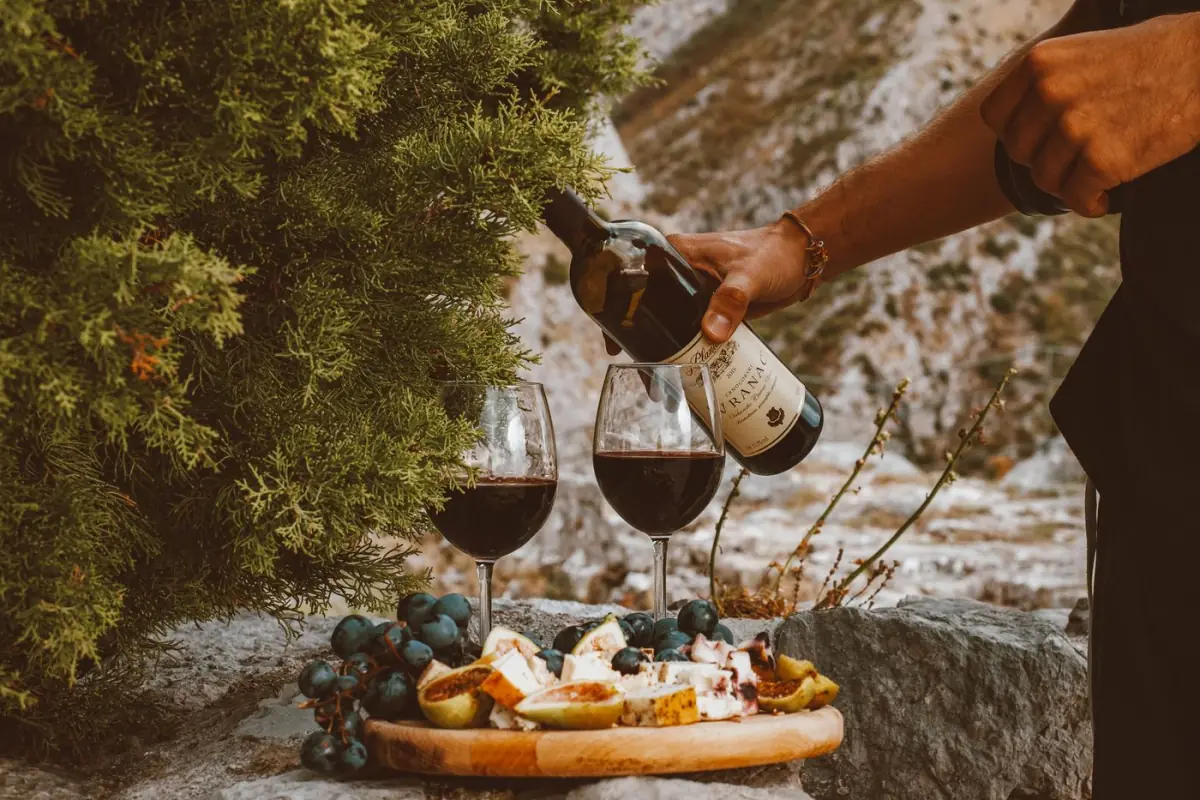
It's also worth tasting the medronho aguardente and the liqueurs of the hills, often available at the same inland wineries. They're not wine, but they're part of the Algarve's distilling culture and round off the tasting for anyone wanting to take home a different bottle.
Where are the wineries and where to stay nearby?
The greatest concentration of wineries open to visitors is in the interior of the municipalities of Lagoa and Silves, in the Centre of the Algarve, with a few more producers scattered across Portimão, Loulé and Tavira. Anyone wanting to do wine tourism seriously gains by basing themselves in Portimão or Lagoa, because they're half an hour from the main wineries and at the same time next to top beaches.
From Portimão (52 km from Faro Airport) you reach Praia da Rocha in a few minutes and, in about 20, the vineyards north of Silves. Lagoa, in the same municipality as Praia da Marinha and Benagil, is the most central spot of all for alternating a winery in the morning with the beach in the afternoon.
| Base | Municipality | To Faro Airport | Advantage for wine tourism |
|---|---|---|---|
| Lagoa | Lagoa | ≈ 45 km | The most central; DOC wineries and beaches all around |
| Portimão | Portimão | ≈ 52 km | A town with amenities, close to the Silves vineyards |
| Carvoeiro | Lagoa | ≈ 44 km | Charm and beaches, a base in the same municipality |
| Silves | Silves | ≈ 46 km | In the heart of the inland wine area |
| Albufeira | Albufeira | ≈ 26 km | Further east; amenities and easy access |
If the priority is not to drive much after tasting wine, stay in the Centre: from Lagoa or Carvoeiro you have everything within a short radius. For those arriving from afar and wanting to grasp the logic of the areas, our guide to where to stay in the Algarve and the Barlavento vs Sotavento help you choose the right municipality before booking.
How does a winery visit work?
Almost all Algarve wineries take visitors by prior appointment rather than spontaneous arrival, especially in high season. The typical visit lasts about an hour and includes a tour of the vineyard and the vat or barrel room, followed by a tasting of three to five wines paired with regional snacks. Some offer a lunch or dinner with wine, which needs to be booked further in advance.
- Book ahead by phone or email — in July and August some wineries sell out days in advance.
- Check whether the tasting includes food; if it does, it counts as a light meal.
- Ask whether the tasting is free with a purchase or paid separately (it varies from winery to winery).
- Sort out who's driving: if you're tasting in earnest, plan a driver or a transfer.
- Bring cash or a card to buy bottles at the end — that's where the prices are best.
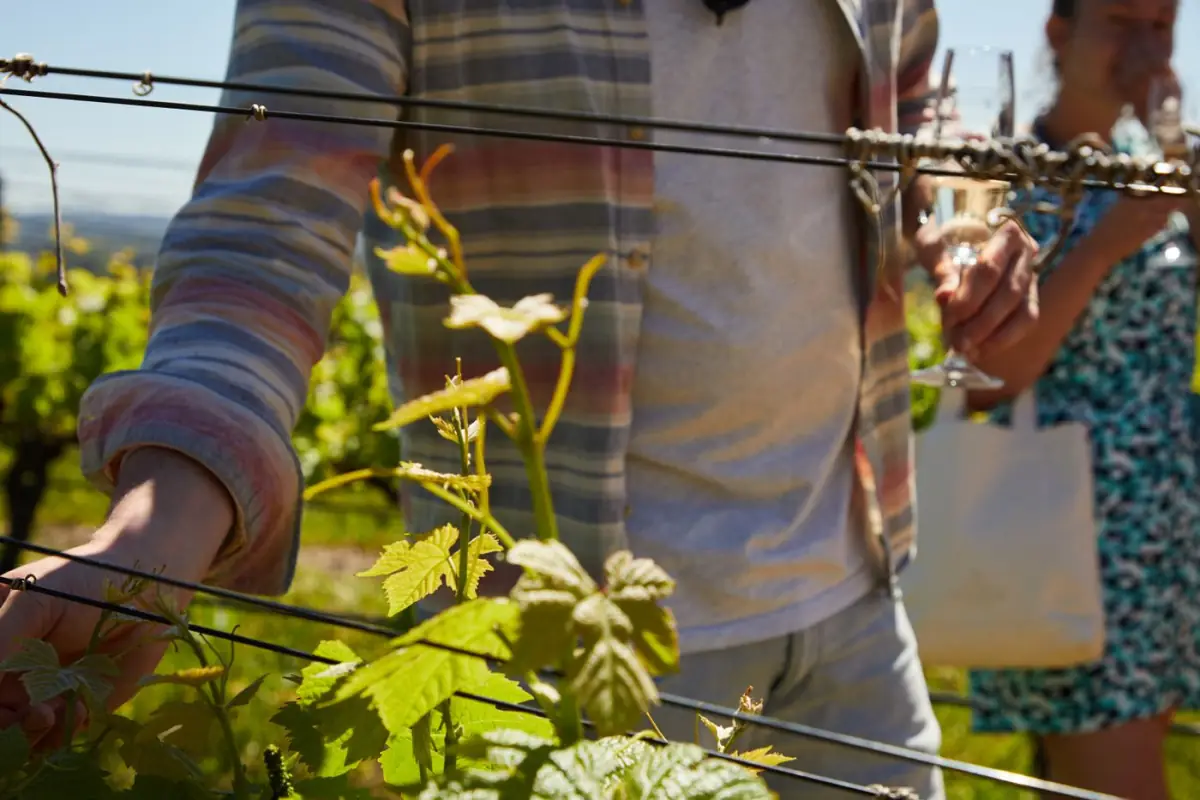
The difference between a good and a bad afternoon of wine tourism almost always lies in the planning beforehand. Booking days ahead, grouping nearby wineries on the same route and settling the driver right at the start turns the outing into a relaxed experience rather than a race against the clock.
What's the best time of year for wine tourism?
The best time to see the winery in action is September and early October, during the harvest, when the grapes arrive at the winery and the smell of the must fills the air. It's also when many producers hold harvest events open to the public. Spring, from March to May, is the calmest and coolest period to stroll through the vineyard without the summer heat.
Summer works, but the inland heat can be intense in the early afternoon — book your visits for the morning or late afternoon. The off-season Algarve, in winter, on the other hand, is a pleasant surprise: the wineries are quiet, there's availability and red wine tastes even better on a cooler afternoon in the Monchique hills.
| Period | What to expect | Practical notes |
|---|---|---|
| March–May | Green vines, mild weather | Few people; good for photos |
| June–August | High season, inland heat | Book early; morning visits |
| September–October | Harvest, winery at work | The best time; book ahead |
| November–February | Total calm, low rates | Check whether the winery opens that month |
Whatever the month, always confirm by phone before going, because many small wineries have reduced hours outside summer. Combining the wine afternoon with the hills works especially well in autumn — you can add a getaway to the Caldas de Monchique, a few kilometres from the Barlavento vineyards.
What one-day wine route to take?
A good day of wine tourism in the Algarve combines two wineries with a lunch break and a beach in the late afternoon — without covering more than 60 km in total. The key is to stay within the same geographical axis, usually the interior of Lagoa and Silves, and leave the beach for the end, when the heat has eased.
Morning: the first winery
Start early, around 10am, with the booked visit to the most distant winery of the day — that way you do the longest leg with a clear head. The vineyards north of Silves are a good starting point, with the hills in the background.
Afternoon: lunch and a second tasting
Have lunch at an inland tasca — it's part of the experience — and head for a second winery closer to the coast. To choose a table, the guide to the best restaurants in the Algarve by area has options in the interior of Lagoa and Silves serving regional cooking at honest prices.
Late afternoon: the beach
Finish at a beach in the same municipality. From Lagoa, Praia da Marinha is a few minutes away and offers one of the best late afternoons in the Algarve. Anyone staying in Portimão has Praia da Rocha on the doorstep to close the day.
This format — two wineries, a regional lunch and a beach — works at any time of year, you just adjust the hours to the heat. It's also the most relaxed way to discover the local wine without turning the outing into a marathon.
Where to stay to combine beach and wineries?
To alternate beach in the morning and a winery in the afternoon without big journeys, the best base is an apartment in the Centre or the Barlavento, in Portimão or Lagoa. An apartment gives you a kitchen to store and open the bottles you buy at the wineries, a fridge for the whites and space to rest between tastings — advantages a hotel room doesn't have.
Our inventory has good options in this area. The 3-bedroom apartment in Portimão suits families or two couples wanting to share the car and the wine route, while the 1-bedroom apartment with a private pool in Portimão is ideal for a couple wanting beach in the morning and a winery in the afternoon, with a swim at the end of the day. In Lagoa, right in the municipality of the DOC wineries, the 2-bedroom apartment in Lagoa puts you in the most central spot of all.
Real-time availability and prices on Homing — book direct, cheaper than Booking, Airbnb and Hotels.com. Click «See dates and price».
Booking directly on Homing, our official partner, comes out cheaper than on Booking, Airbnb or Hotels.com, because there's no platform commission or hidden fees, and support is in Portuguese, English, French and Spanish. Prices vary with the dates — confirm on each home's page before booking. To see the difference in cost, look at the comparison between direct booking and Booking or Airbnb.
How much does wine tourism in the Algarve cost?
A visit with a tasting comes to accessible figures compared with other European wine regions, and at many wineries the tasting is free or discounted if you buy bottles at the end. The bulk of a wine-tourism day's budget tends to go on the meal, the transport and the bottles you decide to take home, not on the tasting itself.
For the accommodation, prices per night vary a lot with the season and the type. An apartment in the Centre costs less in May or October than in August, and staying a whole week usually works out cheaper per night than two or three nights apart. Anyone wanting to fine-tune the budget benefits from first reading how much it costs to rent a holiday home in the Algarve and the calendar of when to book.
- Winery tasting: often free or discounted with the purchase of bottles.
- Regional lunch: in the interior it's cheaper than on the tourist coastal strip.
- Transfer/taxi: recommended if everyone wants to taste — it spares you the driving.
- Bottles: buying at the winery is where the prices are best.
- Accommodation: an apartment in the Centre, with a price per night that varies with the dates.
All in all, wine tourism is one of the cheapest ways to do something different in the Algarve, especially outside August. With a well-chosen base and a short route, a day of wineries costs little more than a beach day with lunch out.
Sources and references
- Turismo do Algarve (Visit Algarve) — https://www.visitalgarve.pt/
- Wikipedia — Algarve — https://pt.wikipedia.org/wiki/Algarve
- Wikipedia — Algarve wine — https://pt.wikipedia.org/wiki/Vinho_do_Algarve
- Comissão Vitivinícola do Algarve — https://www.vinhosdoalgarve.pt/
- IVV — Instituto da Vinha e do Vinho — https://www.ivv.gov.pt/
Original editorial article by Maré Algarve, based on official sources (Turismo do Algarve, ICNF, ABAE/Blue Flag, IPMA, INE) and on our experience of holiday rentals in the Algarve. Prices and availability vary — always check each property's page.