
Ilha de Tavira is part of a system of barrier islands that shields the Ria Formosa lagoon along around 60 kilometres of coast, between Quinta do Marim (Olhão) and Manta Rota. There are five islands with a beach reachable by ferry or beach train — Barreta (Ilha Deserta), Culatra, Armona, Tavira and Cabanas — and each has its own personality. Ilha de Tavira is the best known of the group, with several kilometres of south-facing sand and access from four distinct points.
Those staying in Tavira or Santa Luzia have these islands a crossing of a few minutes away, without the traffic and the construction that mark the Central Algarve.
What are the barrier islands of the Ria Formosa?
The barrier islands are elongated sandbanks that formed in front of the Sotavento coast and partly close off a lagoon — the Ria Formosa. They are the result of the work of the sea and the wind over centuries, and so they change shape with the tides and the storms. Between the Faro-Olhão inlet and the mouth of the Gilão, this chain shields the lagoon that is classified as the Ria Formosa Natural Park, managed by the ICNF.
The set includes five islands with a beach facing the ocean: the Barreta (known as Ilha Deserta), the Culatra, the Armona, the Ilha de Tavira and the Ilha de Cabanas. There are also the Ancão and Faro/Ramalhete peninsulas, joined to the mainland, which many people also associate with the islands. All five true islands are reachable only by water, which keeps the sand quieter than on a beach you reach by car.
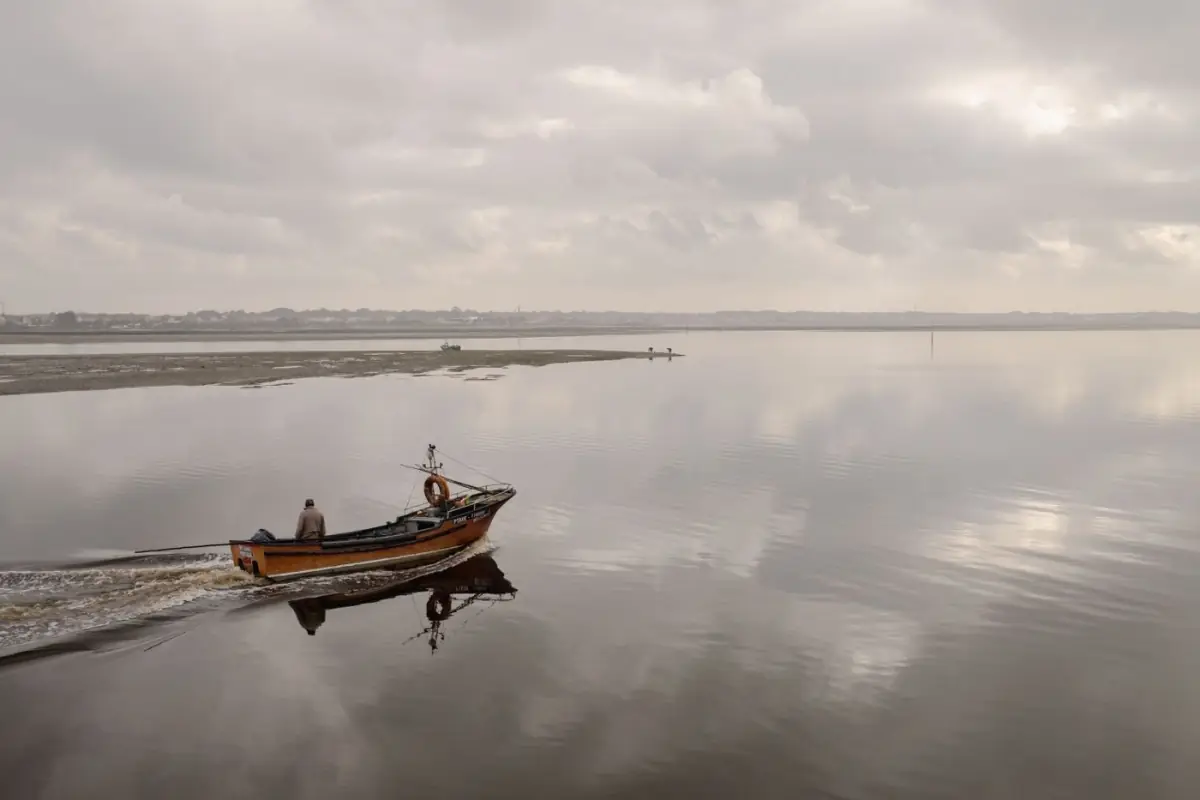
This barrier of sand is what sets the Sotavento apart from the rest of the region. Where the Barlavento has cliffs and small coves, the Sotavento has flat islands, dunes and kilometres of white sand in front of a lagoon full of oyster and clam beds. It's a different Algarve, and this guide explains how to travel it island by island.
How do you reach Ilha de Tavira?
Ilha de Tavira is reached by four distinct access points, all by boat or beach train, and each drops the visitor at a different spot on the same stretch of sand. The choice of access completely changes the kind of day you have, from the livelier side by the island's hub to the tranquil far end of Barril.
Ferry from the centre of Tavira
The most direct access leaves from the Quatro Águas quay, east of the historic centre of Tavira, with a short crossing of a few minutes. It drops visitors by the island's hub, where there are bars, restaurants and the beach facilities. It's the option for those who want services nearby and the main sand to hand.
Barril beach train (Pedras d'el Rei)
From Pedras d'el Rei, west of Tavira, you cross the salt marsh on foot or on a small beach train that links the mainland to the Praia da Ilha de Tavira in the Barril sector. This is where the well-known anchor cemetery is, dozens of iron anchors driven into the dunes that recall the old tuna fishing. This entrance drops the visitor at the quietest end of the island.
Ferry from Santa Luzia and from Cabanas
To the west, Santa Luzia — the octopus capital — has a boat connection to the western part of the island, near Barril. To the east, Cabanas de Tavira has its own ferry to the Ilha de Cabanas, which is the natural extension of Ilha de Tavira on the eastern side. They are four doors to the same chain of sand, and it's worth varying between them over a stay.
The frequency of the boats rises sharply in high season and reduces in winter, when some connections run only at the weekend or are suspended. Always confirm the timetables on the day, especially outside July and August, with the operators at the quays.
Which beach to choose on each island?
Each barrier island offers a different beach profile, and the choice depends on whether you want services, isolation or ease of access. The table below sums up the essentials of each to help you decide before buying your ticket.
| Island | Main access | Profile | Good for |
|---|---|---|---|
| Barreta (Deserta) | Boat from Faro | No population or roads; southernmost point of mainland Portugal | Total isolation, nature |
| Culatra | Ferry from Olhão | Inhabited fishing village, open sea | Authenticity, seafood |
| Armona | Ferry from Olhão | Holiday homes, wide sand | Families, a full day |
| Tavira | Ferry from Tavira / Barril train | Kilometres of sand, facilities in the central area | Variety, all audiences |
| Cabanas | Ferry from Cabanas | Chain of sand facing the lagoon | Quiet, couples |
For a first visit, the Ilha de Tavira is the most versatile because it has several access points and beach facilities. Those seeking pure nature choose the Barreta; those wanting to eat fish and seafood in a fishing village prefer the Culatra. The distances between the boarding points are short, which lets you combine two islands in the same day.
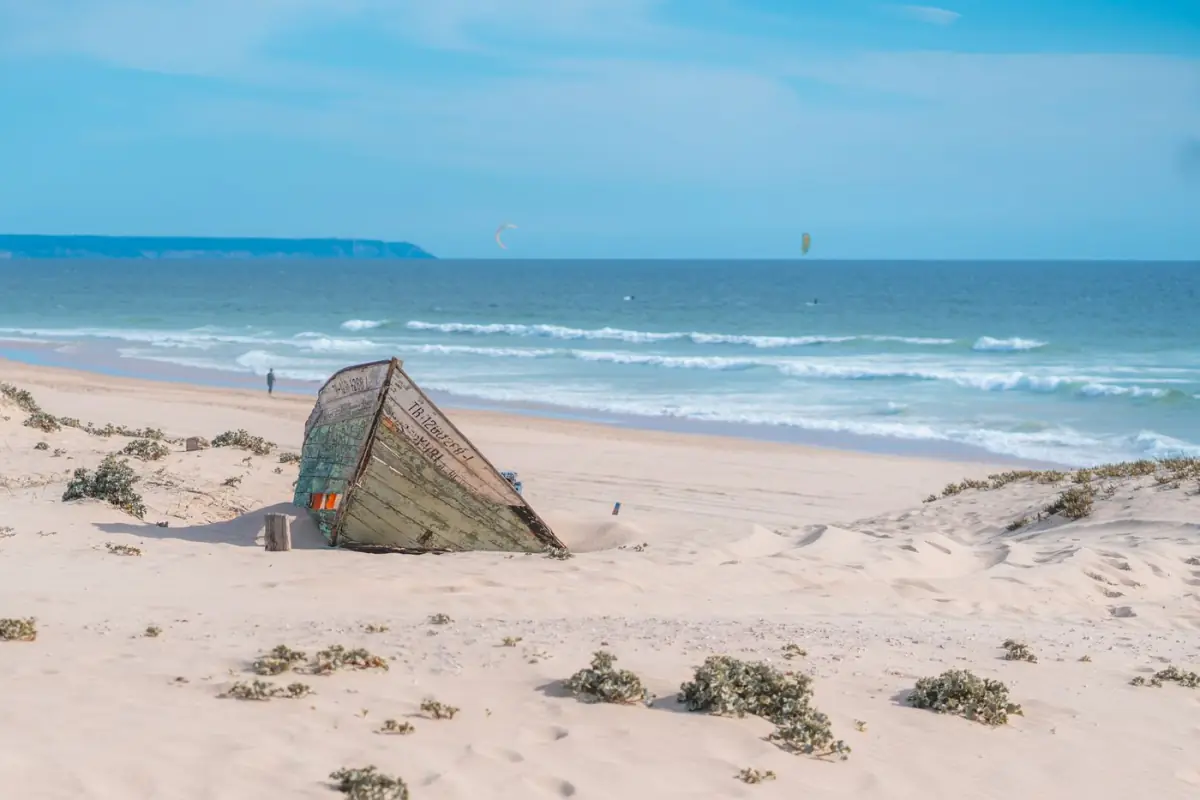
Several of these beaches have the Blue Flag distinction and seasonal facilities with a lifeguard in summer. As they are islands, the services are concentrated in the high-season months and disappear almost entirely in winter, when the sand is left to those who like to walk in the wind.
Is the Ilha Deserta worth the trip from Faro?
Yes, if you're after the wildest sand in the Ria Formosa. The Ilha da Barreta, known as Ilha Deserta, is the southernmost barrier island and marks the most southerly point of mainland Portugal, at Cabo de Santa Maria. It has no permanent population, roads or construction beyond a single support restaurant, which makes it the opposite of an urban beach.
It's reached by boat from the quay of Faro, which is just 3 km from the airport — it's the most immediate gateway for those who land and want to go straight to the lagoon. The crossing weaves through the channels of the ria, with a good chance of spotting flamingos, herons and other water birds that make the Ria Formosa one of the richest birdwatching spots in the country.
The island has a wooden walkway that runs from one end to the other and lets you walk without treading on the fragile dunes. As it has no natural shade or shops, it's wise to bring water, a hat and whatever you need for the day. It's a destination for those who value silence and the landscape above comfort, and so it tends to appeal to couples and nature lovers more than to families with small children.
Culatra and Armona: what are the Olhão islands like?
Culatra and Armona are the two islands served by the ferries from Olhão, which is 11 km from Faro Airport and has one of the best-known fish markets in the Algarve. They are inhabited islands, with their own rhythm and a connection to fishing that you feel on land.
The Culatra has a permanent fishing community, with single-storey houses, sandy streets and shellfishing boats moored on the ria. It's the island where you eat fresh seafood almost on the doorstep of those who caught it, in a setting that has little of the tourist about it. The Armona is more geared to holidaymaking, with holiday homes of Sotavento families and a wide stretch of sand on the ocean side, ideal for spending the whole day with children.
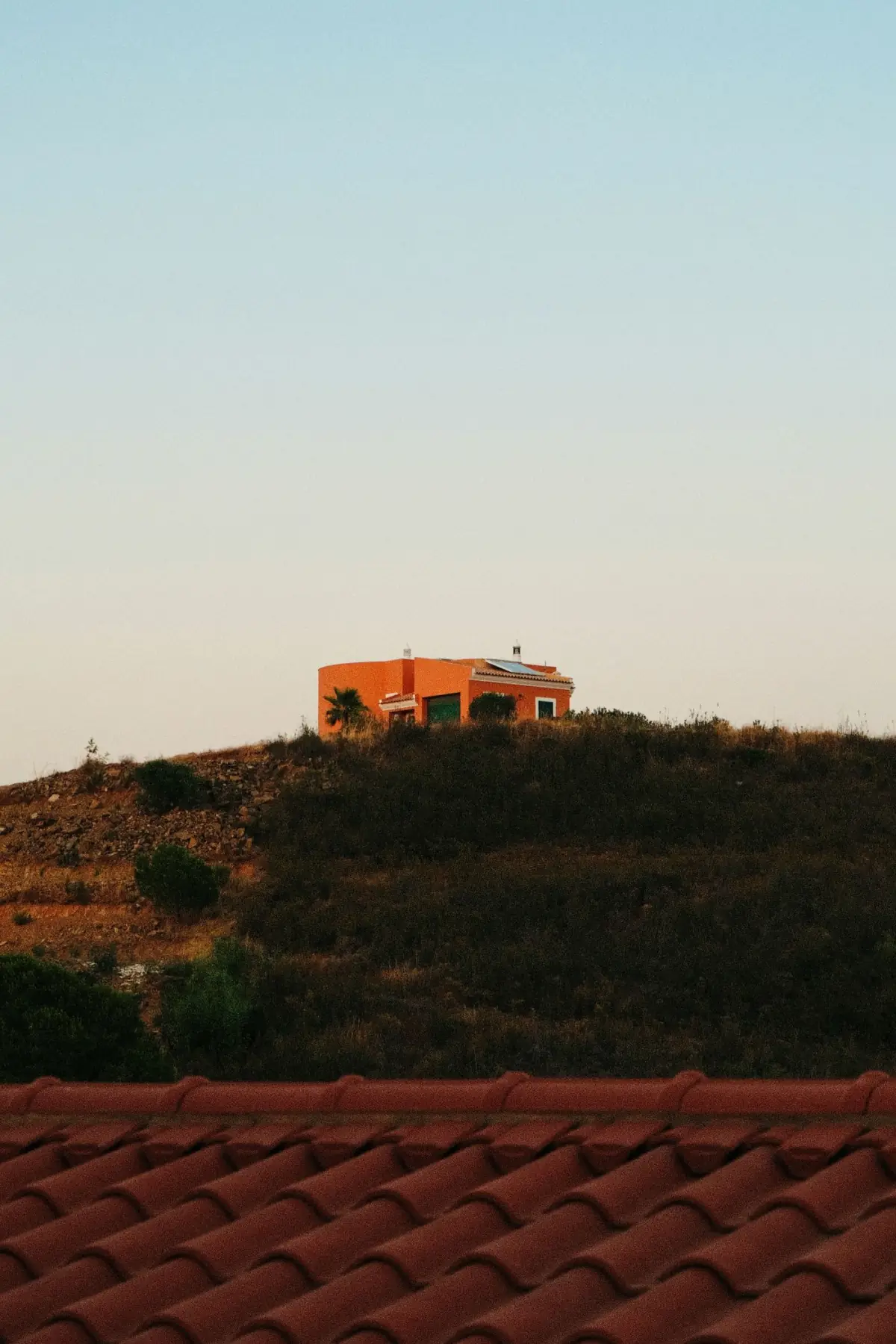
Olhão is also the starting point for boat trips across the lagoon, many of which combine a stop at the islands with watching birds and the shellfish beds. To get a better idea of these outings, and the dolphin trips offshore, see our guide to boat trips and dolphins in the Algarve.
What's the best time to visit the Ria Formosa islands?
The best time for bathing is between June and September, when the Sotavento sea warms up more than anywhere else in the Algarve. The reason is physical: the shallow lagoon of the Ria Formosa retains the heat, and the waters that flow in and out of the islands arrive more temperate than the open ocean of the Barlavento. That's why bathing at Ilha de Tavira tends to be more comfortable than at a beach in the Lagos area.
Summer (July and August)
These are the months of the highest ferry frequency and all the facilities open, but also of the greatest crowds. The islands absorb the crowd well because the sand is immense, but the first boats of the morning and those of the late afternoon are the quietest. It's the season when booking a home in advance makes the most difference.
Spring and early autumn
May, June and September offer a sea that's already mild, fewer people and accommodation prices below the August peak. They are perhaps the best window to get to know the islands at leisure, combining the beach with walks through the dunes and birdwatching, which is particularly good in the migration seasons.
In winter, many connections reduce or are suspended and the facilities close, but the islands still warrant a crossing for those who like a deserted beach and clean air. Those who want to know more about the Algarve in this season can read our guide to the Algarve off season.
Where to stay to visit Ilha de Tavira?
The most practical base is Tavira or Santa Luzia, because they put the ferry on your doorstep and Faro Airport around 30 km away — 31 km from Tavira and 29 km from Santa Luzia. Cabanas is the alternative for those who want their own island on the eastern side, and any of these villages sits within a few kilometres of one another, all in the municipality of Tavira.
Tavira has around 26 thousand inhabitants and works as the centre of the Sotavento, with the white houses on the hillside, the Roman bridge over the Gilão and a town life that doesn't vanish outside summer. Santa Luzia is much smaller, with a little under 1,600 inhabitants, and lives off octopus fishing — it's the place for those who want an authentic fishing atmosphere a few metres from the ferry quay.
Real homes near the islands
In our Sotavento inventory there are apartments a few minutes from the quays. In Tavira, the 3-bedroom apartment in Tavira · 91 m² gives a family space near the centre, while the 2-bedroom apartment with pool in Tavira · 108 m² combines the comfort of a pool with the closeness of the ferry. In Santa Luzia, the 2-bedroom apartment with private pool in Santa Luzia · 60 m² puts you steps from the quay that links to the western part of the island.
Real-time availability and prices on Homing — book direct, cheaper than Booking, Airbnb and Hotels.com. Click «See dates and price».
These homes are booked directly on Homing, our official partner, which comes out cheaper than Booking, Airbnb and Hotels.com by not charging a platform commission or hidden fees, with support in Portuguese, English, French and Spanish. To see more options in the area, browse the apartments or compare with the villas of the Sotavento.
How to spend a perfect day on the barrier islands?
A day well spent on the islands starts early and combines the beach with discovering the lagoon. The sequence below serves as a flexible itinerary for those with Ilha de Tavira or the Olhão islands as their destination.
- Catch one of the first morning ferries, when the sea is calm and the sand still empty.
- Walk along the island until you find a more isolated stretch, away from the beach facilities.
- Mid-morning, devote some time to the dunes and birdwatching on the ria side.
- Have lunch on fresh fish or seafood at the island restaurants or, in the case of Tavira, on the way back to the mainland.
- In the afternoon, return to bathing with the sea now warmer and stay for dusk over the lagoon.
Those staying several days can devote each outing to a different island: Tavira for variety, Barreta for isolation, Culatra for seafood. Combine these crossings with the Barril sector and with what the village has to offer, described in our guide to Tavira.
To frame the islands in the wider context of the region, the guide to the Sotavento of the Algarve links Tavira, Olhão and the Ria Formosa in a single read, and the Ria Formosa hub gathers everything you need to know about the natural park.
Sources and references
- ICNF — Parque Natural da Ria Formosa — https://www.icnf.pt/
- Turismo do Algarve (Visit Algarve) — https://www.visitalgarve.pt/
- ABAE — Blue Flag — https://bandeiraazul.abae.pt/
- IPMA — Instituto Português do Mar e da Atmosfera — https://www.ipma.pt/
- Wikipedia — Ria Formosa — https://pt.wikipedia.org/wiki/Ria_Formosa
- Wikipedia — Algarve — https://pt.wikipedia.org/wiki/Algarve
Original editorial article by Maré Algarve, based on official sources (Turismo do Algarve, ICNF, ABAE/Blue Flag, IPMA, INE) and on our experience of holiday rentals in the Algarve. Prices and availability vary — always check each property's page.