
You can holiday in the Algarve and spend far less than the average, and most of the saving comes down to three choices: where you stay, when you go and how you book. A home with a well-equipped kitchen halves the food bill, going in May or October instead of August can cut the lodging in half, and booking direct avoids the commissions that Booking and Airbnb add to the final price.
We've put together 15 tried-and-tested tips, with real distances and price ranges, to plan a holiday that stays sunny but weighs far less on your wallet.
How do you save on an Algarve holiday?
You save in the Algarve by tackling the three lines that weigh most on the budget: lodging, food and transport. Lodging is almost always the biggest slice, so it's where the right choice pays off most — a home with a kitchen in an area a few minutes from the beach beats any hotel on cost per person. Food comes next: cooking some of your meals with market produce makes a huge difference over the course of a week.
The rest is planning. The time of year changes the price of lodging by more than 50%, the way you book decides whether or not you pay a platform commission, and many of the experiences worth the trip — beaches, viewpoints, trails, historic centres — cost nothing. Anyone who understands this saves hundreds of euros without sleeping or eating worse. The 15 tips below are organised by theme, with real figures to plan with.
Before going further, it's worth keeping two companion guides handy: the one on how much it costs to rent a holiday home in the Algarve, with the price ranges by area and type, and the one on when to book an Algarve holiday, with the month-by-month calendar. Together, they show exactly where the room to save lies.
Saving on lodging
Lodging is where you get most money back, and four decisions make almost all the difference: booking direct, choosing a home with a kitchen, staying near (not on top of) the beaches and matching the size of the home to the group. Each one is worth tens to hundreds of euros per stay.
1. Book direct and avoid the platforms' commission
Booking direct is the easiest saving of all, because it requires changing nothing about the holiday — only the way you pay. Platforms like Booking, Airbnb and Hotels.com charge the owner a commission and the guest service fees, and that cost is baked into the price you see. On Homing, the official partner of Maré Algarve, you book the same home with no platform commission and no hidden fees, with support in Portuguese, English, French and Spanish.
In practice, the same apartment can come out several percentage points cheaper than on the platforms, and the discount grows with the value of the stay. To see the figures in detail, look at the comparison of direct booking vs Booking and Airbnb — it explains how much each platform charges and why booking direct almost always pays off.
2. Choose a home with a well-equipped kitchen
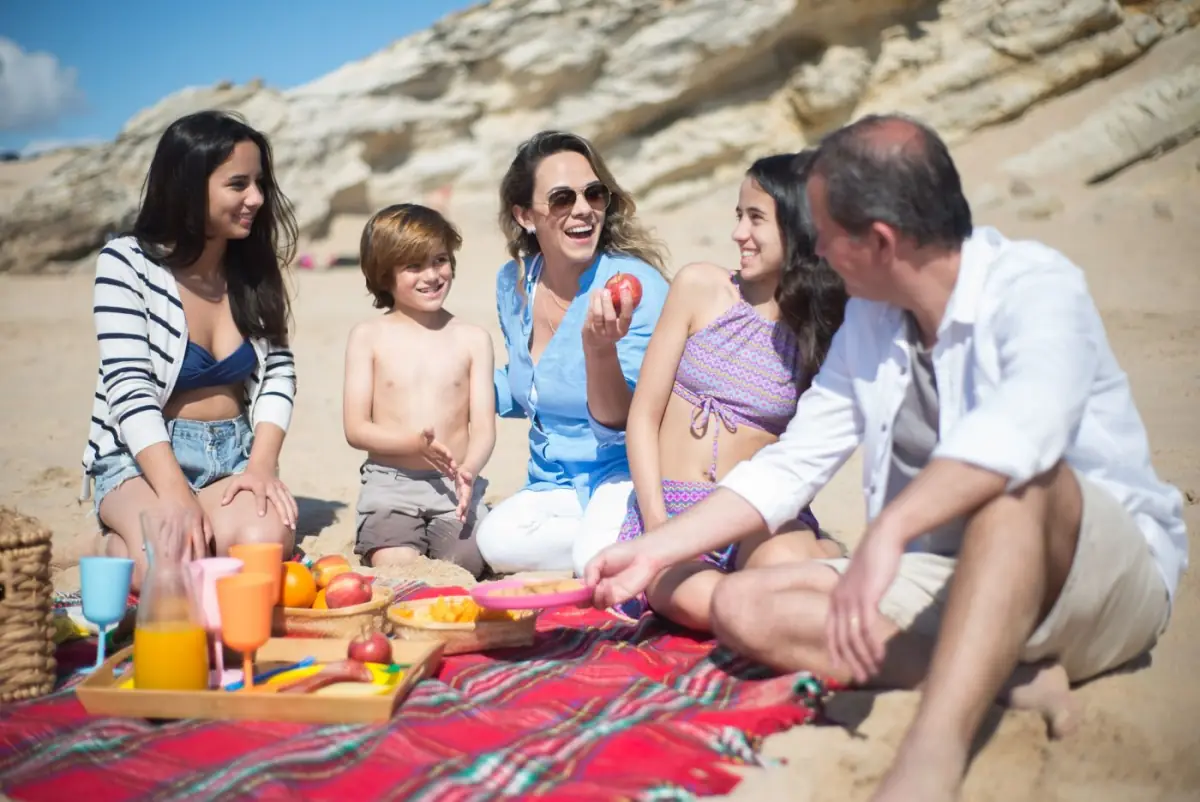
A home with a kitchen is, after the price per night, the factor that most reduces the total cost of the holiday. Cooking breakfast and some meals at home can cut the food bill almost in half compared with eating out every day. Almost all rental apartments and villas have a fridge, a hob and a coffee machine — something a hotel room rarely offers.
The saving isn't only on dinner: taking fruit, water and snacks from home to the beach avoids the inflated prices of seafront bars. It's one of the reasons a holiday home beats a hotel on cost for anyone staying more than two or three days.
3. Stay near the beaches, not on top of them
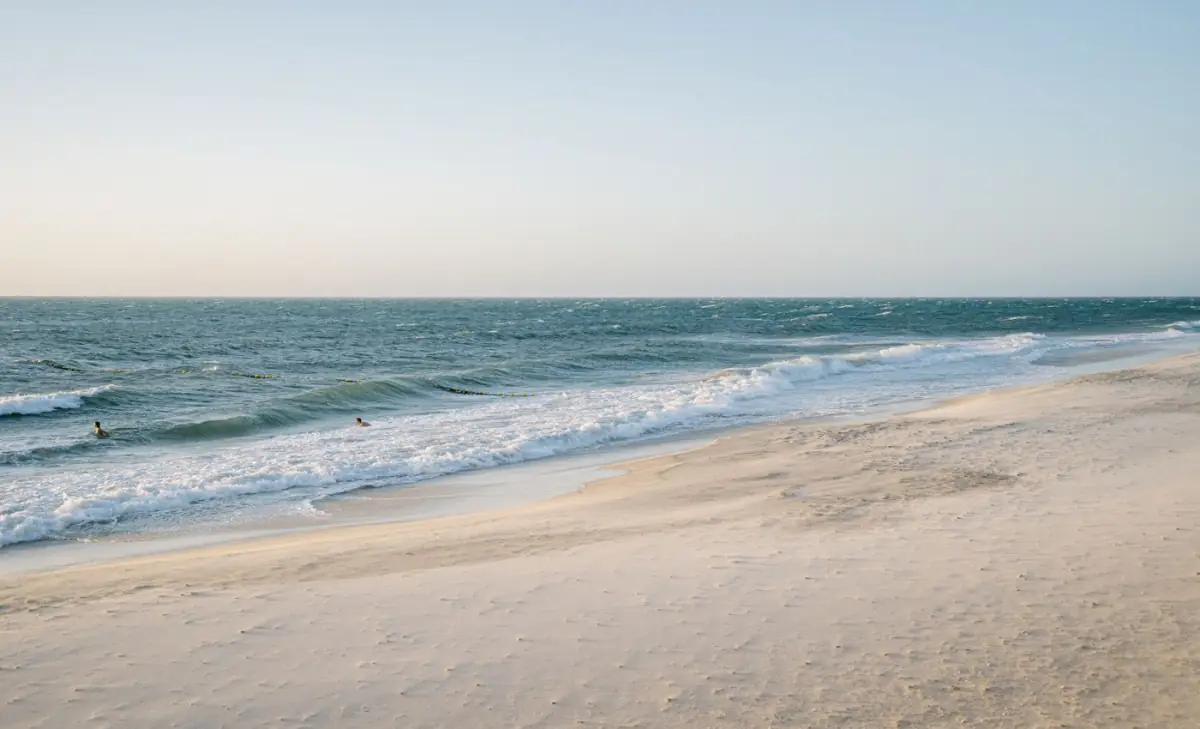
Staying 5–15 minutes from the most famous beaches, rather than on the front line, lowers the price of lodging without costing sea time. Armação de Pêra and Quarteira give quick access to wide sands at far more modest prices than label areas like Vilamoura or Praia da Rocha. A difference of a few kilometres translates into tens of euros per night.
The same goes for the icon beaches of the Centre: to visit Praia da Marinha or Benagil you don't need to pay for the most expensive home in the row — you stay a few minutes' drive away and save where it counts most. To map these distances, the guide to the most beautiful beaches in the Algarve shows where to stay close to each one.
4. Match the size of the home to the group
Paying for rooms you don't use is a waste, and splitting the right home by the number of people is what makes renting unbeatable per person. A couple saves in a studio or 1-bedroom; a family or a group spreads the cost better across a shared 2- or 3-bedroom. A well-located 1-bedroom in shoulder season runs about €80–150 per night (indicative range, varies with the dates — check each home's page).
The larger the group, the cheaper it comes out per head, above all in houses with several bedrooms. This is the logic the family holiday budget sets out — four people in one home pay per night what two would pay in a good hotel.
Saving on food and meals
After lodging, food is the easiest expense to control — and the one that runs away most when you eat out every day. The good news is that the best food in the Algarve, from fresh fish to seafood, is in the cheapest places: markets, tascas and supermarkets with local produce.
5. Shop at the municipal markets
The municipal markets are the cheapest way to eat well in the Algarve, with fish, seafood, fruit and vegetables at producer prices. The Olhão Market, on the edge of the Ria Formosa, and the Loulé Market are two of the best known, and they sell oysters, tuna and fresh sardines for a fraction of what you'd pay in a restaurant. With a kitchen at home, a seafood meal becomes affordable.
Go early, when there's more choice and the fish is freshest. To know what to buy and how to prepare it, the guide to what to eat in the Algarve helps you make the most of what's on the stall that day.
6. Eat the set lunch menu
Lunch is the cheapest meal to eat out in the Algarve, thanks to the set menu or "dish of the day" that many tascas serve on weekdays. It usually includes soup, a main course, a drink and coffee for well below the same dish à la carte at dinner. It's the way to taste Algarve cooking without weighing on the budget.
Flipping the logic — a hearty lunch out, a simple dinner at home — usually comes out cheaper than the other way round. Look for the places full of locals at lunchtime, away from the more touristy marina terraces, where prices rise with the view.
7. Take a cool bag to the beach
Taking a cool bag with water, fruit and sandwiches to the beach avoids the prices of seafront bars, where a drink and a snack for the family easily pass €15–20. Over a week with the beach every day, this simple saving adds up to an amount that pays, on its own, for a dinner out or a boat trip.
A picnic on a wide-sand beach like Meia Praia, in Lagos, or at Praia de Monte Gordo, in the Sotavento, is also one of the most pleasant and genuine experiences of the holiday. With drinking water at home, filling reusable bottles also avoids constantly buying bottled water in the sun.
Saving on transport
Transport is the third big line, and the saving depends a lot on the area you choose. Those who stay near what they want to visit cut fuel, tolls and parking — and in some areas can do almost without a car.
8. Decide early whether you really need a car
Not every Algarve holiday needs a rental car, and going without one saves a whole week's rental, fuel and parking. Anyone staying in a compact town who doesn't plan to hop between areas can manage on foot and by public transport. Tavira, Olhão and Lagos have a train on the Algarve line and compact centres where almost everything is done on foot.
If the plan is to travel the coast from Lagos to Tavira, the car pays off in flexibility — in that case, book it ahead, which is when it comes out cheapest. The 7-day Algarve itinerary helps you choose between one fixed base (fewer kilometres) or two (more car).
9. Use the train and bus for the long trips
For trips between towns, the Algarve line train and the buses are far cheaper than the equivalent fuel and tolls. The line links Lagos to Vila Real de Santo António and passes through Portimão, Albufeira, Faro, Olhão and Tavira, and a train ticket between towns costs a few euros. It's the cheapest way to reach a Sotavento beach or visit a neighbouring town without taking the car.
From Faro airport, there's a bus to Faro city — just 3 km away — and connections to the main tourist towns, which avoid the taxi or private transfer. Those staying near the airport, such as in Almancil (10 km) or Vilamoura (15 km), also save on the arrival trip.
Saving on activities and beaches
Here is the Algarve's best-kept secret: much of what makes the trip worth it is free. The beaches have public access, the viewpoints and trails charge no entry, and the historic centres are visited on foot. You pay only for the extras you choose.
10. Make the most of the open-access beaches
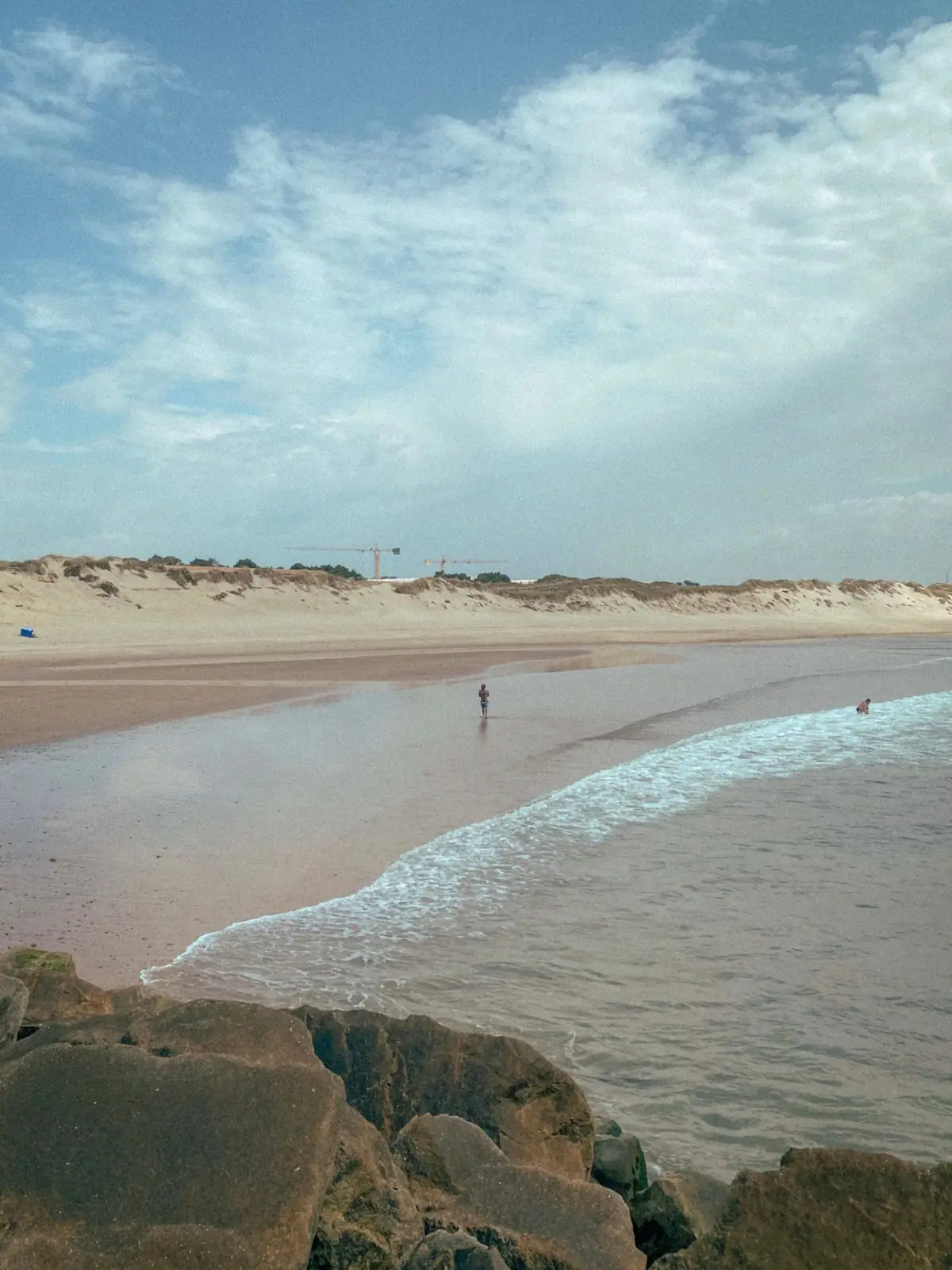
Every beach in the Algarve has free public access — you pay only for what you choose to rent, such as a sun umbrella, a lounger or a board. From Praia do Camilo, in Lagos, to Praia da Falésia, in the Centre, and the wide sands of Ilha de Tavira, in the Sotavento, entry is always free. Bringing your own towel and umbrella does away with the rental.
The Sotavento beaches, in the Ria Formosa, have the warmest sea on the coast (22–25 °C in summer), which saves on a wetsuit and lengthens the swimming season. The guide to free things to do in the Algarve gathers dozens of options that cost nothing.
11. Walk the trails and viewpoints
The Algarve's trails and viewpoints are free and give some of the best views in the region without costing a cent. The Seven Hanging Valleys Trail, between Praia da Marinha and Carvoeiro, is one of the most famous, and the boardwalks and viewpoints of the Alvor estuary or of Ponta da Piedade, in Lagos, show off cliffs and coves for free.
Inland, the Monchique hills and the climb to Fóia, the highest point in the Algarve, offer cool walks in summer with no ticket. For inspiration on walking routes, the guide to what to do in the Algarve beyond the beach has whole sections of free nature.
12. Choose boat trips with care
Boat trips are among the few extras that really are worth the money, but the price varies a lot — comparing before you pay can save a good chunk. The visit to the Benagil cave is the classic example: a kayak or stand-up paddle from Praia de Benagil costs far less than a launch trip leaving from Portimão or Albufeira, and takes you to the same spot.
Book directly with the local operators on the beach, away from the street agencies, and prefer the early morning, when the sea is calmer and demand is lower. That turns the coast's most coveted experience into a controlled spend, rather than a surprise on the budget.
When to go to spend less
The time of year is the most powerful lever of all: the same apartment costs double or more in August than it does in May. Getting the dates and the booking lead time right is often the biggest saving of the whole trip.
13. Steer clear of the July and August peak
July and August are the peak of demand and price in the Algarve, and avoiding them is the most direct way to cut the bill. Shoulder season — April, May and October — gives sun, long days and a pleasant sea (the sea runs around 17–20 °C) at prices well below summer. June and September are the sweet spot: summer weather without the crowds or the peak rates.
The difference is concrete: an apartment with a pool that costs €160–320 per night in high season drops to €110–200 in shoulder season (indicative ranges, vary with the dates — check each home's page). See the full calendar of weather, sea and price in when to book an Algarve holiday.
| Season | Months | Indicative price/night |
|---|---|---|
| Low | November to March | €70–130 |
| Shoulder | April, May and October | €110–200 |
| High | June to September (peak in July/August) | €160–320 |
The figures are indicative for 2026 and vary with the lead time, the length of stay and the home — always check the page. Even so, they show the golden rule: shifting your holiday a few weeks outside the peak can save a third to half of the lodging.
14. Book ahead (or go for last-minute out of season)
Booking early secures the best homes at the best prices, above all for summer, when inventory in the most sought-after towns sells out months ahead. Anyone who knows their July or August dates should lock the home in winter or spring. Out of season, on the other hand, last-minute can bring discounts on homes still free — but it's a gamble, not a strategy for the peak.
The practical rule: book ahead for high season, stay flexible for low season. Booking direct on Homing helps in both cases, because it shows the final price with no commissions and lets you talk directly about availability and terms.
15. Go for longer stays
Stays of 7 nights or more usually come with a per-night discount and spread the fixed costs of the stay better, such as the cleaning fee (once per stay, typically €40–120). Over a week, that one-off fee almost vanishes in the price per night; over a two-night weekend, it weighs far more. Many homes offer weekly rates below the sum of individual nights.
Staying longer in the same place also saves on logistics — fewer moves, fewer check-ins, fewer kilometres. If you factor in the tourist tax of some municipalities, which usually has a night cap, you'll see that a longer stay also keeps that extra cost in check.
Where to stay to save without giving up quality
Saving doesn't mean staying somewhere poor. A well-located 1-bedroom, with a fitted kitchen and a few minutes from the beach, brings the best of both worlds: a modest price and the comfort of home. Armação de Pêra and Quarteira give access to wide sands without the rates of the label areas, and Vilamoura has modern 1-bedrooms that become affordable out of peak.
These homes are booked direct on Homing, with no platform commission, the final price in view and support in Portuguese. It's the way to make sure the saving from the dates and the location isn't then eaten up by fees hidden at checkout.
Real-time availability and prices on Homing — book direct, cheaper than Booking, Airbnb and Hotels.com. Click «See dates and price».
Any of these apartments serves as an economical base to explore the Centre of the Algarve from Armação de Pêra, Quarteira or Vilamoura — all 13–37 km from Faro airport and a few minutes from a beach. To compare areas and work out which fits your budget best, the guide to where to stay in the Algarve and the one on how much it costs to rent a home show the full picture.
Frequently asked questions
The most common questions from those wanting an Algarve holiday on a smaller budget revolve around the best time, the way to book and how to cut food and transport. The answers below sum up the essentials.
If any question remains unanswered, the frequently asked questions page and the Maré Algarve contact help you plan case by case, and the guides section goes deeper into each topic on this list.
Sources and references
- Turismo do Algarve (Visit Algarve) — https://www.visitalgarve.pt/
- Wikipédia — Algarve — https://pt.wikipedia.org/wiki/Algarve
- Comboios de Portugal (linha do Algarve) — https://www.cp.pt/
- ANA Aeroportos — Aeroporto de Faro — https://www.ana.pt/pt/fao/inicio
Original editorial article by Maré Algarve, based on official sources (Turismo do Algarve, ICNF, ABAE/Blue Flag, IPMA, INE) and on our experience of holiday rentals in the Algarve. Prices and availability vary — always check each property's page.