
In the Algarve you can fill a week's holiday with barely a ticket to pay for. The beaches are all of public, free access by law, cliff trails like the Seven Hanging Valleys charge no entry, and markets, viewpoints and historic centres open their doors at no cost. The spending goes on meals and the car — the rest is the scenery, which is free.
This guide gathers 12 free things to do in the Algarve, grouped by theme, with the distance to each and the area where it pays to stay to reach them on foot or with a few kilometres by car.
What can you do for free in the Algarve?
Almost everything that makes the Algarve special is free. The beaches are of public, open access — in Portugal the strip of sand is public domain, so no one charges to set foot on the Praia da Marinha, the Praia do Camilo or the Ilha de Tavira. The cliff trails, the viewpoints, the historic centres of the towns and the municipal markets open without a ticket. The holiday bill comes down to three things: sleeping, eating and the car.
When the accommodation is a home with a kitchen, the biggest variable expense — eating out — shrinks a lot, and there's budget left for the few paid extras (a boat trip to Benagil, the entry to a castle). That's why this itinerary works best from a budget base like an apartment or a studio, from where you set off on foot or with a few kilometres to each free attraction.
It's this logic of grouping stops by area that structures the twelve ideas in this guide, starting with the ones that draw the most people: the beaches and the cliff trails.
Beaches and trails without spending a thing
The beaches and cliff trails are the heart of the free things in the Algarve. The coast between Lagos and Albufeira concentrates the most spectacular walking routes in the country, all of open access, and most of the most beautiful beaches only ask the effort of going down a few steps.
1. Seven Hanging Valleys Trail
The Seven Hanging Valleys Trail is the best cliff walking route in the Algarve and doesn't charge a cent. It's around 6 km (one way) between the Praia da Marinha and the Praia de Vale Centeanes, in Lagoa, passing honey-coloured limestone bluffs, sinkholes and hidden coves. Count two to three hours with stops. The starting point at Praia da Marinha has free parking outside the peak of summer — arrive early, because it fills up.
Do the trail in the morning, with low light and less heat, and finish with a swim. Praia da Marinha is about 40 km from Faro Airport and is an ideal base for anyone staying in Carvoeiro, about 10 minutes by car.
2. Praia do Camilo and the descent of the stairs
The Praia do Camilo, in Lagos, is perhaps the most photographed beach in the Algarve and the access is a free wooden staircase of about 200 steps. Down below, two stretches of sand linked by a tunnel in the rock, transparent water and golden cliffs. There's no ticket — only the legs for the climb back up.
A few minutes' walk away is the Praia de Dona Ana, another Lagos postcard with open access. Anyone staying in the city reaches both on foot along the coastal path, with no need for a car.
3. Ponta da Piedade Trail
The Ponta da Piedade, at the far south of Lagos, is the most celebrated set of cliffs and caves in the Barlavento, and it's walked for free along a dirt path running across the top of the bluffs. From the lighthouse, you go down some stairs to sea level, where the boats leave for the caves — but the view from above, with the rock pinnacles rising from the turquoise sea, isn't paid for. It's about 65 km from Faro and around 10 minutes by car from the centre of Lagos.
These three stops all fit into one day from the Barlavento, and none charge entry. It's the cheapest way to see why the Algarve appears on every list of the world's best coasts.
Villages, viewpoints and historic centres
Walking around the Algarve towns is one of the richest — and most free — things you can do in the region. The historic centres are visited freely; only specific monuments and museums charge a ticket, and even those tend to be cheap.
4. Cidade Velha of Faro
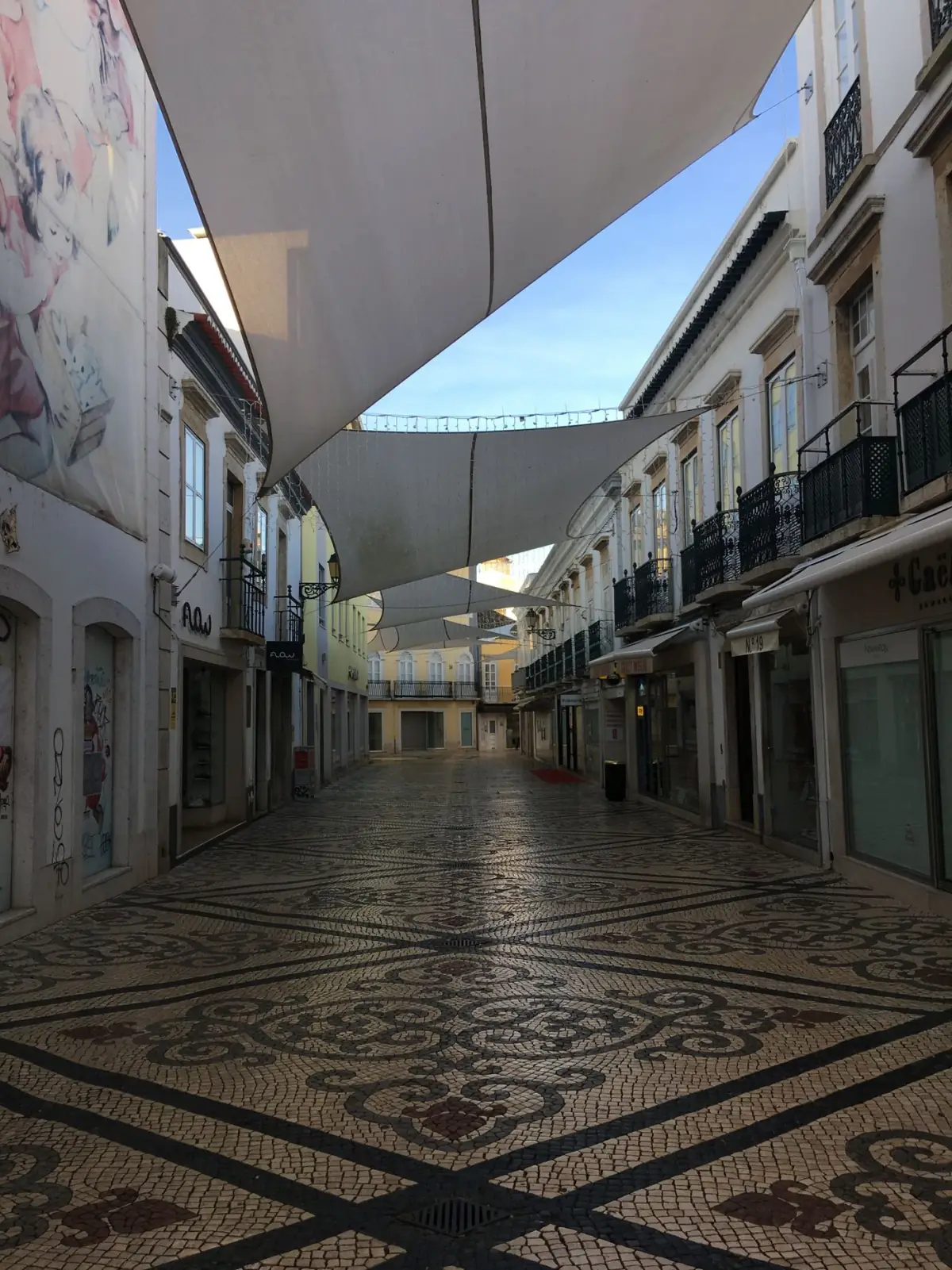
The Cidade Velha of Faro, closed within medieval walls, is the best-preserved historic centre in the Algarve and is walked for free. You enter through the Arco da Vila, climb to the Sé and the tree-lined square in front, and you're a step from the Ria Formosa. Faro is the gateway to the region — the airport is just 3 km away — and few visitors stop in the city, which leaves it peaceful.
Make the most of Faro's location to combine the historic centre with a late afternoon on the boardwalks of the Ria, both without a ticket, on the same day.
5. Cacela Velha
Cacela Velha, in the municipality of Vila Real de Santo António, is one of the most beautiful villages in the Sotavento and has nothing to pay: a handful of white houses, a church, a small fort and a natural viewpoint over the lagoon of the Ria Formosa. The view from the bluff over the salt marsh and the sand of the peninsula is one of the best in the Algarve and costs nothing. It's about 50 km from Faro, next to Cabanas de Tavira.
6. Viewpoints of the Ponta da Piedade at sunset
The viewpoints of the Algarve are free and give the most memorable photos of the holiday. The one at the Ponta da Piedade, at the end of the afternoon, with the sun dropping over the cliffs of Lagos, is among the most sought-after. In the Sotavento, the viewpoint of Cacela Velha; inland, the Fóia, in Monchique, is the highest point in the Algarve, at 902 metres, with a view over the whole coast on a clear day.
Choosing a different viewpoint for each afternoon turns the sunset into a programme of its own, without ever opening your wallet. For more ideas for views, see our guide to the best viewpoints in the Algarve.
Nature: Ria Formosa and Costa Vicentina
The Algarve has two natural parks that you explore on foot and for free: the Ria Formosa, in the Sotavento, and the Costa Vicentina, in the far west. Both are protected areas managed by the ICNF, with boardwalks and trails of open access.
7. Boardwalks and trails of the Ria Formosa
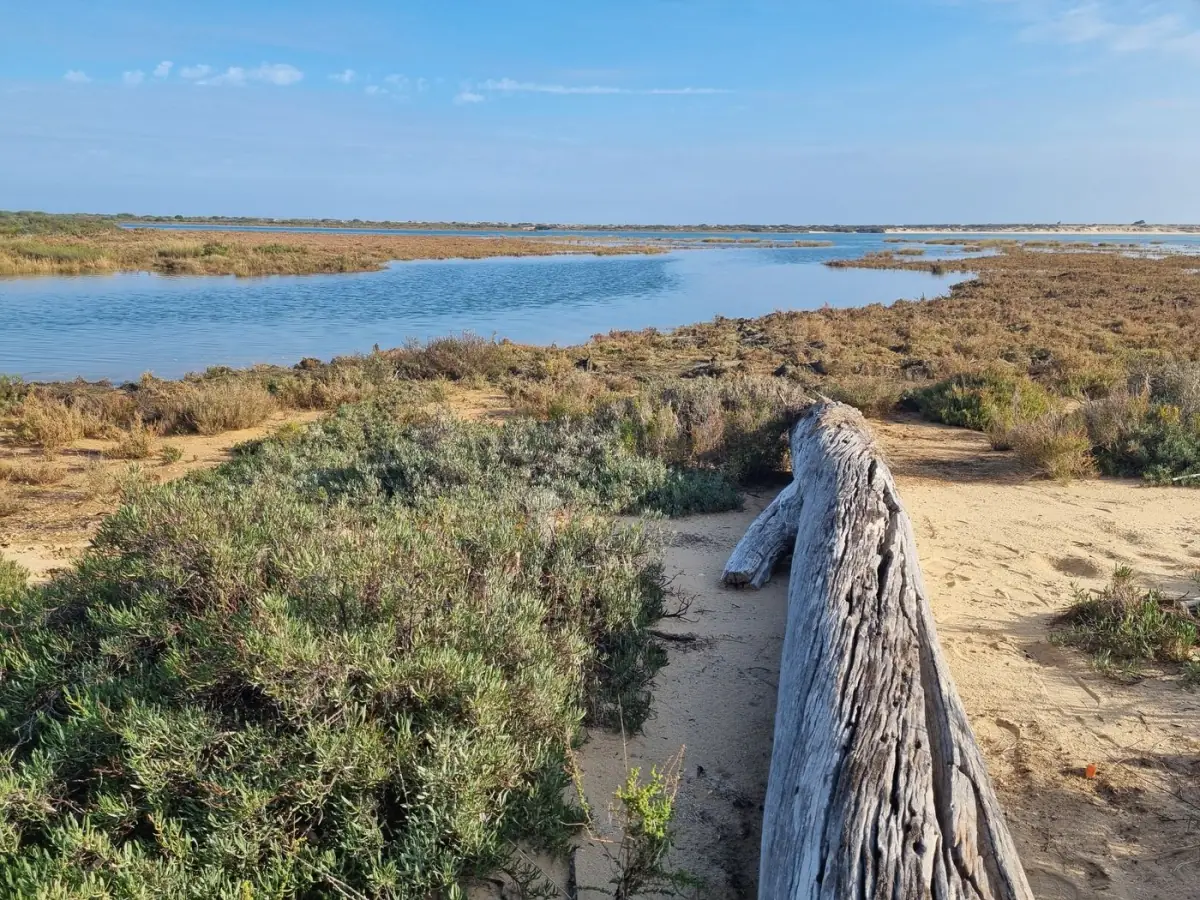
The Ria Formosa Natural Park stretches over around 60 km of coast between Faro and Cacela and is walked for free along boardwalks and trails over the salt marsh. Next to Olhão is the Marim environmental education centre, with a walking route through the lagoon where you see flamingos, storks and the tide mill. It's one of the best bird-watching areas in southern Europe and entry to the trails is free.
To get to know this lagoon of barrier islands in depth, read our guide to the Sotavento of the Algarve, which brings together Tavira, Olhão and the Ria in a single itinerary.
8. Costa Vicentina trails in Sagres
In Sagres and along the Costa Vicentina, at the end of the world to the southwest, there are kilometres of wild cliff trails that charge no entry. The route from the Fortaleza de Sagres to Cabo de São Vicente, the most south-westerly point of mainland Europe, is done on foot or by bike between cliffs battered by the Atlantic. The fortress itself has a ticket, but the surrounding scenery — the most dramatic in the Algarve — is entirely free.
This coast, part of the Rota Vicentina, is also where the surf beaches of the Algarve are. If you like walking, our guide to trails and walks in the Algarve details the best stages, all of open access.
Markets and the local atmosphere
Stepping into an Algarve market costs nothing and is the most authentic way to feel the region. The municipal fish and fruit markets open in the morning, Monday to Saturday, and can be visited without buying — though it's hard to resist.
9. Olhão Market
The Olhão Market, in two brick pavilions by the Ria Formosa, is the largest fresh-fish market in the Algarve and entry is free. On one side, the fish and seafood just landed — sardine, tuna, oysters, goose barnacles; on the other, the fruit, the vegetables and the almond sweets. On Saturday morning, an open-air fair joins in. Olhão is 11 km from Faro and the market is the heart of the city.
10. Loulé Market
The Loulé Municipal Market, in a neo-Arabic building with domes and arches, is one of the most beautiful in Portugal and is visited for free. On Saturday mornings, it spills out into the surrounding streets with the fair of local produce: honey, cheese, cured meats, fleur de sel and medronho. Loulé is in the interior of the municipality, about 20 km from the coast, and combines the market with a historic centre of narrow streets.
Bringing the day's fish from the market and cooking it at the home is, at once, the most local experience and the cheapest way to dine on seafood in the Algarve. It's another reason to choose a home with a fitted kitchen.
Free activities for families
With children, the Algarve is sorted almost entirely for free. The warm, calm sea of the Sotavento, the wide sands and the late afternoons collecting shells replace any paid programme, and there are spots designed for the youngest at no entry cost.
11. Wide-sand, calm-sea beaches in the Sotavento
The beaches of the Sotavento — Monte Gordo, the Ilha de Tavira, the Praia do Barril — have wide, shallow sand, warm sea that reaches 22–24 °C in summer and gentle swell, ideal for children. Building castles, collecting shells and playing in the shallows fills a whole morning without spending a thing. Access is free; only the parasol and the sunlounger are paid for, and most families bring their own shade.
To choose the right area for the youngest, our guide to the Algarve with children compares the best family beaches and towns.
12. Sunset and a swim at the end of the day
The simplest and most free programme in the Algarve is the late afternoon on the beach: the last swim once the crowd has gone, the sun dropping over the sea to the west and the sand still warm. In Lagos, on Meia Praia; in the Centro, on the Praia da Falésia, with the bluff taking on tones of fire; in the Sotavento, with the tide pulling back to leave natural pools for the children. It's the ritual that best closes a holiday day, and it's priceless.
Add to these twelve ideas an occasional paid day — a boat trip to the caves of Benagil, the entry to a castle — and you have a whole week in which the scenery does almost all the work. For more ways to stretch the budget, see our tips for saving on a holiday in the Algarve.
The 12 free things at a glance
The table below sums up the twelve free things by area, with the type of programme and the approximate distance to Faro Airport, to help you put together your days from your base.
| # | Free thing | Area | Type | Distance to Faro |
|---|---|---|---|---|
| 1 | Seven Hanging Valleys Trail | Lagoa | Cliff trail | ~40 km |
| 2 | Praia do Camilo | Lagos | Beach / stairs | ~65 km |
| 3 | Ponta da Piedade | Lagos | Cliffs / viewpoint | ~65 km |
| 4 | Cidade Velha of Faro | Faro | Historic centre | 3 km |
| 5 | Cacela Velha | VRSA | Village / viewpoint | ~50 km |
| 6 | Viewpoints at sunset | Various | View | Various |
| 7 | Boardwalks of the Ria Formosa | Olhão | Nature / birds | ~11 km |
| 8 | Sagres and Cabo de São Vicente trails | Sagres | Costa Vicentina | ~90 km |
| 9 | Olhão Market | Olhão | Market | ~11 km |
| 10 | Loulé Market | Loulé | Market | ~20 km |
| 11 | Wide-sand beaches in the Sotavento | Tavira / VRSA | Beach / families | ~30–50 km |
| 12 | Sunset and a swim at the end of the day | Various | Beach | Various |
As the table shows, the Sotavento concentrates the free things closest to the airport — useful for anyone arriving late or with little time — while the Barlavento demands more kilometres, but pays them back with the most spectacular cliffs. A base in the Centro, like Vilamoura or Armação de Pêra, sits halfway between the two coasts.
Where to stay to enjoy the Algarve for free
To stretch an itinerary of free things to the maximum, the best choice is a budget home with a kitchen, near the coast and halfway between the two ends of the Algarve. Cooking at home cuts the biggest holiday expense and a central location saves kilometres to each beach, trail or market. A 1-bedroom apartment with pool in Vilamoura or in Armação de Pêra sorts the base of a couple or a small family for little money.
The bands below are indicative per night for 2026 and vary with the dates and how far ahead you book — always confirm on each home's page. A studio typically runs between €40–75 in low season, €60–110 in mid and €95–170 in high; a 1- to 2-bedroom apartment, between €50–95, €80–150 and €130–240 depending on the season. For groups, a larger house splits across many people and lowers the cost per head.
Real-time availability and prices on Homing — book direct, cheaper than Booking, Airbnb and Hotels.com. Click «See dates and price».
Any of these homes is booked direct on Homing, our official partner, with no platform commission or hidden fees and with support in Portuguese — it comes out cheaper than booking the same home on Booking, Airbnb or Hotels.com. If you're still hesitating between a home and a hotel, our guide holiday home or hotel does the maths; and to understand when to pay less for the accommodation, see when to book a holiday in the Algarve.
Sources and references
- Turismo do Algarve (Visit Algarve) — https://www.visitalgarve.pt/
- ICNF — Parque Natural da Ria Formosa e Costa Vicentina — https://www.icnf.pt/
- Rota Vicentina — southwest walking routes — https://rotavicentina.com/
- Wikipedia — Algarve — https://pt.wikipedia.org/wiki/Algarve
- Wikipedia — Ria Formosa — https://pt.wikipedia.org/wiki/Ria_Formosa
Original editorial article by Maré Algarve, based on official sources (Turismo do Algarve, ICNF, ABAE/Blue Flag, IPMA, INE) and on our experience of holiday rentals in the Algarve. Prices and availability vary — always check each property's page.