
The most beautiful villages in the Algarve are the ones that hold on to a human scale: Ferragudo, Cacela Velha, Tavira, Alvor, Silves and Santa Luzia gather white houses trimmed with colour, Portuguese cobblestone paving, 17th-century churches and a seafront or riverfront that never grew upwards. They are spread across the three regions — Barlavento, Centro and Sotavento — and most lie less than an hour from Faro Airport.
This guide brings together twelve real settlements, with distances, concrete facts and where to stay near each. Use it as a map to plot a driving route or to choose the base for your holiday.
Which are the most beautiful villages in the Algarve?
The most beautiful villages in the Algarve are Ferragudo, Alvor, Salema, Burgau, Sagres, Carvoeiro, Silves, Tavira, Santa Luzia, Cacela Velha, Olhão and Monchique. They are spread across the three regions of the coast: the Barlavento to the west, the Centro in the middle and the Sotavento to the east, beside the border with Spain. What unites them is scale: low houses, whitewashed with blue or ochre trim, cobbled streets and a direct relationship with the sea, the river or the hills.
The choice isn't about size. Cacela Velha has a few dozen houses; Tavira and Silves have thousands of inhabitants. They make this list because they have kept a legible historic centre, without the high-rise building that marked part of the central coast. That's why the best time to visit them is outside the peak of summer — in May, June, September or October, when the weather still holds and the streets can breathe.
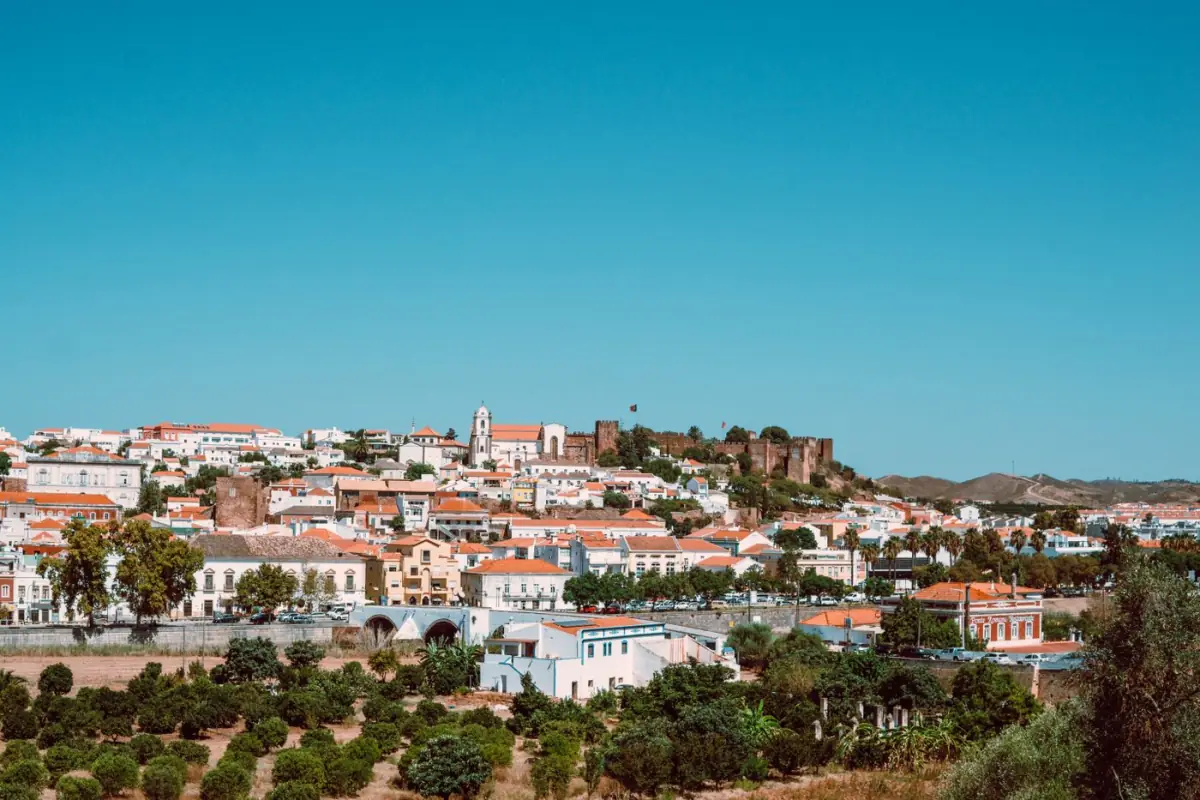
Before getting into the detail of each one, it's worth fixing the geographic logic: to the west the fishing villages and the cape of Sagres dominate; in the centre, the houses of Ferragudo and Carvoeiro over cliffs; to the east, the settlements above the Ria Formosa, with warm sea and oysters. Each region calls for a different base — and that is how this guide is organised.
Villages and towns of the Barlavento
The Barlavento concentrates the most authentic fishing villages in the Algarve and the southwesternmost point of continental Europe. From Lagos westward, the coast turns wilder and windier, with small villages tucked into coves. These are four stops worth the journey.
1. Alvor
Alvor is the most charming fishing village in the Barlavento, in the municipality of Portimão, around 57 km from Faro Airport. The historic centre drops through narrow lanes down to the estuary, where the fishing boats still head out at dawn. The parish church, with its Manueline portal, and the wooden boardwalk over the marshland are the village's two highlights.
Alvor's great strength is joining the village to the beach: the Praia dos Três Irmãos and the long stretch of sand are a short distance away, and the boardwalk links the houses to the river mouth on a flat walk of about half an hour. For more, see our guide to Alvor. Tip: dine on grilled fish at one of the taverns on Rua da Ribeira, away from the most touristy area.
2. Salema
Salema is one of the two fishing villages west of Lagos that escaped the concrete. It sits in the municipality of Lagos, around 77 km from Faro, in a sheltered cove where the colourful boats rest on the sand beside the sun umbrellas. The low density and the family-friendly beach make it a refuge for those fleeing the crowds.
What sets Salema apart is the survival of artisanal fishing: early in the morning you can still see the catch being landed on the beach. It pairs well with neighbouring Burgau in a single morning — read our guide to Salema and Burgau. Because it's small, book accommodation early; supply sells out fast in summer.
3. Burgau
Burgau is Salema's sister, around 72 km from the airport, wedged into a gully that drops sharply to the sea. The streets, so narrow that cars barely pass, end at a small beach between cliffs, with taverns perched over the water. It's one of the few villages on the coast where you can feel the old rhythm of a fishing community.
The constant rise and fall of Burgau's streets rewards those who walk: each corner opens a new view over the cove. It's part of the network of coastal trails in the west, ideal for walking off-season — see suggestions in trails and hikes in the Algarve. Go in the morning to catch the low, raking light on the white houses.
4. Sagres
Sagres is land's end: the southwesternmost village in the Algarve, in the municipality of Vila do Bispo, around 87 km from Faro. The fortress on the cliff and neighbouring Cabo de São Vicente — the point where Europe ends over the Atlantic — make it a place of pilgrimage for those seeking rough sea, surf and sunsets. The atmosphere is stripped-back, wind-beaten, with low houses and the feel of a surfers' community.
Unlike the rest of the Algarve, Sagres faces several seas: it has beaches looking south, more sheltered, and beaches facing west, with strong swell. It's the gateway to the Costa Vicentina — read our guide to Sagres and the Costa Vicentina. To stay nearby and explore the west, the village of Praia da Luz and Lagos itself are practical bases.
Villages of the Centro and the coast
The Centro of the Algarve, the so-called Golden Triangle, is also the region of cliffs and white houses above the sea. Among the big resorts hides a trio of settlements that have kept their character: the fishing village of Ferragudo, the amphitheatre of houses at Carvoeiro and the former Moorish capital of Silves.
5. Ferragudo
Ferragudo is, for many, the prettiest fishing village in the Algarve. It sits in the municipality of Lagoa, across the Arade river facing Portimão, around 50 km from Faro Airport, and has just under 2,000 inhabitants. The whitewashed houses climb from the riverbank through cobbled lanes to the church of Nossa Senhora da Conceição, at the highest point, from where you can take in the whole river mouth.
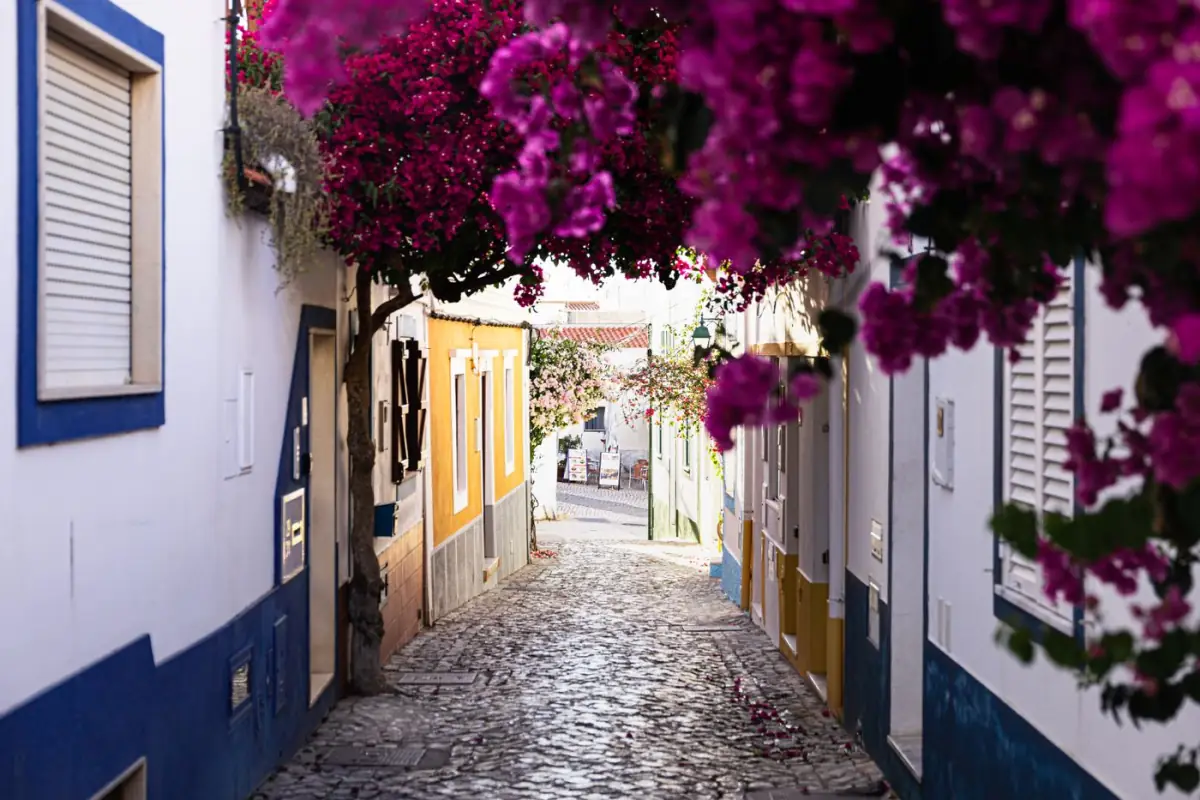
Ferragudo's charm lies in having resisted the high-rise of the opposite bank: while Portimão grew upwards, the village kept its old scale. Praia Grande and the fort of São João do Arade are a few minutes' walk away. Go deeper in our guide to Ferragudo and try the grilled fish at the restaurants on the square by the river, in the late afternoon.
6. Carvoeiro
Carvoeiro began as a fishing village and grew over the cliffs in an amphitheatre of white houses facing a small central beach. It sits in Lagoa, around 44 km from Faro, and has about 2,700 inhabitants. It's the ideal base for visiting the most spectacular cliffs in the Algarve: the Algar Seco, with its formations sculpted by the sea, lies right by the centre.
A few kilometres away are two of the most famous beaches on the coast — the Praia da Marinha and the Benagil cave — which makes Carvoeiro an excellent starting point for boat trips. See our guide to Carvoeiro. The Seven Hanging Valleys boardwalk starts here and offers the best cliff walk in the Algarve.
7. Silves
Silves was the Moorish capital of the Algarve and even today its skyline is dominated by the castle with its red sandstone walls, the largest Islamic monument in southern Portugal. It sits inland in the municipality of Silves, around 46 km from Faro, on the banks of the Arade river. The climb through the medieval streets up to the castle and the Gothic cathedral is a journey into the region's most ancient past.
Being inland and on the river, Silves combines history with quiet and lower accommodation prices than the coast. The Fábrica do Inglês and the Medieval Festival, in August, liven up the town in summer. It's also the gateway to the Monchique hills. To see how Silves fits into a driving route, look at the Algarve by car itinerary.
Villages of the Sotavento and the Ria Formosa
The Sotavento, east of Faro, is the most authentic Algarve and the one with the warmest sea — between 22 and 25 °C in summer, several degrees above the Barlavento. Its settlements open onto the Ria Formosa and the barrier islands, a lagoon system protected by the ICNF. It's the region of oysters, tuna and serene houses.
8. Tavira
Tavira is the jewel of the Sotavento: a town of around 26,000 inhabitants that keeps a historic centre of cobblestone, churches — said to number 21 — and a bridge of Roman origin over the Gilão river. It lies just 31 km from Faro Airport, which makes it easy to reach. The houses with their four-sided rooftops and the tiled façades give it a profile unlike any other on the coast.
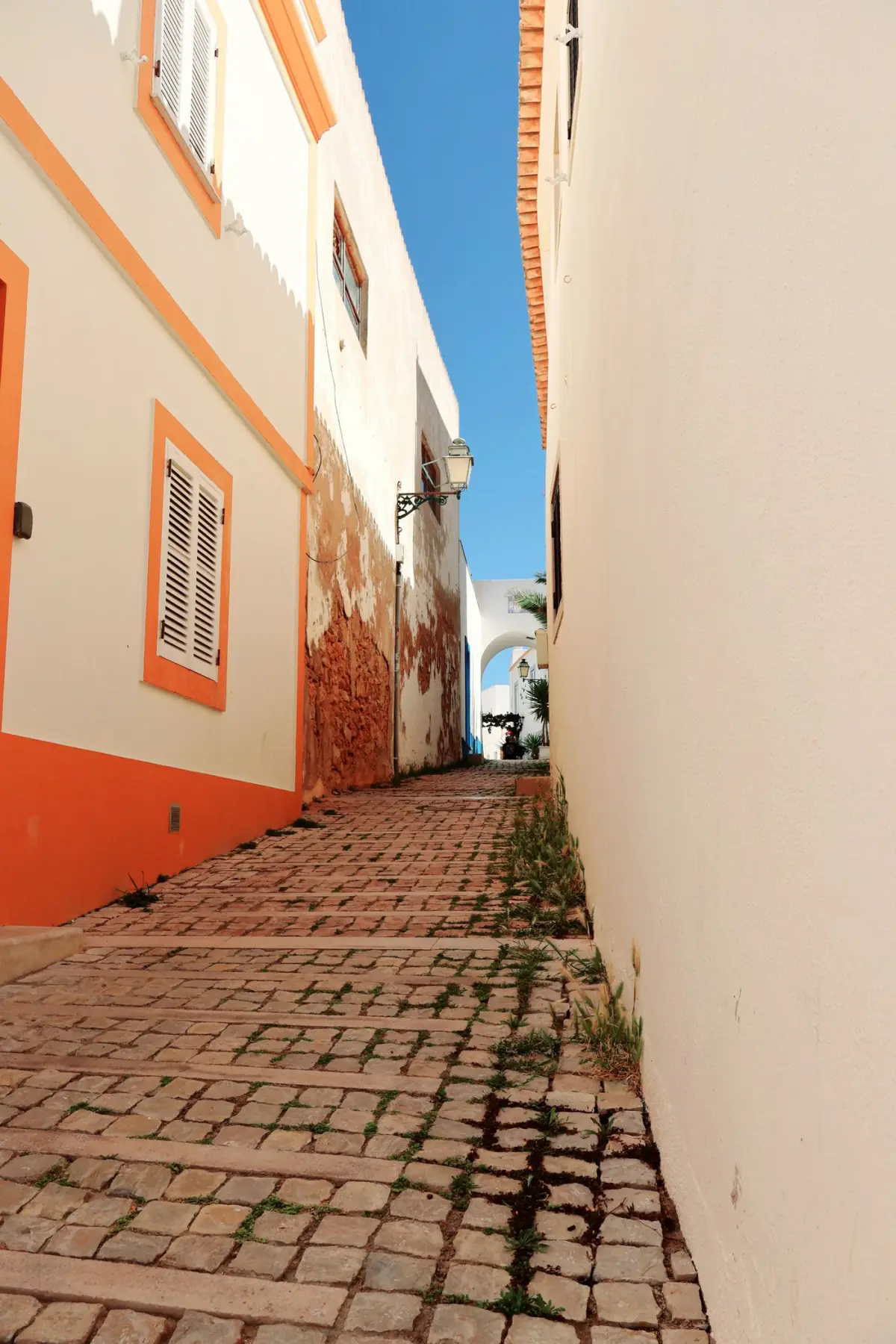
What sets Tavira apart is the balance: it has history, gastronomy and direct access to the Ilha de Tavira, the barrier island with its wide sands and warm sea a few minutes away by boat. Go deeper in our guide to Tavira and in the broader read on the Sotavento. For somewhere to stay, there are apartments in the centre of Tavira a short distance from the bridge.
9. Santa Luzia
Santa Luzia is the octopus capital, a small fishing village of around 1,600 inhabitants south of Tavira, 29 km from Faro. The riverfront, lined with boats and octopus pots, is its highlight, and the restaurants along the front serve the fresh catch of the day. From here departs the tourist train that runs to Praia do Barril, on the barrier island.
Santa Luzia's charm lies in its quiet authenticity: it's a working village, not a stage set, with a life of its own beyond summer. Praia do Barril, with its anchor cemetery, is a short ride away by train or on foot along the boardwalk. To stay nearby, there are houses in Santa Luzia over the estuary, with seven properties in our inventory.
10. Cacela Velha
Cacela Velha is the most beautiful village in the Sotavento: a tiny cluster of white houses, with a church and a fort, suspended over the Ria Formosa, in the municipality of Vila Real de Santo António. It's just a few dozen houses on a promontory from where you take in one of the rarest views on the coast — the lagoon, the sands and the sea beyond. It has no urban beach: the sand is reached by wading at low tide or by boat.
Being so small and protected, Cacela Velha remains almost untouched — no traffic, no mass commerce, just the viewpoint beside the church. See our guide to Cacela Velha. Visit in the late afternoon, when the golden light strikes the lagoon and the coach tours have already left; it's the moment when the village reveals its best.
11. Olhão
Olhão is the village with the most unusual architecture in the Algarve: a cluster of white cubes with terraces and rooftop platforms of North African inspiration, born of trade links with Morocco. It lies just 11 km from Faro Airport, the closest point on this list. The two municipal brick markets, by the estuary, sell the best fish and shellfish in the region every morning.
Olhão is the gateway to the islands of the Ria Formosa — Armona and Culatra leave from its quay — and lives off fishing and shellfish gathering, not mass tourism. The Barreta neighbourhood, behind the market, is a maze of narrow streets that rewards those who get lost. To taste what comes out of these waters, see where to eat fresh shellfish.
Villages of the hills and the interior
Not all the Algarve is sea. To the north, the Monchique hills rise above 900 metres and hold a green, cool Algarve of thermal water, a world away from the beaches. It's the right stop for those who want to breathe the hills between days on the coast.
12. Monchique
Monchique is the Algarve's hill town, seat of the municipality of the same name, around 65 km from Faro and with nearly 6,000 inhabitants. Set into the hillside, among eucalyptus and chestnut trees, it offers a cool climate even in the height of August and views that, on clear days, reach the sea. The town lives off medronho — the local brandy — cured meats and handcrafted woodwork.
A few kilometres away are the Caldas de Monchique, a Roman thermal spa in a valley of hot water, and the Fóia, the highest point in the Algarve, at 902 metres. It's the perfect counterpoint to a week of beach — see the guide to the Caldas de Monchique. Go up in the morning, have grilled chicken or wild boar for lunch, and head down to the sea at the end of the day.
How to plan a route through the villages
The best way to visit the villages of the Algarve is by car, grouped by region to avoid crossing the coast from end to end. The Algarve stretches some 150 km from west to east, and linking Sagres to Cacela Velha takes more than two hours on the A22. So it pays to pick one or two bases and make short loops from them.
| Village | Region | Municipality | Faro (km) |
|---|---|---|---|
| Ferragudo | Centro | Lagoa | ~50 |
| Carvoeiro | Centro | Lagoa | ~44 |
| Silves | Centro | Silves | ~46 |
| Alvor | Barlavento | Portimão | ~57 |
| Salema | Barlavento | Lagos | ~77 |
| Burgau | Barlavento | Lagos | ~72 |
| Sagres | Barlavento | Vila do Bispo | ~87 |
| Monchique | Barlavento (hills) | Monchique | ~65 |
| Tavira | Sotavento | Tavira | ~31 |
| Santa Luzia | Sotavento | Tavira | ~29 |
| Cacela Velha | Sotavento | V. R. Santo António | ~50 |
| Olhão | Sotavento | Olhão | ~11 |
Reading the table suggests three natural blocks. A base in the Centro (Carvoeiro, Ferragudo, Lagoa) covers the cliffs and still reaches Silves and Monchique. A base to the west (Lagos, Praia da Luz) links Alvor, Salema, Burgau and Sagres. And a base to the east (Tavira, Cabanas) puts Santa Luzia, Cacela Velha and Olhão within easy reach. To decide between the coasts, read Barlavento vs Sotavento.
If you arrive by plane, most of these villages are less than an hour from Faro, and renting a car at the airport exit is the most practical option. To plan journeys and transport, our guide on how to get to and around the Algarve covers car, train and bus in detail.
Where to stay to explore the villages
To explore the villages in comfort, the best base is a holiday home in a central area with good access — which points to the axis of Vilamoura and Quarteira, in the heart of the Golden Triangle. From there you can reach Carvoeiro, Ferragudo and Silves to the west, and Tavira, Olhão and Cacela Velha to the east, on car journeys of 30 to 60 minutes, with the marina, the golf courses and the beaches on your doorstep.
In our inventory there are options for every profile in this area: a 2-bedroom villa with pool in Vilamoura for a couple wanting an independent base, a 2-bedroom apartment with pool in Vilamoura for small families, or a 1-bedroom apartment in Quarteira a step from the beach, more economical. All book direct, with no middleman inflating the price.
Real-time availability and prices on Homing — book direct, cheaper than Booking, Airbnb and Hotels.com. Click «See dates and price».
Booking is direct on Homing, our official partner: it comes out cheaper than Booking, Airbnb and Hotels.com because there's no platform commission or hidden fees, and support is in Portuguese, English, French and Spanish. We do the maths ourselves in the article direct booking vs Booking and Airbnb. To choose the right area, start with the guide where to stay in the Algarve.
Those who prefer to sleep within the villages themselves have real alternatives: there are apartments in Cabanas de Tavira a short distance from Santa Luzia and Cacela Velha, and apartments and villas scattered along the whole coastline. Book early: in the smaller villages, supply is limited and sells out months in advance in summer.
Sources and references
- Turismo do Algarve (Visit Algarve) — https://www.visitalgarve.pt/
- Wikipedia — Algarve — https://pt.wikipedia.org/wiki/Algarve
- Wikipedia — Silves — https://pt.wikipedia.org/wiki/Silves_(Portugal)
- Wikipedia — Tavira — https://pt.wikipedia.org/wiki/Tavira
- ICNF — Parque Natural da Ria Formosa — https://www.icnf.pt/
Original editorial article by Maré Algarve, based on official sources (Turismo do Algarve, ICNF, ABAE/Blue Flag, IPMA, INE) and on our experience of holiday rentals in the Algarve. Prices and availability vary — always check each property's page.