
The Algarve has 150 km of coastline between the Costa Vicentina and the mouth of the Guadiana, and not everything that makes it memorable happens on the sand. The experiences no one forgets are a mix: seeing the Benagil cave from the inside, climbing down to Praia do Camilo, eating a seafood cataplana by the river in Tavira, catching the sunset at Cabo de São Vicente. This list gathers 15 of those things — grouped by what you're after — with real distances, the best time for each and where to stay to have them within reach.
What really can't you miss in the Algarve?
If you have to choose, settle on five: the Benagil cave, Ponta da Piedade in Lagos, a trip through the Ria Formosa in the Sotavento, the sunset in Sagres and a meal of fresh seafood at a market. They're the experiences that come up in every conversation about the Algarve and cover the essentials: cliff, sea, nature, scenery and table.
The list that follows has 15 items organised by profile — beach and sea, adventure, nature, history and food — because what makes the Algarve memorable depends on who's travelling. Each item brings a concrete fact, a distance and a logistics tip, plus a pointer to where to stay nearby so you don't spend the trip behind the wheel. At the end, there's the maths on the time you'll need and the real homes that serve as a base.
Before we go on, a planning note: the Algarve is longer than it looks on the map. From Sagres to Vila Real de Santo António is around 150 km and more than two hours by car. It pays to pick one or two bases and make half-day loops out from them, rather than changing home every night.
For beach and sea lovers
Beach and sea experiences are the heart of the Algarve and split between the Barlavento of the cliffs and the Sotavento of the islands. These four items cover both sides and the biggest natural attraction on the coast as well.
1. Enter the Benagil cave by water
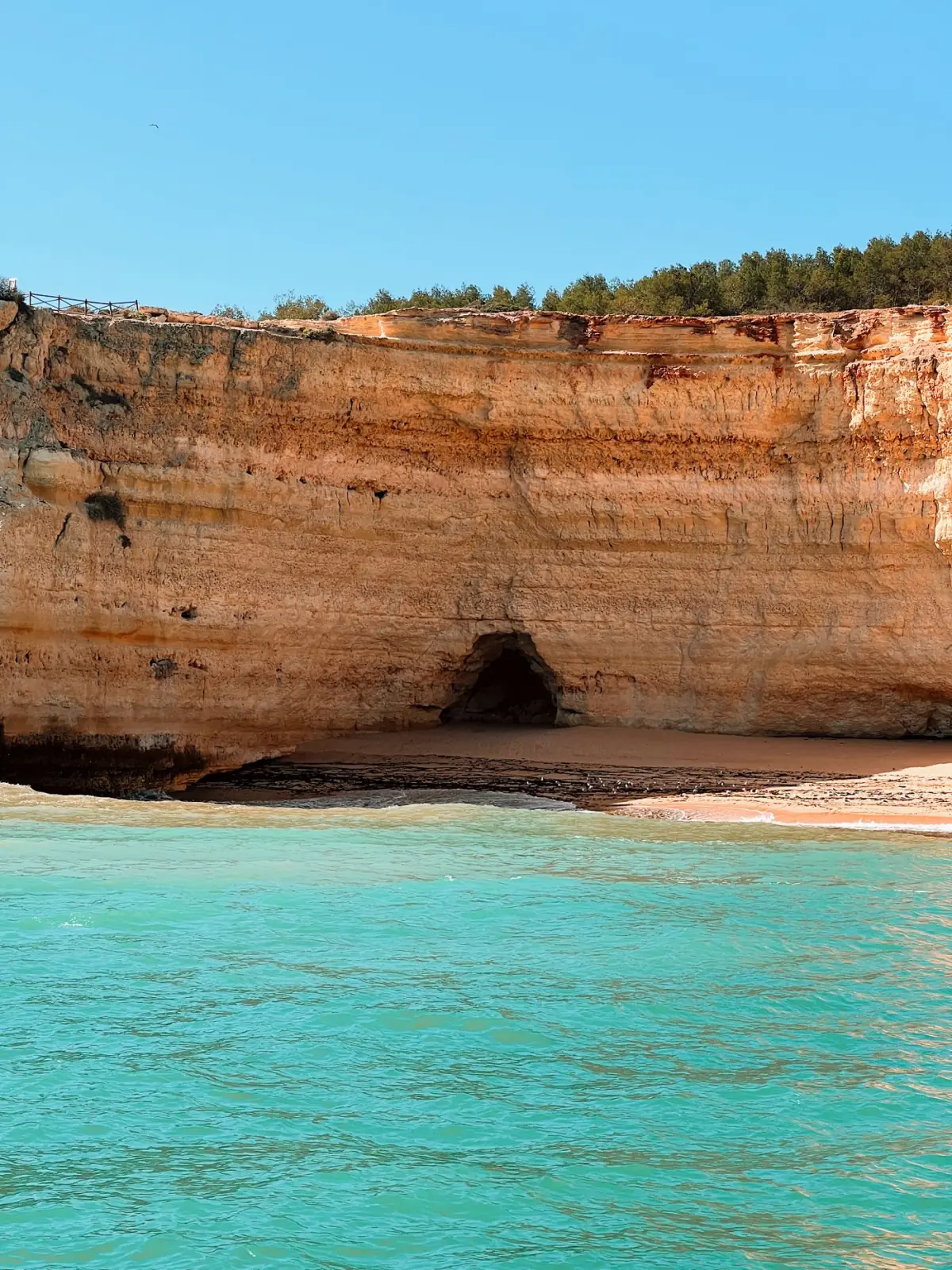
The Benagil cave is the most recognisable image of the Algarve: a stone cathedral with an opening cut into the ceiling that lets light fall onto the sand. It can only be reached by water — access by swimming or on foot along Benagil beach has been restricted for safety. The most common way is by kayak or stand-up paddle from the beach itself, or by boat leaving from Carvoeiro and Portimão. Find out how to organise the visit in our Benagil guide.
Tip: go early, first thing in the morning, when the sea is calmest and the crowds haven't yet arrived. In July and August there are queues and the swell sometimes closes the access; checking the swell forecast saves a pointless trip to Carvoeiro.
2. Climb down to Praia do Camilo and see Ponta da Piedade
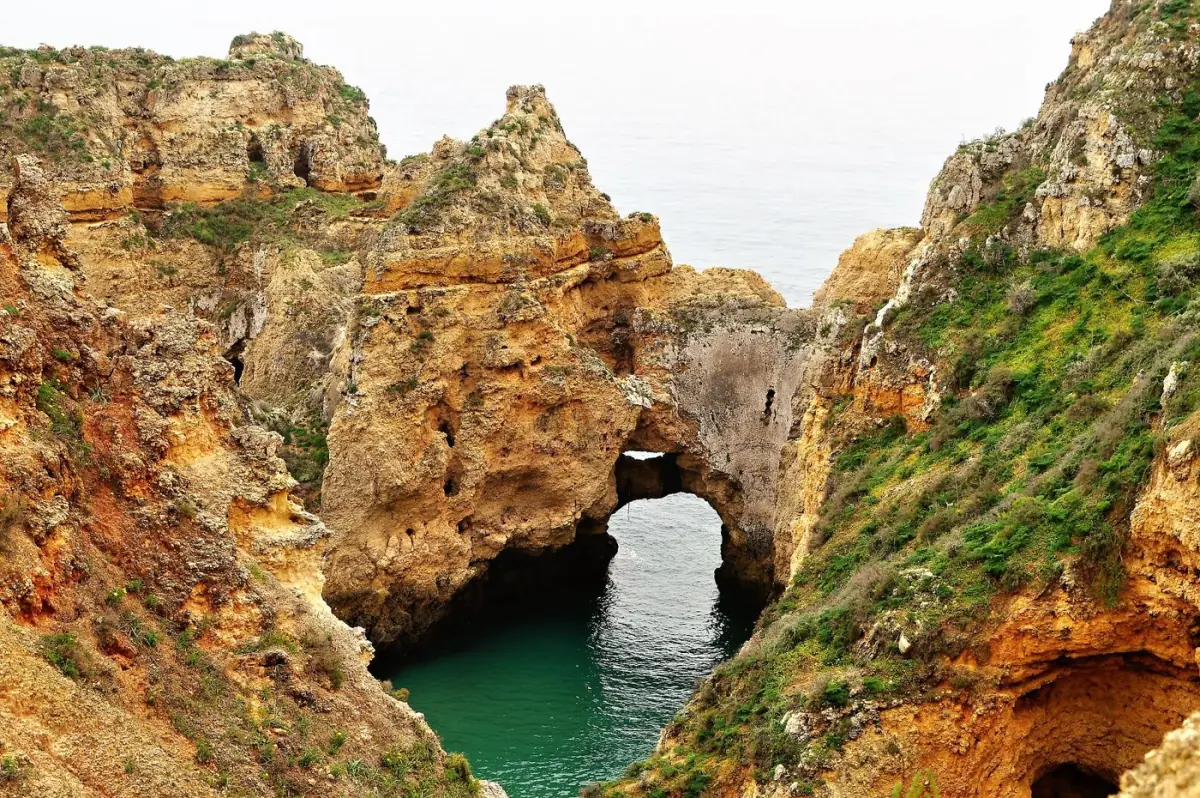
In Lagos, Ponta da Piedade concentrates the most photographed cliff scenery in the Algarve: arches, caves and pinnacles of golden rock above emerald water. You see it from above, from the viewpoints by the lighthouse, and from within, on a boat trip that goes into the caves. Right beside it is Praia do Camilo, with its wooden staircase of more than 200 steps dropping to a beach tucked between rocks — worth every step.
Distance: Ponta da Piedade is about 3 km south of the centre of Lagos. It pairs well with Praia de Dona Ana and the Meia Praia on the same day. To widen the list of beaches, see the most beautiful beaches in the Algarve.
3. Spend a day on a Ria Formosa island
In the Sotavento, the best beaches are on islands. The Ria Formosa is a system of barrier islands and marshland protected as a Natural Park, and its islands — Tavira, Armona, Culatra, Farol — are reached by boat from Tavira, Santa Luzia or Olhão. They're wide beaches, warm sea and few buildings, the opposite of the bustle of the Centre.
Tip: the crossing to Ilha de Tavira from the Quatro Águas quay takes a few minutes and runs more often in summer. Combine the island with a seafood lunch in Santa Luzia, the octopus capital. For the full context, read our guide to the Sotavento.
4. Walk the endless sand of Praia da Falésia
Between Albufeira and Vilamoura stretches Praia da Falésia, almost 6 km of continuous sand backed by a red-and-ochre cliff covered in pines. It's the longest and most photogenic beach in the Centre, perfect for a walk early in the morning or at the end of the day, when the cliff takes on tones of fire. Even at the peak of summer, just walk a few minutes to find space all to yourself.
Distance: Falésia sits between Albufeira and Vilamoura, both with good access and parking. It's one of the Blue Flag beaches most frequented by families from the Golden Triangle, and the wide sand makes it easy to settle in without a fight for shade.
For the adventurous and active
Those who prefer to keep moving have, in the Algarve, world-class waves, boat trips with dolphins and coastal trails among the best in Europe. These three items turn the coast into an adventure park.
5. Catch waves on the Costa Vicentina
The west coast of the Algarve, the Costa Vicentina, is the mecca of Portuguese surf. The Atlantic wind and swell create consistent waves almost all year, and beaches like the Amado, the Arrifana and the Bordeira have schools for every level. It's a different Algarve: wild, with no concrete, protected as the Southwest Alentejo and Costa Vicentina Natural Park.
Tip: for a first lesson, choose the Amado or Praia da Luz, with gentler waves and sand. Sagres is the natural base for surfing in the far west; see what else there is to do in our guide to Sagres and the Costa Vicentina.
6. See dolphins on a boat trip
Off the Algarve live common dolphins and bottlenose dolphins all year round, and the watching trips set off from the marinas of Portimão, Lagos, Albufeira and Vilamoura. Most operators work with biologists on board and keep a safe distance from the animals. Many trips combine the dolphin search with a pass by the caves along the coast, joining two experiences in a single outing.
Tip: the chance of a sighting is high in spring and summer, with a calmer sea. Check whether the operator refunds you or repeats the trip in the event of no sighting — the more serious ones offer it.
7. Walk the Seven Hanging Valleys Trail
Between Praia da Marinha and Praia de Vale Centeanes, in the municipality of Lagoa, runs the Seven Hanging Valleys Trail, around 5.7 km along the top of the cliffs with views over some of the most beautiful beaches in the Algarve, including Praia da Marinha and the Benagil sinkhole seen from above. It's the most celebrated coastal walk in the region and takes two to three hours, there and back.
Tip: take water, a hat and closed shoes — there's little shade and the ground is uneven. Do it early in the morning in summer to avoid the heat. For more routes, see the trails and walks of the Algarve.
For nature lovers
The Algarve isn't only coastline. The Monchique hills rise to more than 900 metres just a few kilometres from the coast, and the Ria Formosa opens up a world of water and birds that feels like another country. These two items show the green interior and the sunset at the end of Europe.
8. Climb the Monchique hills and the Fóia
To the north-west, the Monchique hills are the green lung of the Algarve, with forest of eucalyptus, chestnut and strawberry trees. The highest point, the Fóia, reaches 902 metres and offers, on clear days, a view of the whole coast down to the sea. The town of Monchique lives off crafts and medronho spirit, and at the Caldas, lower down, there are thermal baths in operation since Roman times.
Distance: Monchique is about 25 km from Portimão, a half-hour climb by car. It's an excellent plan for a cooler day or to escape the heat of the beach in August, when up in the hills the temperature drops several degrees.
9. Watch the sunset at Cabo de São Vicente
Cabo de São Vicente, next to Sagres, is the most south-westerly point of mainland Europe — the place the ancients called the end of the world. The cliffs drop more than 70 metres into the Atlantic and the lighthouse is one of the most powerful on the continent. Late in the afternoon, the sun plunges into the ocean with nothing in front of it, and it's perhaps the most dramatic sunset in Portugal.
Tip: arrive 30 to 45 minutes before sunset to grab a spot and watch the light change over the rock. There's a famous food van selling the "last bifana before America". See other places for the sunset in the Algarve.
For those who love history and culture
Eight centuries of Arab presence, an intact Moorish castle and towns of cobblestone and tile: the Algarve has a historical layer the beach hides. These three items take you from Silves to Tavira, by way of the Roman ruins near Faro.
10. Visit the Moorish castle of Silves
Silves was the capital of the Algarve in Moorish times, when it was called Xelb, and its red-sandstone castle is the best preserved in the region. From the walls, you see the old town, the cathedral and the Arade valley covered in orange groves. The climb through the old town, along narrow streets up to the fortress, is a journey straight into the Algarve's Middle Ages.
Distance: Silves is about 46 km from Faro Airport and 20 minutes from Portimão. In summer, the Medieval Fair fills the town with merchants, music and processions for around ten days in August.
11. Get lost in the streets of Tavira
Tavira, crossed by the river Gilão and a bridge of Roman origin, is the prettiest town in the Sotavento. It's said to have 37 churches, and the white houses with hipped roofs and tiled doors climb from the river up to the castle. It's a town for walking on foot, unhurried, between the market, the riverside cafés and the viewpoints. Get to know it better in our Tavira guide.
Tip: late in the afternoon, climb to the castle garden to watch the sun drop over the Ria Formosa and the rooftops. Tavira is about 31 km from Faro Airport, well served by train on the Algarve line.
12. Discover the Roman ruins of Milreu, in Estói
A few kilometres north of Faro, in Estói, lie the Roman ruins of Milreu — a 1st-century villa with fish mosaics and a temple dedicated to the waters that survives almost whole. Beside it, the Palace of Estói, rococo and pink, opens its gardens of tile and fountains. It's one of the least obvious and most rewarding cultural outings in the Algarve.
Distance: Estói is less than 11 km from Faro, a short trip by car. It pairs well with a morning in the historic centre of Faro and along the edge of the Ria Formosa, a few minutes from the airport.
For those in love with food
Algarve cooking lives off the sea and the hills, and is best tasted at the table of a market or a tavern than in a tourist-menu restaurant. These three items are the gastronomic experiences that stay in the memory.
13. Eat a seafood cataplana by the sea
The cataplana is the signature dish of the Algarve, cooked in the copper vessel of the same shape that gives it its name. The seafood version — clams, prawns, squid and fish in a stew of tomato, pepper and coriander — is the most celebrated, and tastes better on a terrace with the sea in front. It's a dish to share, unhurried, usually for two people or more.
Tip: the best cataplanas are often found in fishing villages like Ferragudo, Alvor and Santa Luzia, rather than in the more touristy areas. To know what else to try, see our food of the Algarve.
14. Try oysters and fresh seafood at Olhão market
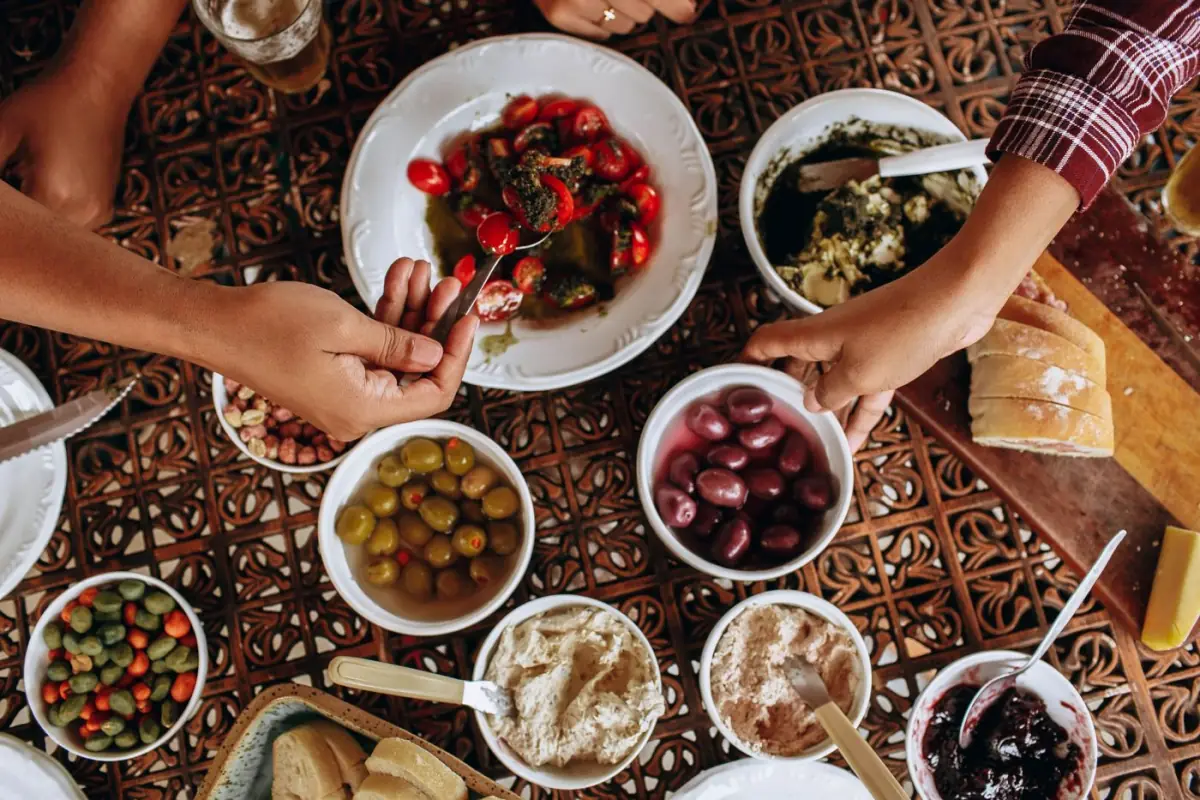
Olhão has the largest fish market in the Algarve, two brick halls on the edge of the Ria Formosa where the morning's catch is sold. The Ria is one of the country's main oyster and clam nurseries, and there they're bought at source prices. On Saturdays, the market spills out into the street with produce from the hills, herbs and pastries. It's the most authentic gastronomic experience in the Sotavento.
Tip: if the home has a kitchen, buy fresh seafood at the market and cook it in the home itself — it's half the price of a restaurant and almost as good. Many of our homes have a kitchen equipped for it.
15. Sweeten up with the almond and fig pastries
Algarve pastry-making was born from the almond and fig trees inherited from the Arabs and the convents. The dom rodrigo, wrapped in silver paper, the morgado de amêndoa and the fig sweets are the stars, always based on almond, egg and sugar. They're tasted in the old pastry shops and the markets, and make the best edible souvenir of the trip. Get to know them in our pastries of the Algarve.
Tip: the almond-blossom fair, at the end of winter, and the summer food festivals are the best occasions to taste everything at once. This last experience closes a route that goes from sea to hills, from castle to table, and that shows the Algarve is much more than beach.
How much time do you need to do all of this?
To do the 15 experiences without rushing, allow 10 to 12 days. In a week, choose one side of the coast — Barlavento or Sotavento — and cover five or six items calmly; in a weekend, stick to two or three from a single area. The table below sums up the time and the best season for each group of experiences.
| Experience | Area | Time | Best season |
|---|---|---|---|
| Benagil cave + caves by boat | Centre | Half a day | Jun–Sep (calm sea) |
| Ponta da Piedade and the beaches of Lagos | Barlavento | 1 day | May–Oct |
| Ria Formosa island | Sotavento | 1 day | Jun–Sep (warm sea) |
| Surf on the Costa Vicentina | Barlavento (west) | Half a day + | All year |
| Monchique hills and the Fóia | Barlavento (hills) | Half a day | Spring/autumn |
| Cabo de São Vicente at sunset | Barlavento (west) | Late afternoon | All year |
| Silves, Tavira and Milreu | Centre/Sotavento | 1–2 days | Spring/autumn |
| Markets and cataplana | Whole coast | Any time | All year |
Notice that the water experiences cluster in summer, while culture, trails and the hills pay off more in spring and autumn, with less heat and fewer people. If you come off-season, swap the sea for the castles and the walks — find out what to expect in our guide to the Algarve off-season.
Where to stay to have it all nearby
The best base depends on the experiences that interest you most. For the Benagil cave, the cliffs and the trails of the Centre, Albufeira and Carvoeiro sit in the middle of everything, less than 45 km from Faro Airport. For the Ria Formosa, the islands and the history, Tavira is the ideal base in the Sotavento. For surf and the sunset at the end of the world, stay in Sagres or the Lagos area.
For those wanting one foot on the beach and the other on the marina, with golf and restaurants on the doorstep, Vilamoura is the central choice, just 15 km from the airport. Booking your home direct on Homing comes out cheaper than through Booking, Airbnb or Hotels.com, because there's no platform commission or hidden fees, and the support is in Portuguese. To decide on the area, see the guide to where to stay in the Algarve.
Real-time availability and prices on Homing — book direct, cheaper than Booking, Airbnb and Hotels.com. Click «See dates and price».
These apartments in Albufeira and Vilamoura, several with a pool and equipped kitchen, sit in the Centre, the most practical starting point for combining Benagil, the cliffs of Lagos and the Ria Formosa in a single travel loop. To set out the route day by day, follow our 7-day Algarve itinerary.
Frequently asked questions
We've gathered the most common questions from those planning these experiences, with direct answers to sort out the logistics before you set off.
What's the number-one thing to do in the Algarve?
The visit to the Benagil cave is the most sought-after and most recognisable experience in the Algarve. It's done by kayak, stand-up paddle or boat, from Benagil beach, Carvoeiro or Portimão, since access on foot along the beach has been restricted for safety.
Can you do all these experiences in a week?
In a week you comfortably do one side of the coast, with five to six experiences. To combine the Barlavento of the cliffs and the Sotavento of the Ria Formosa without rushing, allow 10 to 12 days or choose a central base like Albufeira or Vilamoura.
Which of these experiences are free?
Many cost nothing: Praia do Camilo and Ponta da Piedade seen from above, Cabo de São Vicente at sunset, the Seven Hanging Valleys Trail, the streets of Tavira and Olhão market. See the full list of free things to do in the Algarve.
When's the best time to visit the Benagil cave?
From June to September, with a calmer sea, and always first thing in the morning to avoid queues and swell. In winter, many trips don't go out because of the Atlantic swell, which closes access to the cave.
Do I need a car to do these things?
For most, yes. The experiences are spread along the whole coast and public transport mainly links the towns. There's a train on the Algarve line (Lagos–Vila Real de Santo António) useful for Tavira, Faro and Silves, but Benagil, Sagres and Monchique require a car. See how to get to and around the Algarve.
Which experiences are best for families with children?
The Ria Formosa island by boat, Praia da Falésia, the dolphin trip and Olhão market work well with children. The Sotavento beaches have a warmer, calmer sea. See the guide to the Algarve with children.
What is there to do in the Algarve besides the beach?
The Monchique hills and the Fóia, Silves castle, the ruins of Milreu, the trails of the Costa Vicentina, the golf of the Golden Triangle and the markets of Olhão and Loulé. There's a whole guide on what to do in the Algarve besides the beach.
Is it cheaper to book the home direct?
Yes. Booking direct on Homing avoids the platform commission that Booking, Airbnb and Hotels.com add to the final price. Without that commission and with no hidden fees, the same accommodation comes out cheaper, with support in Portuguese. Always confirm the price range and the dates on each home's page.
If a question went unanswered, our team helps you choose the right home and area for the experiences that interest you most, and put together the itinerary from the base you book.
Sources and references
- Turismo do Algarve (Visit Algarve) — https://www.visitalgarve.pt/
- Wikipedia — Algarve — https://pt.wikipedia.org/wiki/Algarve
- ICNF — Ria Formosa and Costa Vicentina Natural Park — https://www.icnf.pt/
- Wikipedia — Cabo de São Vicente — https://pt.wikipedia.org/wiki/Cabo_de_S%C3%A3o_Vicente
- Wikipedia — Castle of Silves — https://pt.wikipedia.org/wiki/Castelo_de_Silves
Original editorial article by Maré Algarve, based on official sources (Turismo do Algarve, ICNF, ABAE/Blue Flag, IPMA, INE) and on our experience of holiday rentals in the Algarve. Prices and availability vary — always check each property's page.